YouTube offers deepfake detection to Hollywood / Photo: © AFP

 Kyrgios gets month ban for cocaine, enters treatment programme

 Colombian judge bans strikes on guerrillas if minors are present
 Khachanov shocks ailing Auger-Aliassime, Swiatek and Osaka advance at US Open
 Lone juror blocking verdict in US mother's child murder trial: defense
 'Kinda chic' - Williams sisters set to launch US Open doubles bid
 Volkswagen says cutting 100,000 jobs by end of decade
 Russia slaps curfew on charity director over army criticism

 Ailing Auger-Aliassime upset by Khachanov at US Open
 Richarlison omitted from Tottenham's Premier League squad
 How El Nino is choking the Panama Canal
 Hamilton drives his Ferrari dream at Monza
 Senegal has an IMF loan, now what?
 Auger-Aliassime upset by Khachanov at US Open
 Hugging Face, the French start-up that became AI's warehouse

 World Cup winner Llorente retires from Spain team at 31
 Osaka squeezes into US Open third round

 Apple faces £2 bn lawsuit in UK over app privacy feature

 Former champ Swiatek eases into US Open third round
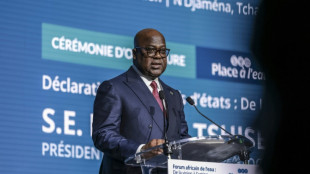 DR Congo latest to promise moving Israel embassy to Jerusalem
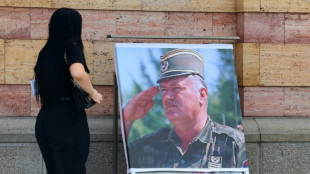 War criminal Mladic's body returns to Serbia with military honours

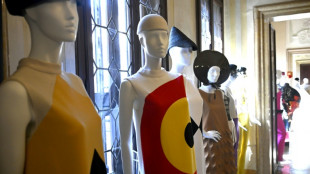 Pierre Cardin museum brings designer's futurist style to Venice
 Slovenian rookie Omrzel triumphs as Mas extends Vuelta lead

 British, French leaders talk migrants, EU relations
 Heading for Ferrari's home race, Leclerc still dreams of world title

 Cafe at centre of Israel culture clash agrees to shut on Sabbath
YouTube is offering Hollywood celebrities and entertainers a free detection tool to help combat their deepfakes, expanding the Google-owned video platform's efforts to guard against AI-driven impersonations.
Last month, YouTube introduced its likeness protection tool -- which helps identify content in which a person's face appears altered or generated using AI technology -- to government officials, journalists, and political candidates.
The platform is now extending access to entertainers including actors and musicians, who face a heightened risk of having their likeness misused -- potentially harming their careers and distorting shared realities.
"We're expanding our likeness detection technology to the entertainment industry: talent agencies, management companies, and the celebrities they represent," YouTube said earlier this week.
Likeness detection "looks for AI-generated content with a participant’s likeness, like a deepfake of their face, and gives them the power to find it and request removal."
The video giant added that celebrities and entertainers were eligible to access the tool regardless of whether they have a YouTube channel.
"YouTube opening its deepfake detection capabilities to public figures reflects a turning point in how platforms approach identity protection in the age of generative AI," Alon Yamin, chief executive and co-founder of AI content detection platform Copyleaks, told AFP.
"The technology to replicate a person's face, voice, and mannerisms has advanced faster than the safeguards around it, creating a gap that bad actors are already exploiting."
- High stakes -
The move comes after hyper-realistic AI videos of dead celebrities -- created with apps such as OpenAI's easy-to-use Sora -- rapidly spread online, prompting debate over the control of deceased people's likenesses.
OpenAI's app also unleashed a flood of videos of celebrities such as Michael Jackson and Elvis Presley.
Last month, OpenAI said it was shutting down its Sora app.
In February, Irish director Ruairí Robinson created a stunningly realistic clip featuring Brad Pitt fighting Tom Cruise on a rooftop using a two-sentence prompt.
The widely circulated clip, which sparked alarm across Hollywood, was generated with Seedance 2.0, an AI video generation tool owned by the Chinese technology company ByteDance.
Robinson also created other videos depicting Pitt battling a sword-wielding "zombie ninja," and another showing him teaming up with Cruise to fight a robot.
Charles Rivkin, the chairman and chief executive of the Motion Picture Association, called on ByteDance to "immediately cease its infringing activity," accusing it of disregarding copyright law that protects creators and underpins millions of jobs.
YouTube said it was working with leading talent agencies to refine how likeness detection can protect entertainers.
The video giant is "doing the right thing by providing these tools at no cost to the talent, so they can protect their real estate," Jason Newman of the management and production firm Untitled Entertainment told The Hollywood Reporter.
"Their real estate is their face. Their real estate is their body. Their real estate is who they are, what they do, how they say it."
The expansion of the detection tool follows complaints from high-profile Americans about YouTube's cumbersome process for flagging and removing deepfakes from the platform –- especially as AI accelerates the creation of fabricated content.
"For celebrities, executives, and other high-profile individuals, the stakes are especially high as deepfakes can be used to spread misinformation, manipulate markets, damage reputations, or falsely imply endorsement. Robust detection is no longer optional," said Yamin.
"Detection systems must be highly accurate, continuously updated, and paired with clear policies and swift takedown processes to be effective.
"This won't eliminate deepfakes entirely, but it can significantly reduce their reach and impact by making it harder for manipulated content to go undetected or unchallenged," he added.
L.Stucki--VB