
-
 Colombian judge bans strikes on guerrillas if minors are present
-
Carreras reverts to fullback as Argentina change four for Australia Test

-
 Khachanov shocks ailing Auger-Aliassime, Swiatek and Osaka advance at US Open
-
Wilson back to lead Australia as Kiss rotates team for Argentina
-
 Lone juror blocking verdict in US mother's child murder trial: defense
-
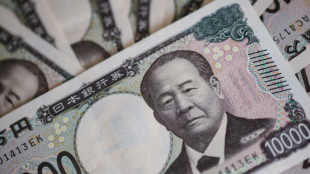
Yen surges on new intervention talk, US stocks rally
-
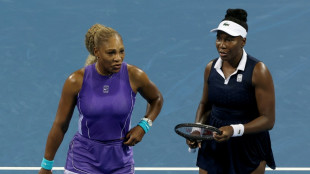 'Kinda chic' - Williams sisters set to launch US Open doubles bid
-
Japan's Ueda fires Lille top of Ligue 1 on debut

-
 Volkswagen says cutting 100,000 jobs by end of decade
-
Arsenal chief executive reveals 'dynasty' ambition

-
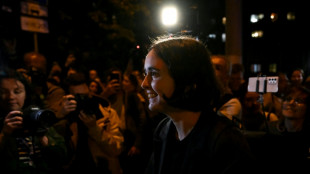 Russia slaps curfew on charity director over army criticism
-
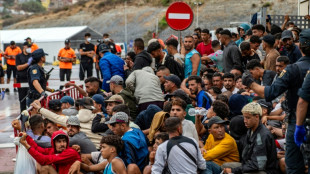
Spanish PM says no 'solid proof' Morocco planned migrant rush
-
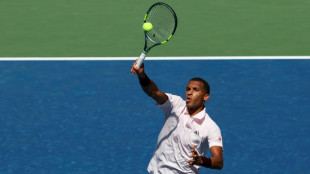 Ailing Auger-Aliassime upset by Khachanov at US Open
-
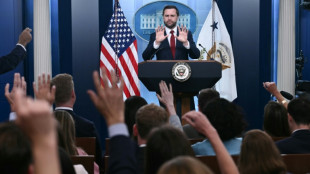
Iran war is not a war, US VP Vance says
-
 Richarlison omitted from Tottenham's Premier League squad
-
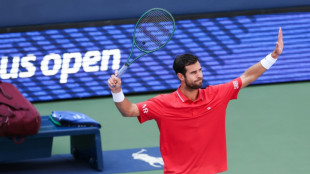
Khachanov stuns third-seeded Auger-Aliassime in US Open second round
-
 How El Nino is choking the Panama Canal
-
Bordeaux facing sixth-tier football after French federation upholds relegation

-
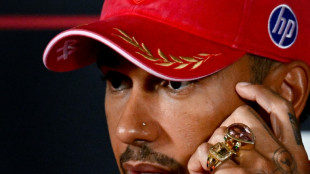 Hamilton drives his Ferrari dream at Monza
-
Stoic Verstappen looking beyond 'painful' Monza weekend
-
 Senegal has an IMF loan, now what?
-
OpenAI begins rollout of new powerful AI model GPT-6 Astra
-
 Auger-Aliassime upset by Khachanov at US Open
-
FIFA blasts UEFA 'smear campaign,' fights World Cup plan disclosures
-
 Hugging Face, the French start-up that became AI's warehouse
-
Zelensky hopes to host US envoys in Kyiv in 'coming days'

-
 World Cup winner Llorente retires from Spain team at 31
-
Martinelli joins Al-Hilal from Arsenal for reported £60 million

-
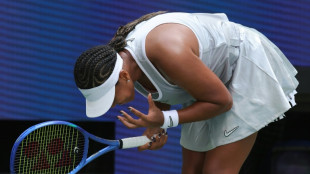 Osaka squeezes into US Open third round
-
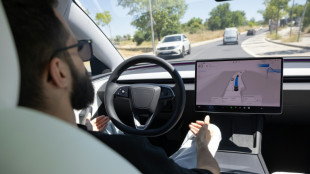
Tesla's semi-autonomous driving could be adapted to EU norms: France
-
 Apple faces £2 bn lawsuit in UK over app privacy feature
-
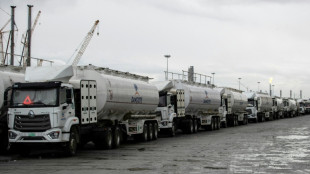
37 people die from fumes during oil pipeline theft in Nigeria: NGO
-
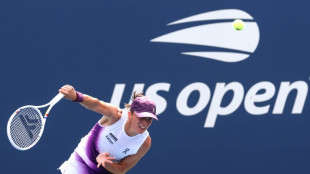 Former champ Swiatek eases into US Open third round
-
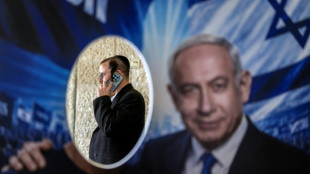
Ahead of elections, Israel tests West's patience on West Bank violence
-
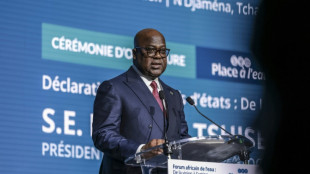 DR Congo latest to promise moving Israel embassy to Jerusalem
-
Antonelli will obey Mercedes orders to help 'tow' teammate Russell

-
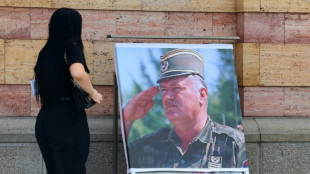 War criminal Mladic's body returns to Serbia with military honours
-
UK fintech Revolut gains conditional US banking licence

-
 Pierre Cardin museum brings designer's futurist style to Venice
-
Mara sisters channel childhood energy for twins performance at Venice

-
 Slovenian rookie Omrzel triumphs as Mas extends Vuelta lead
-
UN's Sudan probe says foreign fighters fuelling conflict
-
 British, French leaders talk migrants, EU relations
-
Violence erupts at S.Africa anti-migrant protest
-
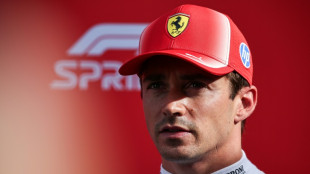 Heading for Ferrari's home race, Leclerc still dreams of world title
-
Nothing left: Nepal flood survivors face loss and uncertainty

-
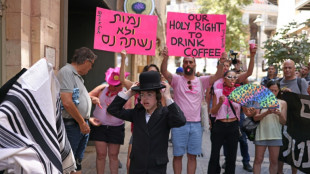 Cafe at centre of Israel culture clash agrees to shut on Sabbath
-
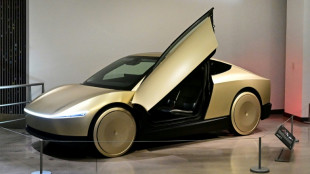
Tesla to launch self-driving 'Cybercab' in Texas
-
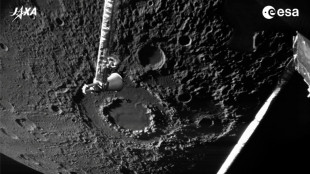 Spacecraft bound for Mercury begins 'tricky' arrival
-
Europe struggles to respond as Russia escalates shadow warfare
Pope urges 'disarming' of AI in major manifesto
Pope Leo XIV called Monday for the "disarming" of artificial intelligence in his long-awaited manifesto on the rapidly developing technology, and warned of "new forms of slavery" behind its rise.
Leo, the first US pope, warned against "a race for ever more powerful algorithms and larger datasets, driven by the desire to secure geopolitical or commercial dominance".
He presented his first encyclical, "Magnifica Humanitas" (Magnificent Humanity) in person at the Vatican, alongside AI experts including Christopher Olah, co-founder of US giant Anthropic.
Anthropic is embroiled in a legal battle with the US military after opposing the use of its technology for lethal autonomous warfare and mass surveillance.
At the presentation, Olah said AI companies operate "inside a set of incentives and constraints that can sometimes conflict with doing the right thing".
He welcomed input from outside actors like the Catholic Church, to "push events in a better direction" saying that "the questions raised by AI are bigger than the AI research community".
In the encyclical, Leo also sounded the alarm over AI-directed weaponry, saying it was "not permissible to entrust lethal" decisions to tech.
Leo has repeatedly clashed with the White House over the Iran war and its use of religion to justify conflict.
The "just war" theory -- espoused recently by the Trump administration -- was "outdated", Leo wrote, adding that "no algorithm can make war morally acceptable".
- 'Armed competition' -
AI could be worth up to $4.8 trillion by 2033, a 25-fold increase in a decade, while concentrating its profits in the hands of a limited few, according to the United Nations.
"Disarming AI means freeing it from the mentality of 'armed' competition," the pope wrote.
"To disarm does not mean rejecting technology, but preventing it from dominating humanity," Leo wrote.
AI should be "human-friendly", accessible to all and opened to discussion and debate, he added.
The head of the world's 1.4 billion Catholics has made the hot-button issue a cornerstone of his papacy by dedicating to it his first encyclical -- a document which lays the basis for Church teaching and longer-term debate.
The manifesto references a range of cultural giants, from Greek philosopher Plato to Beethoven and his Ninth Symphony, even citing a character from JRR Tolkien's "The Lord of the Rings".
- 'Not magical' -
"Magnifica Humanitas" was signed on May 15, the 135th anniversary of an 1891 encyclical by Leo XIII which laid the foundations of the Church's social doctrine during the Industrial Revolution.
Leo warned of new forms of slavery fuelling the technological revolution, noting "nothing in the world of AI is immaterial or magical".
"Every seemingly immediate and flawless response... relies on the silent work of millions of people", from content moderators forced to watch disturbing material, to children who extract the rare earth elements on which AI depends.
They are "scarred, injured and worn down so that computational flow may continue uninterruptedly", he wrote.
Greater efficiency or innovation did not excuse "a chain of exploitation that remains deliberately hidden", he wrote, while more must be done to reduce AI's environmental impact and "protect our common home".
He also issued an unprecedented apology for the Vatican's role in the slave trade and in helping to justify slavery, saying it was "a wound in Christian memory".
"For this, in the name of the Church, I sincerely ask for pardon," Leo wrote.
The release of the text follows several years of study by the Church on AI-related technologies.
As early as 2020, the Holy See launched the "Rome Appeal for an AI Ethic", which called for new technologies to respect human dignity.
Experts say "Magnifica Humanitas" could prove as influential as Pope Francis's "Laudato Si", a 2015 climate manifesto that triggered political and civic reactions worldwide.
B.Wyler--VB