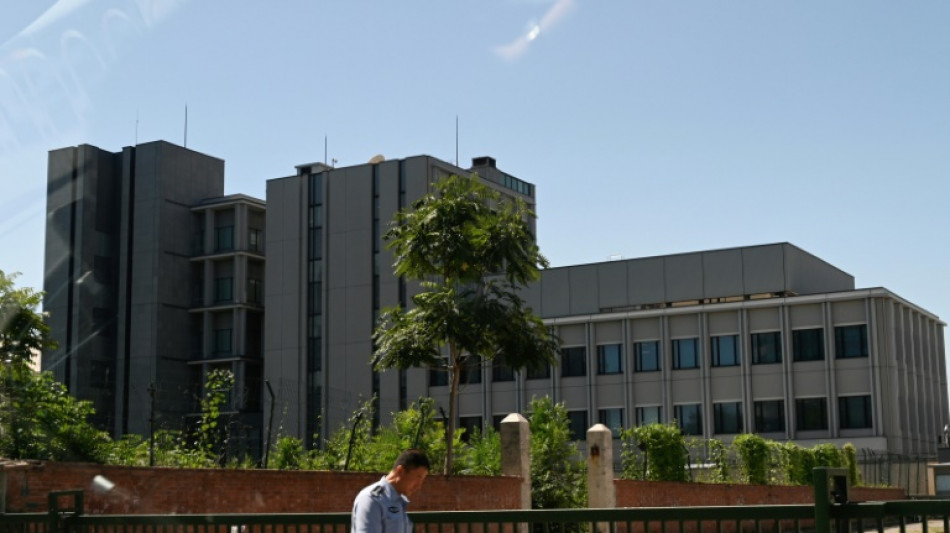
China and Japan's long history of strained ties / Photo: © AFP

 Trump under pressure from all sides over Chinese AI surge

 ICC member states decide fate of embattled prosecutor Karim Khan

 Dodgers return to Trump White House despite fan anger

 Lyles, Richardson ease into 100m semis at US athletics championships
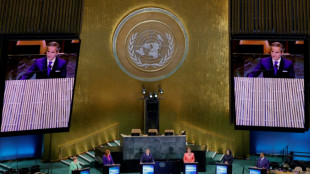
 Salman Rushdie testifies at knife attacker's US terror trial

 World Bank confirms plan to phase out China lending by 2031
 US panel backs trendy peptides despite safety concerns

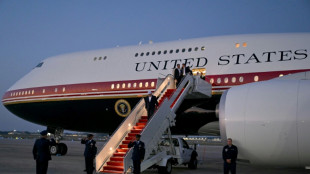 Justice Dept withdraws NY Times subpoenas over Trump plane report

 Barcelona's De Jong returns from World Cup with torn ligament
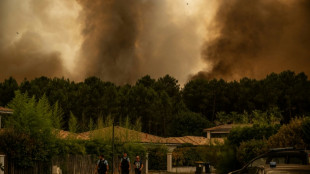
 Albania police teargas protesters against Trump-linked resort
 US panel says to loosen restrictions on popular peptide despite safety concerns

 Verstappen swerves around future questions
 EU renews online child sex abuse detection powers

 Airbus, Boeing fly in different directions at Farnborough

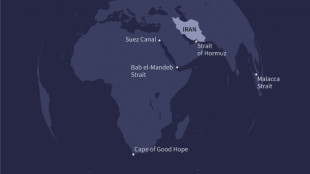 Bab al-Mandeb Strait: another key oil shipping route under threat
 Deadly wildfires in Europe force thousands to flee

 NATO to overhaul European fuel pipeline network

 US trade envoy to make tariff announcement as 10% duty soon expires

 Trump stuns Saudis by pinning nuclear deal to Israel ties
 Tough day for Ubisoft stock topped with weaker revenues
 Swelling jet fuel costs hit American Airlines outlook
 Carapaz climbs unopposed to Tour de France 18th stage win

 Sooryavanshi hits maiden 50 as India thump Zimbabwe in T20
 ECB opens door to September rate-hike as Iran war flares up
 World Bank estimates Venezuela quakes caused $19.6 bn in damage
A row between China and Japan over Tokyo's decision to release treated wastewater from the Fukushima nuclear plant has added to decades of animosity between the two nations.
Here are some of the key issues that have long impacted the relationship between Asia's two biggest economies:
- Historical wars -
Japan's early 20th-century imperial ambitions resulted in occupations across Southeast Asia and East Asia, including China.
Atrocities after its invasion of China in the 1930s include the "Rape of Nanking" -- a period of mass murder and rape committed after Japanese soldiers took the city -- as well as torture, sexual slavery and human medical experiments.
The Sino-Japanese War, part of World War II, ended with Japanese military defeat in 1945.
Ties were restored with a 1972 Joint Communique in which China renounced "its demand for war reparation from Japan" to foster links between the two countries.
But history remains a stumbling block in modern diplomacy, especially as the two tussle over regional influence.
Over 10,000 people protested in Beijing after Tokyo approved revisionist textbooks in 2005, hurling rocks and eggs at the Japanese embassy.
Old wounds also resurface when nationalist Japanese politicians visit Tokyo's Yasukuni Shrine -- which commemorates senior military and political figures convicted of war crimes after WWII.
China terms these visits as "serious provocations", urging Tokyo to "learn from history".
"The Japanese have been their own worst enemies on history issues," said East Asia analyst Richard McGregor.
But this is due to the Japanese government's belief that China would never accept an apology and "politicise the issue no matter what," he added.
- Territorial disputes -
Another point of contention has been a territorial dispute over islets in the East China Sea, known as Senkaku by Tokyo and the Diaoyu by Beijing.
The remote chain of islands has long fuelled tensions and is the scene of regular confrontations between Japanese coastguard vessels and Chinese fishing boats.
Beijing has grown more assertive about its claim over the islands in recent years, with Tokyo reporting the presence of Chinese coastguard vessels, a naval ship and even a nuclear-powered submarine.
Japanese Prime Minister Fumio Kishida said he had "expressed serious concerns over the situation in the East China Sea" to Chinese President Xi Jinping during the pair's first in-person talks in Bangkok last year.
- Alliances -
The United States has been a staunch ally of Japan since the end of World War II.
Japan hosts several US military bases, with the southernmost region of Okinawa containing the bulk of the 50,000-strong troop presence -- right at the doorstep of mainland China.
This has fuelled China's belief that the United States is intent on encircling and containing it.
But as Beijing's sabre-rattling around Asia grows more frequent, Tokyo has shifted towards a more hawkish stance over security issues.
"They simply do not trust China," McGregor said.
The neighbours maintain several hundred billion dollars in economic trade annually.
But Japan has in recent years deepened its relationship with Washington -- including through the Quad alliance involving Australia, India and the United States.
"The tone of (China's) diplomatic relations with Japan is to some degree set by their relations with the United States," McGregor said.
"It's hard to see how (Japan-China) relations can bounce back in any substantial form."
- Taiwan -
Another flashpoint issue is self-ruled Taiwan -- which Beijing claims as its territory and has vowed to take one day, by force if necessary.
China has in the past year staged wargames around the island -- ruled by Japan for half a century until 1945 -- including missile drills.
Some missiles fired during Chinese exercises last August were believed to have fallen within Japan's exclusive economic zone.
While Japan recognises Beijing's "One China" policy on Taiwan, it is concerned about its neighbour's more aggressive military posture.
"Japan is exceptionally worried about what's happening in Taiwan and that's a big driver of just about everything in the region nowadays," McGregor told AFP, adding that Taipei and Tokyo share close relations.
G.Schulte--BTB