-
 Trump under pressure from all sides over Chinese AI surge
-
Is 'superstar' Pogacar's Tour de France domination boring?

-
 ICC member states decide fate of embattled prosecutor Karim Khan
-
Iran ramps up executions under shadow of war
-
 Dodgers return to Trump White House despite fan anger
-
Rosalia's Argentine fans up in arms over alleged World Cup snub

-
 Lyles, Richardson ease into 100m semis at US athletics championships
-
Six candidates to lead UN take stage for televised debate
-
 Salman Rushdie testifies at knife attacker's US terror trial
-
King Charles opens slimmed down Commonwealth Games in Glasgow

-
 World Bank confirms plan to phase out China lending by 2031
-
US unveils new tariffs on 60 partners as Trump rebuilds trade agenda
-
 US panel backs trendy peptides despite safety concerns
-
WNBA viral star Cunningham wades into trans athletes row

-
 Justice Dept withdraws NY Times subpoenas over Trump plane report
-
Hearn dismisses Fury talk of Joshua no-show for super fight

-
 Barcelona's De Jong returns from World Cup with torn ligament
-
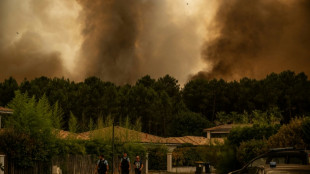
'Like a war zone': France evacuates 20,000 due to wildfires
-
 Albania police teargas protesters against Trump-linked resort
-
Ships avoid Ukrainian grain ports after Russian attacks
-
 US panel says to loosen restrictions on popular peptide despite safety concerns
-
Oil passes $100 a barrel again: why it's more serious this time

-
 Verstappen swerves around future questions
-
Who are the six candidates vying to lead the UN?
-
 EU renews online child sex abuse detection powers
-
Hamilton proud of recovery after hitting rock bottom a year ago
-
 Airbus, Boeing fly in different directions at Farnborough
-
Carapaz eyes polkadot mountains jersey after stage win

-
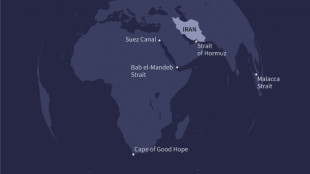 Bab al-Mandeb Strait: another key oil shipping route under threat
-
Fields medal awarded to four young mathematicians
-
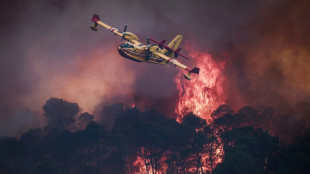 Deadly wildfires in Europe force thousands to flee
-
Carapaz claims Tour de France stage as Pogacar loses key team-mate

-
 NATO to overhaul European fuel pipeline network
-
Alonso welcomes Aston Martin upgrade, warns against unreal expectations
-
 US trade envoy to make tariff announcement as 10% duty soon expires
-
Anderson declares Man City 'kings of Manchester' after £116 mn move

-
 Trump stuns Saudis by pinning nuclear deal to Israel ties
-
Relieved Russell says Mercedes have solved his power problems mystery
-
 Tough day for Ubisoft stock topped with weaker revenues
-
Oil soars above $100 as Middle East fears grow
-
 Swelling jet fuel costs hit American Airlines outlook
-
Venezuelans turn to scrap collecting in quake-hit beach 'paradise'
-
 Carapaz climbs unopposed to Tour de France 18th stage win
-
Heptathlon champion Johnson-Thompson joins list of Commonwealth Games absentees

-
 Sooryavanshi hits maiden 50 as India thump Zimbabwe in T20
-
Nigeria's Dangote raises $2.5bn to expand Africa's largest refinery
-
 ECB opens door to September rate-hike as Iran war flares up
-
Oil soars to $100 on fresh Mideast attacks
-
 World Bank estimates Venezuela quakes caused $19.6 bn in damage
-
Coal-fired power generation rising globally on Mideast war: IEA
India becomes first nation to land spacecraft near Moon's south pole
India on Wednesday became the first nation to land a craft near the Moon's south pole, a historic triumph for the world's most populous nation and its ambitious, cut-price space programme.
The unmanned Chandrayaan-3, which means "Mooncraft" in Sanskrit, touched down at 6:04 pm India time (1234 GMT) as mission control technicians cheered wildly and embraced their colleagues.
Its landing comes days after a Russian probe crashed in the same region and four years since the previous Indian attempt failed at the last moment.
Prime Minister Narendra Modi smiled broadly and waved an Indian flag on a live broadcast to announce the mission's success as a triumph that extended beyond his country's borders.
"On this joyous occasion I would like to address the people of the world," said Modi from the sidelines of the BRICS diplomatic summit in South Africa.
"India's successful moon mission is not just India's alone," he added. "This success belongs to all of humanity."
The Chandrayaan-3 mission has captivated public attention since launching nearly six weeks ago in front of thousands of cheering spectators.
Politicians staged Hindu prayer rituals to wish for the mission's success and schoolchildren followed the final moments of the landing from live broadcasts in classrooms.
Chandrayaan-3 took much longer to reach the Moon than the Apollo missions in the 1960s and 1970s, which arrived in a matter of days.
India used rockets much less powerful than the ones the United States used back then, meaning the probe had to orbit the Earth several times to gain speed before embarking on its month-long journey.
The lander, Vikram, which means "valour" in Sanskrit, detached from its propulsion module last week and has been sending images of the Moon's surface since entering lunar orbit on August 5.
Now that Vikram has landed, a solar-powered rover will explore the surface and transmit data to Earth over its two-week lifespan.
- Ambitious programme -
India is closing in on milestones set by global space powers such as the United States and Russia, conducting many of its missions at much lower price tags.
The South Asian nation has a comparatively low-budget space programme, but one that has grown considerably in size and momentum since it first sent a probe to orbit the Moon in 2008.
The latest mission has a cost of $74.6 million -- far lower than those of other countries, and a testament to India's frugal space engineering.
Experts say India can keep costs low by copying and adapting existing technology, and thanks to an abundance of highly skilled engineers who earn a fraction of their foreign counterparts' wages.
In 2014, India became the first Asian nation to put a craft into orbit around Mars and is slated to launch a three-day crewed mission into Earth's orbit by next year.
Wednesday's landing had been eagerly awaited by the Indian Space Research Organisation (ISRO) after the frustrating failure of its previous mission at the last hurdle in 2019.
Back then, mission control lost contact with the Chandrayaan-2 lunar module moments before its slated landing.
- 'Very, very important' -
Former ISRO chief K. Sivan told AFP that India's efforts to explore the relatively unmapped lunar south pole would make a "very, very important" contribution to scientific knowledge.
Only Russia, the United States and China have previously achieved controlled landings on the Moon.
Russia launched a lunar probe in August -- its first in nearly half a century.
If successful, it would have beaten Chandrayaan-3 by a matter of days to become the first mission from any nation to make a controlled landing around the south pole.
But Luna-25 crashed on Saturday after an unspecified incident as it prepared to descend.
A.Gasser--BTB