At COP15, businesses urged to act for nature / Photo: © AFP

 Chelsea win as Bayern and Madrid draw in Women's Champions League
 Made with munitions from the Falklands War, a 'Chalice of Peace' for the pope

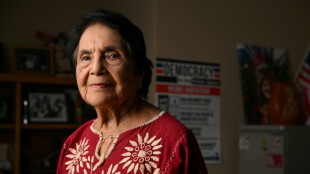
 Pioneering US labor leader Dolores Huerta dies at 96

 Italian PM slams 'shameful' release of alleged protest organiser

 Hollywood producer Kennedy to head LA28 Olympic ceremony plans

 Djokovic wins Basel opener to boost ATP Finals bid
 US Fed holds interest rates steady despite surging inflation
 Chiefs sign ex-Ravens kicker suspended over sex allegations

 Inglis and Carey put Australia in command of South Africa decider

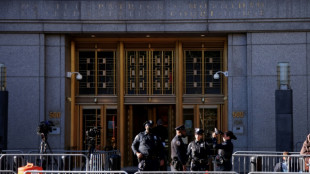 92-year-old US judge handling Maduro case dies
 Perez extends Cadillac deal to 2029

 Arab Israelis proud of high election turnout, uncertain for future
 Inglis, Carey put Australia in command of South Africa decider
 French firm Safran helps build aircraft wings of the future in UK factory

 Ceasefire in Russia-occupied Ukrainian city holds for second day
 Canada hikes rates to contain oil price surge caused by Iran war

 World Bank warns of worsening food insecurity as commodity prices soar

 Mona Lisa scrubbed from Syrian textbooks as critics slam conservative drift
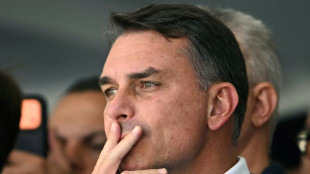
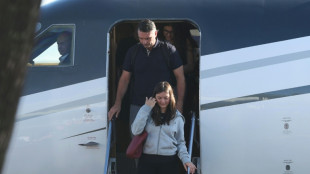 Bolsonaro flees Brazil for US after election defeat: AFP
 Brazil's Bolsonaros: between power, prison, and exile
 Israel president urges against new vote despite inconclusive result

 Eala recovers to move into Tokyo quarter-finals
 COPs 'bunch of baloney' says Panama as it vies to host nature summit

 Denmark mulls banning turbo chickens

 Nintendo producer 'all nervous' as Zelda classic remake hits shelves
Widely blamed for ravaging Earth's ecosystems, big businesses are nevertheless being turned to as key players in a deal to save nature at the COP15 biodiversity conference.
With hundreds of billions of dollars needed for the task, public funds can only fill part of the gap. Campaigners and experts at the talks are demanding companies act to reduce their impact -- and firms in turn are asking for clear rules of engagement.
Ministers at the meeting in Montreal are thrashing out a global agreement for the next decade to curb damage to Earth's forests, oceans and species -- with conservation and finance top of the agenda.
"One of the other things at stake in this COP is getting businesses involved," said Pierre Cannet of the Worldwide Fund for Nature, on the sidelines of the talks.
"Whatever the outcome of the summit, they will have to ask themselves how they can curb the fall in biodiversity."
Elizabeth Mrema, the head of the UN Convention on Biological Diversity that underpins COP15, said a record number of private-sector parties registered for this year's summit, where delegates are working on a new Global Biodiversity Framework.
"Clearly they've listened," she told AFP.
"They have understood or they are getting there now, understanding also the impact of their operations on nature, the nature biodiversity which we all depend on and (they) also depend (on) for their businesses," she added.
"If they are not part of the framework, their businesses will also suffer."
- Invest in nature -
Some $900 billion a year is needed to move from "an economy that devours nature to a neutral and then a positive economy," says Gilles Kleitz of the French state development agency AFD.
For this, "the role of businesses is fundamental," said Didier Babin, a researcher at Cirad, an institute that focuses on sustainable agriculture.
"More businesses have to be brought on board" to help fund the targets, he added. "They depend on biodiversity and they must invest more in the capital of nature. Nature needs to be thought of as an asset."
One of the targets in the framework under discussion at COP15 is a section aimed at obliging big companies and financial groups to measure and publish their impacts on the natural world and their exposure to it.
The World Economic Forum said in a 2020 report that more than half of global production depends heavily (15 percent) or moderately (37 percent) on nature and services related to it.
It calculated the value of businesses' exposure to degraded ecosystems at $44 trillion.
The report found that the construction sector was the most exposed with $4 trillion, followed by agriculture with $2.5 trillion and the food and drink industry with $1.4 trillion.
- Measuring biodiversity impact -
At COP15, a grouping of 330 businesses called Business for Nature is pushing for a uniform framework for all corporations to report their impacts and exposure.
With collective turnover of more than $1.5 trillion, they include big names such as Unilever, Ikea, Danone, BNP Paribas and Tata Steel.
"There will be no economy, there will be no business on a dead planet," said the grouping's executive director, Eva Zabey.
"And so now we need governments to adopt an ambitious global biodiversity framework that will provide the political certainty and it will require businesses to contribute."
Brune Poirson, director of sustainable development at the hotel group Accor, said COP15 "must be a key milestone" in this process.
"We need a framework with all the actors in the sector," she said.
Efforts are gaining pace to make companies disclose their contribution to the carbon emissions that drive climate change -- but relatively few companies currently declare their impact on the ecosystems that support all life.
"This summit needs to be a turning point in humanity's relationship with nature and to do so it needs to kick off fundamental changes in the way the economy works," said Eliot Whittington of the Cambridge Institute for Sustainability Leadership.
"More and more businesses and financial institutions are realizing how essential action on nature and biodiversity is, but they need governments to provide the right rules and incentives to solve market failures and make change possible."
S.Keller--BTB