Costa Rica leader sworn in with tough-on-crime agenda / Photo: © AFP

 US says wants deal with Iran, but not 'at any price'
 US Supreme Court hands win to Bayer in weedkiller litigation
 Apple raises prices for MacBooks and iPads, as costs soar over AI
 UK suffers as heat breaks new June record
 Binance to suspend crypto services in several EU countries
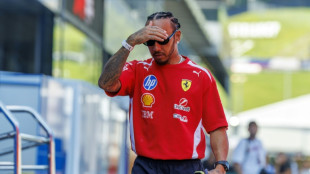 Hamilton reveals neck injury that hampered debut year with Ferrari
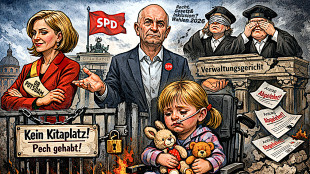 Noosha Aubel and Dietmar Woidke: How Potsdam Is Letting Down a Young Child with Profound Disabilities
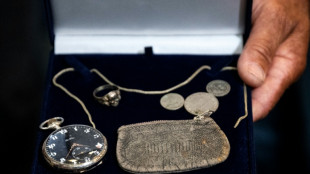 Greek families receive keepsakes of Holocaust victims
 Easyjet rejects latest takeover bid but leaves door ajar
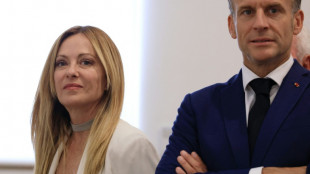 Macron hosts Meloni for Riviera talks after Trump rift
 US Supreme Court paves way for mass deportation of Haitians, Syrians
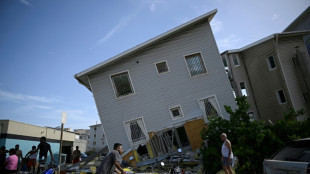
 South Africa vows firm response to anti-migrant violence
 Poland, Ukraine hold key Gdansk conference without Zelensky
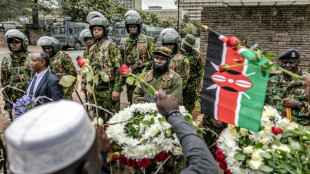 Massive police deployment blocks Kenya protest anniversary

 Court orders TotalEnergies to account for clients' emissions
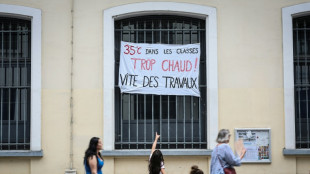
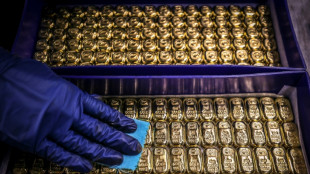 Stocks rally on renewed AI optimism, oil price declines

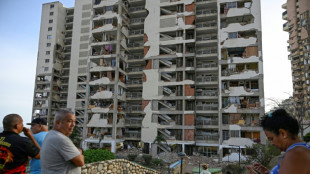 Venezuela twin quakes kill at least 164 with many trapped under rubble
 IOC votes to continue ski mountaineering for 2030 Games

 Stocks rally on AI optimism after Micron's blowout forecast
 Tunisia's short-lived World Cup experience lays bare deep dysfunctions

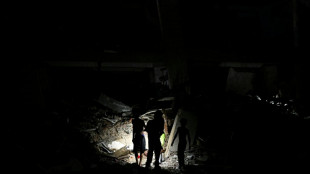 'Everything collapsed': Venezuela region hit hardest by quakes cries for help
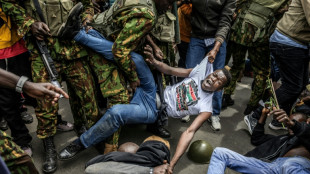 Kenya police turn out in force on protest anniversary

 Baking heatwave gives Europe no respite

 Trump climate pushback spurs courtroom battles, report says

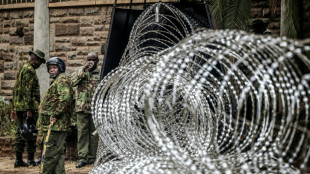 Kenya police in massive show of force on protest anniversary
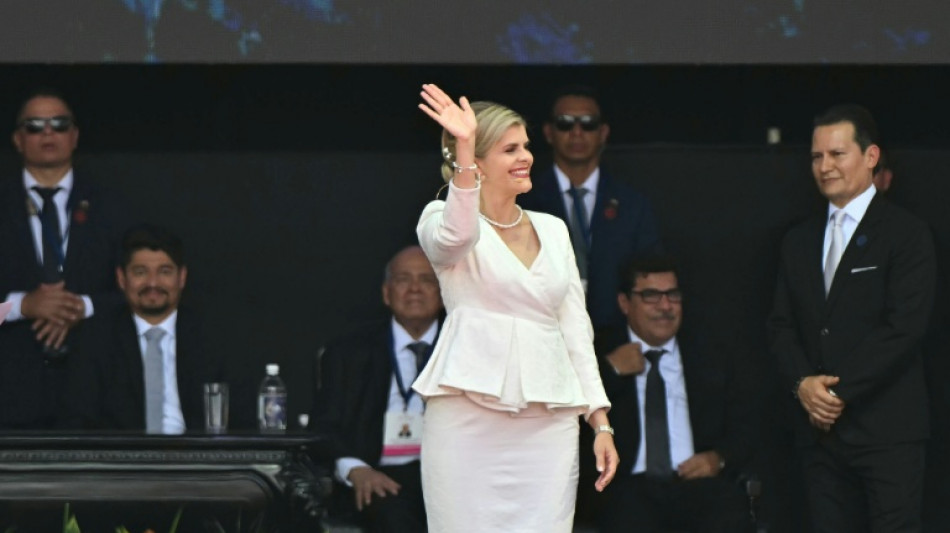
Costa Rican political scientist Laura Fernandez was sworn in as president on Friday, the latest right-winger to win power in Latin America on a promise to combat drug-related violence.
Fernandez, 39, is the political heir of outgoing president Rodrigo Chaves, who survived two impeachment attempts by Congress over corruption allegations.
She has appointed him as a super-minister in charge of the political and economic agenda of her so-called "government of continuity."
Fernandez, dressed in a cream blazer dress, took the oath of office before a large crowd of flag-waving supporters in the National Stadium of San Jose, Costa Rica's capital.
She won the February 1 election outright in the first round, largely thanks to Chaves's popularity.
He was barred by the constitution from seeking a second consecutive term.
A former minister of the presidency under Chaves, Fernandez has vowed to crack down on rising violence linked to the cocaine trade in the small Central American country.
The country of 5.2 million people, famous for its white-sand beaches, has long been seen as an oasis of stability and democracy in Central America.
But in recent years, it has gone from a transit point to a logistics hub in the global drug trade, fueling local turf wars that have caused the murder rate to soar.
- The Bukele model -
"I want to walk down the street without fearing a shootout," Nancy Gutierrez, a 50-year-old housewife, told AFP.
Fernandez cites iron-fisted Salvadoran President Nayib Bukele, who has locked up thousands of suspected gang members without charges, as an inspiration on how to tamp down crime.
Like Chaves, she is an ally of US President Donald Trump.
Her election marked another win for the Latin American right, which has unseated a host of left-wing administrations in recent months, including in Chile, Bolivia and Honduras.
Fernandez's party wants to overhaul the judiciary, which the right accuses of being too lenient on crime and of protecting elites.
Her critics say that Chaves will be the real power behind the presidency and warn of concentrating too much power in his hands.
"We are experiencing signs of authoritarianism, and the wind has shifted to the right, but institutions are still strong," political scientist Constantino Urcuyo told AFP.
"The Bukele model has no place in Costa Rica," he said.
U.Maertens--VB