EU opens door to using US jet fuel as shortages loom / Photo: © AFP

 US says wants deal with Iran, but not 'at any price'

 US Supreme Court hands win to Bayer in weedkiller litigation

 Apple raises prices for MacBooks and iPads, as costs soar over AI

 UK suffers as heat breaks new June record

 Binance to suspend crypto services in several EU countries

 Hamilton reveals neck injury that hampered debut year with Ferrari

 Noosha Aubel and Dietmar Woidke: How Potsdam Is Letting Down a Young Child with Profound Disabilities

 Greek families receive keepsakes of Holocaust victims

 Easyjet rejects latest takeover bid but leaves door ajar

 Macron hosts Meloni for Riviera talks after Trump rift
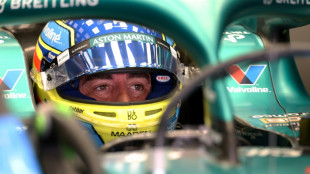
 US Supreme Court paves way for mass deportation of Haitians, Syrians
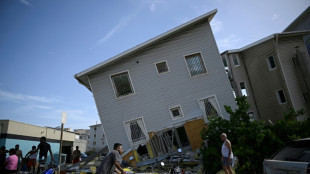
 South Africa vows firm response to anti-migrant violence

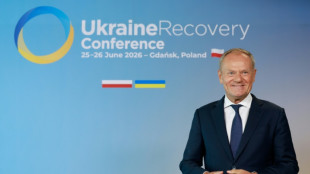
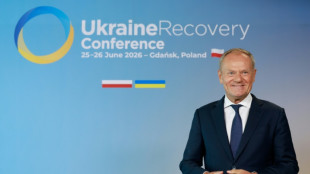 Poland, Ukraine hold key Gdansk conference without Zelensky

 Massive police deployment blocks Kenya protest anniversary

 Court orders TotalEnergies to account for clients' emissions

 Stocks rally on renewed AI optimism, oil price declines
 Venezuela twin quakes kill at least 164 with many trapped under rubble

 IOC votes to continue ski mountaineering for 2030 Games

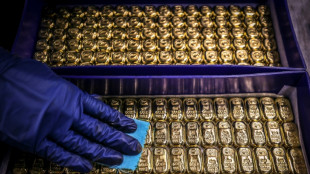 Stocks rally on AI optimism after Micron's blowout forecast
 Tunisia's short-lived World Cup experience lays bare deep dysfunctions

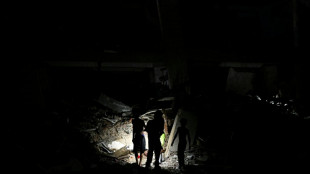 'Everything collapsed': Venezuela region hit hardest by quakes cries for help

 Kenya police turn out in force on protest anniversary

 Baking heatwave gives Europe no respite

 Trump climate pushback spurs courtroom battles, report says
 Kenya police in massive show of force on protest anniversary
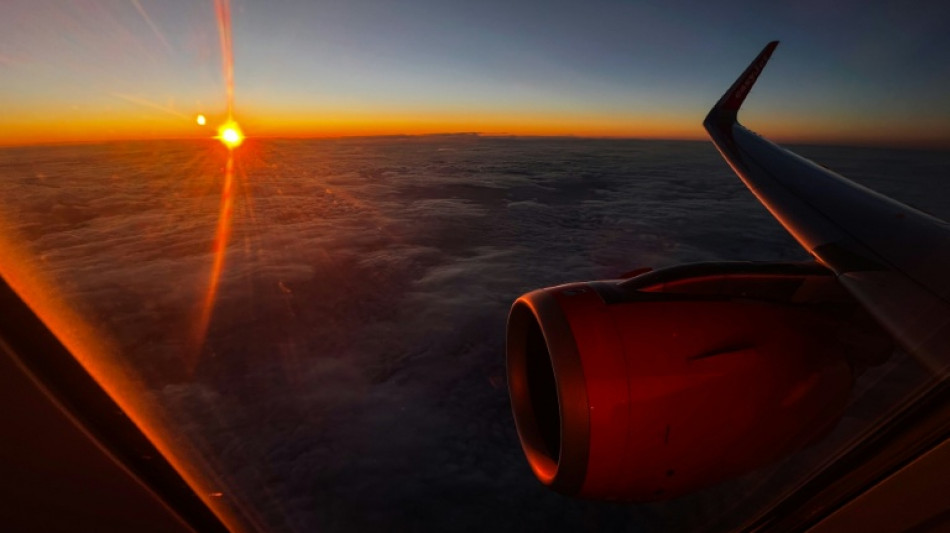
How big is the jet fuel threat to Europe's summer holidays? The EU says it is not facing shortages yet, but it is readying for the worst -- and weighing options including using US kerosene as a back-up.
The US-Israeli war with Iran and the closure of the Strait of Hormuz have sent aviation fuel prices soaring and raised the spectre of shortages during Europe's peak travel season.
On Friday, the EU Aviation Safety Agency (EASA) cleared the way for the use of Jet A, a US-produced aviation fuel that is not currently used in Europe except on return flights from the United States for technical reasons.
In new recommendations, EASA said: "A potential introduction of Jet A in Europe or in other parts of the world would not generate safety concerns provided that its introduction is properly managed."
US-produced Jet A has a higher freezing point from the Jet A‑1 fuel used elsewhere in the world -- making it less resistant to very low temperatures during long-haul flights.
The EASA conditioned its use, warning that its introduction into a system historically running on Jet A‑1 could see "operational" risks when both fuels are used.
At the same time, the European Commission outlined measures available to member states to optimise jet fuel use, including aircraft loading and the allocation of airport slots.
- What about Europe's jet fuel stocks? -
Brussels has repeatedly insisted the 27-nation EU is not yet facing jet fuel shortages.
"At this stage, this is more a problem of economics and fuel costs than availability," Matteo Mirolo, an aviation transport specialist, told AFP.
But "we do have to think about supply, especially as this will not be the last crisis we face."
Before the Middle East war, around 20 percent of the kerosene consumed in Europe transited through the Strait of Hormuz that has been effectively closed by the conflict.
As prices have surged, several airlines, particularly low-cost carriers, have announced flight cancellations.
If the crisis drags on, Brussels is preparing for possible "security of supply issues," EU energy commissioner Dan Jorgensen said Tuesday.
"We are not there yet, but it can happen," Jorgensen said.
The commission said last week it would establish a "fuel observatory" to track EU production, imports, exports and stock levels of transport fuels. It is expected to be up and running in coming days.
Until now, the EU has lacked a detailed overview of strategic fuel stocks across member states.
European legislation requires countries to hold oil stocks equivalent to 90 days of net imports and 61 days of domestic consumption, but does not distinguish between different products such as petrol, diesel or jet fuel.
A commission source said some countries, such as Ireland, are more at risk due to a lack of refining capacity, while others, including Finland, appear better prepared.
The same source also voiced concern some airlines may be using the crisis as an opportunity to drop unprofitable routes.
- What has the EU announced? -
The commission on Friday clarified the rules for governments and airlines on which existing tools can be deployed to ensure jet fuel is used as efficiently as possible and at the lowest possible cost.
It also eased rules restricting "tankering", the practice of aircraft carrying more fuel than necessary to avoid buying more expensive fuel at other airports.
And Brussels confirmed there would be temporary flexibility on airport slots to prevent airlines that exceptionally give up slots because of high fuel costs from being penalised in future slot allocations.
On the sensitive subject of passenger rights, the EU said airlines may be exempt from paying customers compensation if they can prove a cancelled fight was due to "extraordinary circumstances", like a local fuel shortage.
If the crisis drags on, the EU is considering coordinated action by member states to release emergency stocks and voluntarily share jet fuel themselves.
In the longer term, Brussels is also stressing the need to develop non‑fossil sustainable aviation fuels (SAF).
C.Bruderer--VB