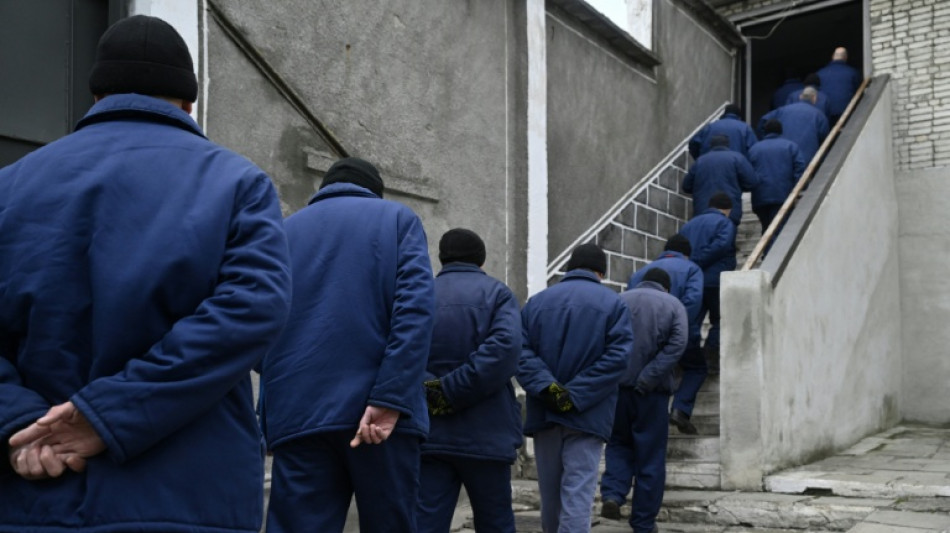
The foreign POWs stuck in Ukrainian prison limbo / Photo: © AFP

 Tech names drag down world stocks, oil dips on supply hopes
 Reports of Dupont inclusion in France squad 'bordering on annoying' says Galthie

 England coach McCullum denies rift with 'good friend' Stokes
 Taliban officials hold EU migration talks in Brussels
 Kenya halts US Ebola facility: health minister tells court
 Zelensky to skip key Ukraine conference in Poland over WWII row
 Europe heatwave closes schools, threatens health
 Germany eyes longer working lives in pension reform plan
 Iran says won't allow UN inspectors at bombed nuclear sites
 Banned Vondrousova insists she has 'never doped'
 UN chief urges AI firms to 'come clean' over environmental footprint

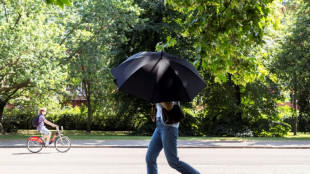 More records set to fall as deadly Europe heatwave drags on
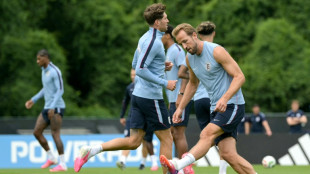 England, Ghana eye last 32 as Portugal look for lift-off
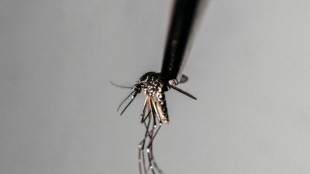 Sri Lanka troops to battle deadly dengue mosquitoes as cases rise
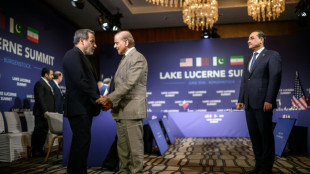
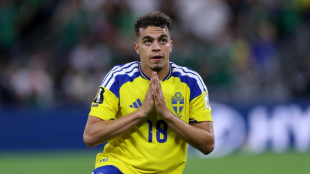 Diaspora World Cup champions diversity over division
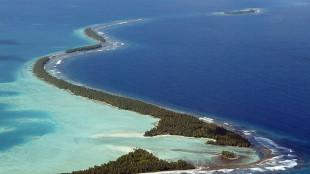 Australia withholds Pacific climate fund reports over risk of diplomatic 'damage'
 Indian startup head appointed as new WhatsApp boss

 Antetokounmpo joining Miami Heat in blockbuster: reports
 'Let's be realistic': Haaland cools Norway's World Cup expectations
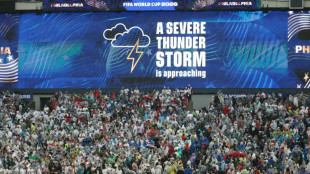 Lightning, downpour, a two-hour delay: bad weather hits the World Cup
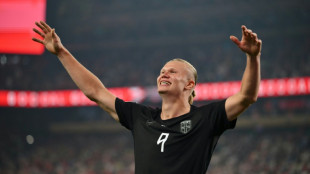 Two-goal Haaland fires Norway into World Cup last 32
 Last one the best one? How Messi keeps doing it at World Cup
 Savea 'embraces challenge' of leading All Blacks towards World Cup
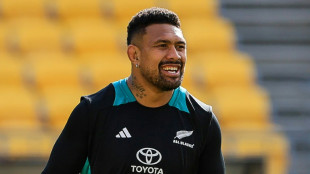 Savea 'embraces challlenge' of leading All Blacks towards World Cup
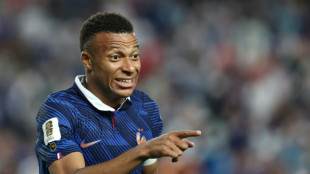 Mbappe scores twice as France beat Iraq at World Cup after two-hour storm delay
"Assemble!" someone bellowed in the prison corridor, cutting through the silence.
Murmurs began echoing off the white walls, and the stairwells filled with people from all over the world: Egyptians, Chinese, Cameroonians, Kenyans, an Italian -- all soldiers captured fighting for Russia, now held in a Ukrainian jail.
Some joined the Russian military in search of a better life or to escape their home countries, while others were persuaded by Russia's war aims. Some say they were tricked or forced into signing a military contract they didn't understand.
They now face a long wait for a prisoner exchange that may never come.
AFP spoke to several in a rare visit to a prison in western Ukraine holding captured foreign prisoners of war (POWs).
Ukrainian authorities requested the specific location of the facility be withheld. Inmates were not under the supervision of guards during the interviews, and AFP has changed their names.
The Geneva Conventions prevent the exposure of POWs to what it calls "public curiosity".
- 'I knew what I was getting into' -
New arrivals are handed a few items through a hatch: a shirt, a jacket, trousers and a coat, all blue. They also get a toothbrush, soap and towels.
AFP met Eric, from Togo, on the stairs while he was chatting -- in stuttering Russian -- with a Nigerian and Chinese inmate.
Five years ago, the aspiring doctor moved to Russia from Togo's capital Lome to train in neurosurgery.
It seemed perfect: a cheap university degree with the possibility of citizenship.
Then came the lure of the Russian military, offering a salary more than 10 times what he could get in Togo.
"I knew from the start what I was getting into," he told AFP.
He and his Nigerian cellmate were also persuaded by the Kremlin's arguments to fight Ukraine.
"It doesn't bother me to see Russia take places that belong to the Ukrainians," Eric said. "I don't really know the history between the two countries."
Russia has flooded French-speaking African social media with recruitment adverts, promising a $2,700 sign-up bonus and a $2,900 monthly salary, in addition to a Russian passport, according to the French Institute of International Relations (IFRI).
Since November, most foreign men aged 18 to 65 must register with the Russian military to obtain permanent residence or a passport.
Other citizens from several African countries have repeatedly told AFP they were forcibly recruited into Moscow's army, lured by deceptive civilian job offers.
"It's because they don't understand, they think they're being forced," Eric said, scoffing and blaming it on their poor command of Russian.
His Russian has improved in prison, where it is a lingua franca among the inmates.
Eric only told his father he had enlisted after he had been captured by Ukraine -- in a phone call from prison.
"He really cursed me out," he laughed.
"My mother? I don't even dare call her."
- 'I just wanted to work' -
In tight formation, the inmates waited for lunch, their hands behind their backs and heads bowed, portraits of famous Ukrainians lining the hallway on either side of them.
In the cafeteria, they sit in fours, eat, and rise in unison, chanting: "Thank you for the meal," in Ukrainian.
It is the only words that break the silence.
In the afternoon, some work making chairs for a small wage at the prison workshop.
Outside, AFP met Giuseppe, a 52-year-old Italian pizza chef.
He left his home in the Campania region eight years ago to live with his Russian wife in Siberia.
He said it was because prices were "skyrocketing" at home, but Italian media reported he fled the country to avoid going on trial for the alleged rape of a child.
After the invasion, he said he saw a television ad for a job cooking for the army near the front line.
Three months in, an artillery shell hit his kitchen. He lost four toes. Wounded, he surrendered to the Ukrainian soldiers that arrived.
One guard questioned his story to AFP, suggesting that claiming to be a cook was a tactic to try to avoid legal retribution.
Wediwela, a Sri Lankan, said he "just wanted to work" in Russia.
In the room he shared with his compatriots, he smiled easily and spoke halting English.
He showed AFP his diary -- a small notebook scrawled with pen.
In it, he condemned the destruction of the war, "devastation of people's lives", and "the ruin of children's futures."
But he blamed the West for starting the war, saying it was jealous of "Russia's rise".
"If my birth country had provided a good environment, I wouldn't have had to make a journey like this," the diary said.
- 'I was forced to sign' -
At exercise time, a crowd gathered in the prison yard -- young and old, slender and paunchy, all with shaved heads. Some smoked, a few were chatting.
Many stood silently.
At the windows, clean-shaven faces cast curious glances at the journalists in the compound.
Aziz was explaining how he was "forced to sign" a Russian military contract.
The Uzbek told AFP he was set up by Russian police, who accused him of drug trafficking.
"They told me either 18 years in prison or sign a contract. They said I would get a job as a driver," he murmured.
"I didn't even get any money," he said.
To avoid fighting, he stepped on a "petal" -- a nickname for an anti-personnel mine, thousands of which speckle the front.
"I heard that the wounded are sent straight back to Russia," he said.
But the one he stepped on "did not explode".
So he chose the second option: raising his arms to a Ukrainian drone, which led him to a place to surrender.
He looked around nervously, his voice trailing off as he spoke.
"I showed them (the Ukrainians) on a map where our (Russian) positions were."
- 'Kill me, I'm ready' -
Both sides have accused each other of mistreating prisoners of war since Russia invaded in 2022.
Human Rights Watch accused Russia in a report last December of systematically torturing Ukrainian captives. The UN says it has recorded dozens of executions of people, including Ukrainian prisoners of war, held in Russian captivity.
A recent Council of Europe report based on inspections said POWs in the Ukrainian facility were generally treated in accordance with the Geneva Conventions.
Diplomatic sources told AFP that conditions are typically better in POW facilities than regular Ukrainian prisons.
One detainee AFP spoke to in the Ukrainian facility reported being subjected to dehumanising racist abuse by several guards.
Ukraine denies mistreating prisoners.
Kyiv says about seven percent of soldiers its forces have captured are foreign citizens, coming from around 40 countries.
"Russia has no interest in exchanging them, nor do their countries of origin," and they may remain captive "for months or years," said Petro Yatsenko, a spokesperson for Ukraine's POW coordination centre.
Aziz is one of just a handful who have been offered the chance to be released in an exchange. He refused, fearful of reprisals.
The others place their hopes in a US plan to end the conflict, which would see both sides free captured soldiers in an "all-for-all" exchange.
Giuseppe wants to return to Russia if released.
So does Eric.
"When I told my father, he insulted me again," he laughed.
Wediwela plans to return to Sri Lanka and reunite with his wife and children.
But his hopes are fading.
"What's the point of living a life that already looks like death?" he wrote in his journal.
"Hang me, kill me. I'm ready."
W.Huber--VB