
US eases Venezuela sanctions after oil sector reforms / Photo: © AFP

 Petrol and diesel prices remain broadly steady across major Indian cities
 Reliance shares remain in focus after near-12% surge

 2026 Arizona Midterms: Key Races, Ballot Measures, and Voter Deadlines

 Coal India prepares possible $1 billion Mahanadi Coalfields listing

 Julia Stiles and Ezra Sosa Share Emotional Farewell After 'DWTS' Elimination
 US Buildings Threatened by Wildfires Could Triple by 2060

 Why Pregnancy Cost Estimates Fail: A Family’s $9,000 Surprise

 US Strikes Iranian Targets in Strait of Hormuz Ahead of Midterms
 Brodeur’s Overtime Goal Secures Bethlehem’s Second Consecutive Sectional Title
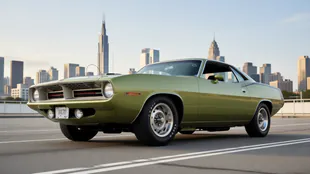 Rare 1970 Plymouth ‘Cuda 426 Hemi Listed for $400,000

 The Digital Burden: Why Instant Messaging Feels Like a Full-Time Job
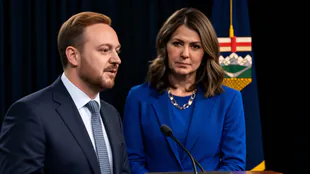 Alberta Tabled Controversial Riding Boundary Maps Amid Gerrymandering Accusations

 Hong Kong court set to sentence activist Joshua Wong in security case
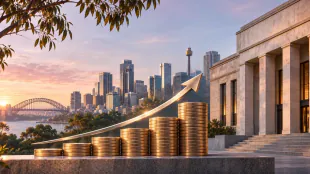 Australia raises benchmark rate to highest level in 18 years

 'The Remarried Empress' Cast Discusses Bringing Fantasy Royal Drama to Life
 Asian stocks retreat as AI worries outweigh steep oil-price drop

 Hamad International Airport stages emergency drills during WATAN 2026

 Global failure to punish attacks leaves journalists at continuing risk

 Researchers Warn 'Bookkeeping Trick' Masks Beef Industry's Methane Emissions

 Climate Change Intensified Atlantic Hurricanes, Study Finds
 Qatar solar expansion opens scope for technical performance gains

 OMP Extends UnisonIQ with Agent Library and Agent Studio: AI Agents that Produce Executable Supply Chain Plans
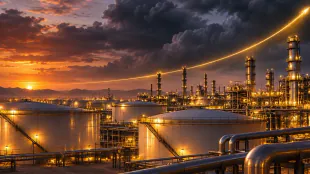
The United States on Thursday eased sanctions on Venezuela's oil industry, expanding the ability of US companies to operate in the country after the lifting of state controls on the sector.
Within an hour of Venezuelan MPs voting to open the oil industry to private investment, the US Treasury Department greenlit a range of activities by US energy companies.
The department issued a general license allowing transactions relating to "the lifting, exportation, reexportation, sale, resale, supply, storage, marketing, purchase, delivery, or transportation of Venezuelan-origin oil."
The activities authorized include the refining of oil, the license said.
Venezuela's acting president Delcy Rodriguez hailed the reform as a "historical leap."
"We are taking important steps," Rodriguez said after a call with US President Donald Trump.
- 'For the future' -
Trump pressured Caracas to open up its oil fields to US investors after overthrowing his socialist arch-foe Nicolas Maduro in a deadly US bombing raid on Caracas on January 3.
The US president backed Maduro's deputy Rodriguez to take over, on the proviso that she give Washington access to the world's largest proven oil reserves.
Rodriguez has appeared eager to comply with his demands, arguing that an influx of foreign capital is needed to revive the battered Venezuelan economy.
The reform adopted Thursday paves the way for the return of US energy majors, two decades after socialist firebrand Hugo Chavez seized foreign oil fields.
It modifies a law dating to 2006 that forced foreign investors to form joint ventures with state oil company PDVSA, which insisted on a majority stake.
Jorge Rodriguez, head of parliament and brother of Venezuela's new acting president, said the reform will help the country recover from years of living under US sanctions.
"Only good things will come after the suffering," he said as he gavelled through the law "for history, for the future."
Trump has said Washington is now "in charge" of Venezuela and Rodriguez will be "turning over" millions of barrels of oil to be sold at market price.
Rodriguez has already ploughed $300 million from a first US sale of Venezuelan crude into shoring up the country's struggling currency, the bolivar.
- Slow recovery -
Venezuela sits on about a fifth of the world's oil reserves.
It was once a major crude supplier to the United States, and multiple American firms operated in the country until 2007, when Chavez led a new wave of nationalizations.
The industry is undergoing a slow recovery after being walloped by years of underinvestment, corruption, mismanagement and six years of US sanctions.
It reached production of 1.2 million barrels per day in 2025, a milestone compared to the 300,000 per day extracted in 2020, but far from the 3 million achieved at the start of the century.
Trump, who has lavished praise on Rodriguez, has been pressing oil executives to invest in Venezuela.
Exxon Mobil and ConocoPhillips exited in 2007 after refusing to cede majority control to the state.
Chevron is the only US firm still operating in Venezuela, under a special sanctions exemption.
The revised law offers greater guarantees to private players, relinquishes state control of exploration, and lowers taxes and royalties.
"This obviously completely dismantles Hugo Chavez’s oil model," said oil analyst Francisco Monaldi, while pointing out that the state will retain some discretion over the issuing of contracts to private players.
- New fields -
The US Department of Energy has already unveiled a plan to develop Venezuela's oil industry and begun marketing Venezuelan crude.
Rodriguez says the reform will bring money for "new fields, to fields where there has never been investment, and to fields where there is no infrastructure."
The changes are cause for optimism for many in a country battling economic collapse and mass emigration.
"This hydrocarbons reform helps restore our dignity," Karina Rodriguez, a worker at PDVSA, said at a recent rally.
T.Suter--VB