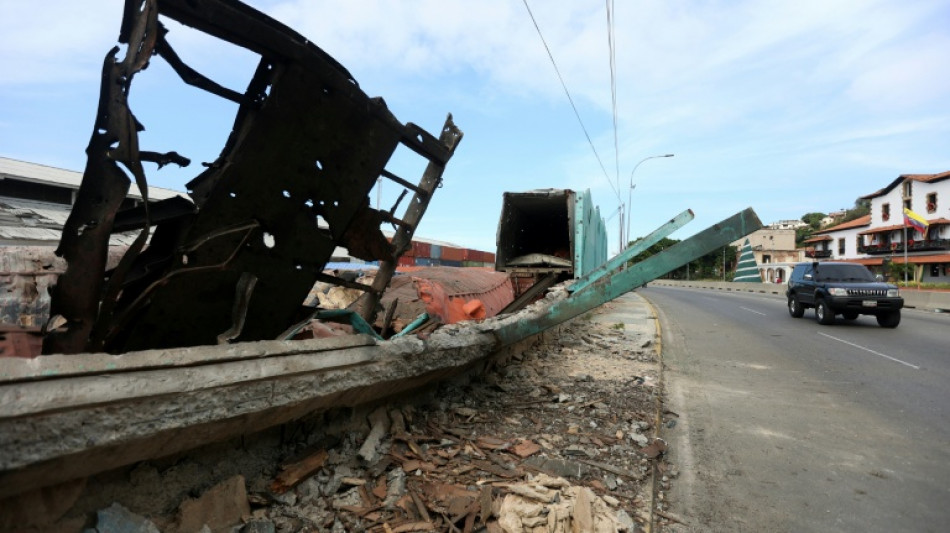
Shock, disbelief in bombed Venezuelan port / Photo: © AFP

 IOC votes to continue ski mountaineering for 2030 Games
 Stocks rally on AI optimism after Micron's blowout forecast

 Tunisia's short-lived World Cup experience lays bare deep dysfunctions
 'Everything collapsed': Venezuela region hit hardest by quakes cries for help

 Kenya police turn out in force on protest anniversary

 Baking heatwave gives Europe no respite

 Trump climate pushback spurs courtroom battles, report says

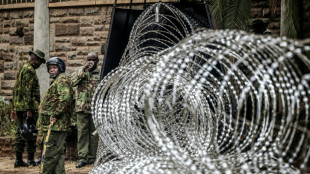 Kenya police in massive show of force on protest anniversary
 USA, Germany in control as Dutch eye World Cup knockouts
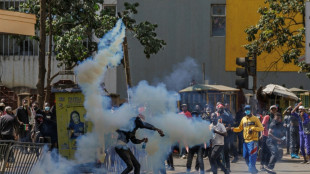 Violence feared as Kenya marks protest anniversary
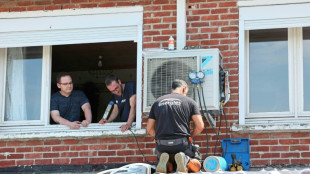
 Ukraine recovery summit opens, overshadowed by Kyiv-Warsaw row
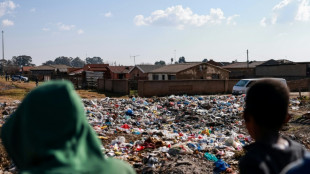
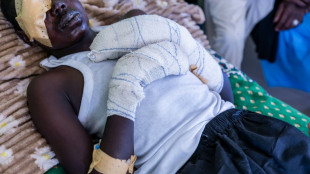 Chad sees influx of drone victims from Sudan
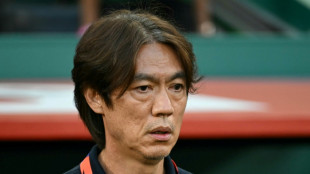
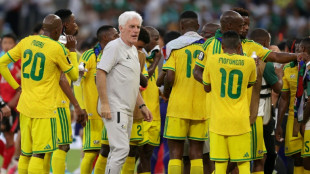 'We shut up big mouths,' says South Africa's World Cup coach Broos

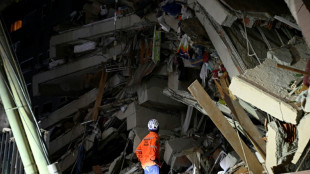 Mothers search, men weep amid debris of Venezuela quakes

 South Africa stun South Korea to make World Cup history
 Clarke fears Scotland 'probably going home' after Brazil World Cup loss

 Secret cameras, mics and AI reveal rare Cambodia wildlife
 Bulgaria's milk farmers falter in former yogurt empire

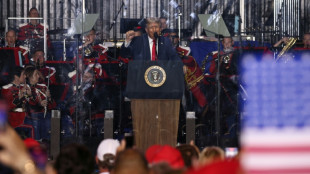 Trump opens US 250th birthday party with rally-style speech

 TotalEnergies awaits ruling in high-stakes climate trial
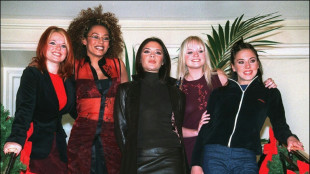 Spice Girls' debut 'Wannabe' turns 30, amid reunion talk

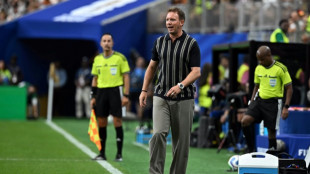 Nagelsmann feels Germany 'punished' for topping World Cup group

 Bosnia beat Qatar to reach World Cup knockout stages for first time
 Brazil advance at World Cup as Swiss, Canada reach last 32

 Morocco overcome historic Haiti goals to maintain World Cup momentum
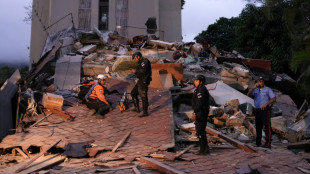
Twelve hours after the United States bombed Venezuela during an operation to oust President Nicolas Maduro, the smoke continued to seep from hangars in the port of La Guaira north of Caracas.
La Guaira was one of several areas in or near Caracas struck by jets during a stealth mission to snatch Maduro and whisk him out of the country.
Deformed shipping containers, their contents spilling onto the docks, bore testimony to the force of the strikes that US officials said were designed to clear the way for helicopters to swoop in on Maduro's hiding place.
There were no reports of casualties in the area.
Firefighters used an excavator to remove broken glass and gnarled metal strewn across the site as policemen with pump-action rifles patrolled on motorbike to prevent looting.
Curious onlookers filmed the scene on their smartphones, many still incredulous at the speed and magnitude of the day's events. In a little over an hour, US forces removed an authoritarian leader who had stubbornly clung to power through years of US sanctions and coup plots.
The blasts blew out the windows of public buildings on La Guaira's seafront and ripped the roofs off several houses.
"Psssh, first we saw the flash and then the explosion," said Alpidio Lovera, a 47-year-old resident, who ran to a hill with his pregnant wife and other residents to escape the strikes.
His sister Linda Unamuno, 39, burst into sobs as she recalled a nightmarish night.
"The blast smashed the entire roof of my house," she said.
Unamuno's first thoughts were that La Guaira was experiencing another natural disaster, 26 years ago after a landslide of biblical proportions swept away 10,000 people, many of them washed out to sea.
"I went out, that's when I saw what was happening. I saw the fire from the airstrikes. It was traumatizing," she sobbed, adding she "wished it on no-one."
Alirio Elista, a pensioner whose water tank was damaged in the strikes, said those who cheered the US intervention for bringing down the unpopular Maduro "don't know what they're talking about."
He said he believed news of Maduro's capture was "fake" -- despite US President Donald Trump having posted a picture of him blindfolded and handcuffed on a US warship.
Like many in Venezuela, the 68-year-old expressed nostalgia for the heyday of the Caribbean country between the 1950s and 1970s, when it was flush with oil riches.
In the past decade Maduro ran the economy into the ground, causing rampant inflation and widespread shortages of fuel, medicine and some basic foodstuffs.
Elista's pension of under half a dollar a week "doesn't pay for anything," he complained.
"We're hungry," he said.
But unlike Trump, he had few illusions of a quick fix for the country's ills.
The Republican leader outlined his vision Saturday of US oil companies pouring into Venezuela to repair crumbling infrastructure -- and reap the rewards with surging oil revenues.
Venezuela has the world's largest proven oil reserves but its output has tanked in recent years due to a US oil embargo and chronic underinvestment.
"We'll need at least 15 years to get back to where we were," Elista predicted.
K.Hofmann--VB