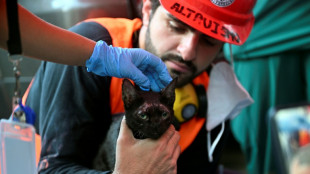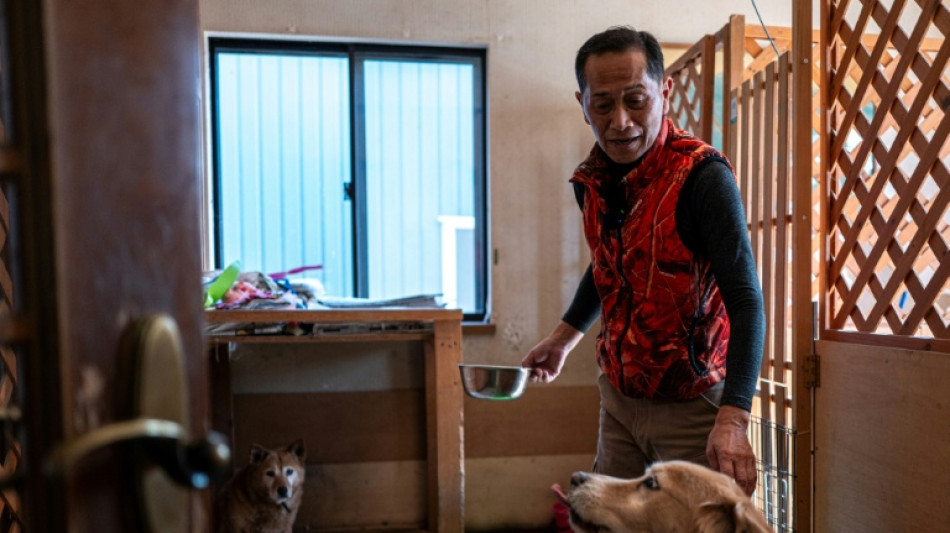
Former Fukushima worker devotes life to abandoned pets / Photo: © AFP

 Andy Burnham set to take over as new British PM
 Survivors warn of loopholes in Hong Kong sexual offence reforms

 Ferry capsizes off Guyana, authorities still searching for 66

 Spain win World Cup after Messi's Argentina fall flat

 Spain deserved to win World Cup: Argentina's Scaloni

 Mbappe retains World Cup Golden Boot crown

 Messi denied dream farewell as abject Argentina lose World Cup final

 Mbappe wins World Cup Golden Boot

 Spain beat Argentina to win World Cup

 Trump basks in World Cup final spotlight

 Madonna, Shakira, Bieber and The Muppets light up World Cup half-time show

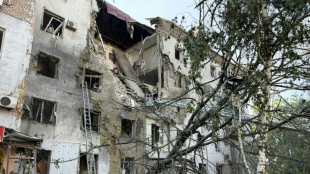 Ukraine blames Russia for deadly strike on Turkish cargo ship

 New Zealander Fox birdies last hole for 'surreal' British Open win

 Italy's Mazzoli wins US PGA Dominican Republic title

 Evenepoel wins Tour stage, Vingegaard crashes out after night-time control

 New Zealander Fox wins British Open on final hole

 Three-team NBA trade sends Dort to Hawks, Risacher to Mavs: reports

 Left knee issues will keep Ohtani off the mound for now
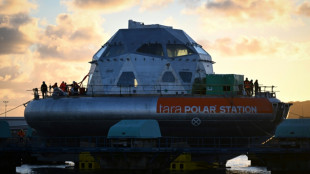 Floating igloo leaves France for polar exploration mission

 Young charges into British Open lead as Scheffler comes up short

 Olympic champ Evenepoel wins Tour de France 15th stage

 Kim leads British Open as Young charges into clubhouse lead

 Antonelli takes sixth win of the season with victory at Belgian Grand Prix

 Red and yellow sweep Madrid before World Cup final

 Russell out of Belgian GP after colliding with Hamilton on lap one

Not far from the Fukushima nuclear disaster site, former plant worker Toru Akama tends to dozens of pets abandoned after the catastrophe 15 years ago, work he sees as part of his quest for redemption.
Meows and barks break the silence of the countryside, once an evacuation zone, as the 63-year-old brings food to the animals left behind when their owners fled the triple disaster of March 11, 2011: earthquake, tsunami, and nuclear accident.
"It's because of this plant, where we worked for years, that these animals ended up like this," Akama told AFP at his home in northern Japan, surrounded by cats.
"They should have been able to go on living their lives as pets, but because of this accident they were abandoned.
"I felt it was my duty to protect them," he said.
Akama will never forget what he saw in the wake of the disaster, caused by Japan's strongest earthquake on record.
The tsunami it unleashed killed or left missing 18,500 people, and a wall of water crashed into the Fukushima nuclear plant on the northeast coast causing a devastating meltdown.
A day later, residents were ordered to evacuate and an unbroken line of cars formed on the national highway that runs past Akama's house.
"Then the dogs started wandering in search of something to eat -- least those that weren't chained up," he recalled.
"There was no one left, just my wife and me handing out food."
-'Outrage'-
Akama then began taking the animals into his home: first 40 dogs, then 50.
A decade and a half later, he has found adoptive families for more than 1,000 animals and continues to take in new pets who have been abandoned for other reasons.
He says he has "felt outrage" at the pet owners, who have sometimes left their animals in front of his house.
Some "are remorseful, but others simply do it because the animals have become a nuisance", he said.
In difficult moments, "of course... people's priority is human beings, but animals are living beings too, members of the family. It's as if people were abandoning their own children".
After the nuclear disaster, some residents had to flee by bus, and animals were not allowed aboard.
"There were elderly people in tears, asking if someone could take their pet," he recalled.
A month after the disaster Akama also had to leave, but he returned every day for his work at the plant and to look after his charges.
"Because they had known hunger, I absolutely wanted to give them a good life. Sometimes we went without ourselves in order to buy them quality food," he said.
-They 'watch over me'-
Over the past 15 years, Akama says he has spent almost all of the compensation he received after the plant accident on the animals, and he continues to cover most of their care and food costs.
"I don't have time to deal with collections or crowdfunding campaigns," he explained, although he has received some donations.
Akama's days are structured around cleaning the cages where new arrivals spend their first days, feeding, walking the dogs, and taking in new residents, leaving him little respite.
"It never stops. To be honest, I feel like my old job was easier," he said.
"But thanks to them I've never fallen ill: they force me to stay active. Maybe it's their way of thanking me, of watching over me in their own way."
At first, he kept the ashes of the deceased animals in his house, but he eventually had to build a grave outside to hold the remains of around thirty dogs and even more cats, beneath the inscription "rest in peace".
Akama's brother took over his subcontracting business for the plant, allowing him to devote himself full time to the 47 cats and 7 dogs with whom he currently shares his life.
"If I'm still able to keep going today, it's because I carry within me the distress these animals experienced. That's what keeps me going."
He would nevertheless like to find a successor.
"That's my biggest concern right now, because I too am starting to get older," he said.
"But I'd like to keep going like this until the end."
F.Wagner--VB