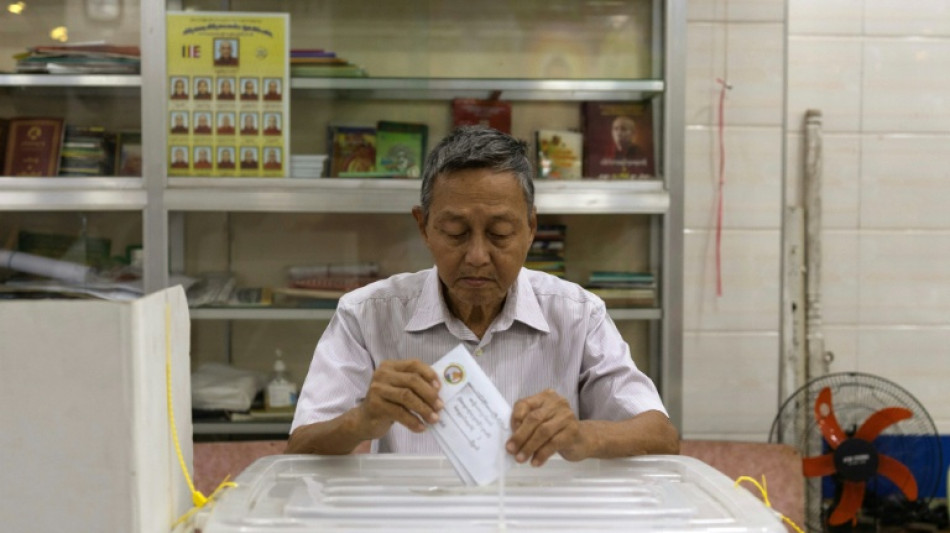
How Myanmar's junta-run vote works, and why it might not / Photo: © AFP/File

 US says wants deal with Iran, but not 'at any price'
 US Supreme Court hands win to Bayer in weedkiller litigation
 Apple raises prices for MacBooks and iPads, as costs soar over AI
 UK suffers as heat breaks new June record
 Binance to suspend crypto services in several EU countries

 Hamilton reveals neck injury that hampered debut year with Ferrari
 Noosha Aubel and Dietmar Woidke: How Potsdam Is Letting Down a Young Child with Profound Disabilities

 Greek families receive keepsakes of Holocaust victims

 Easyjet rejects latest takeover bid but leaves door ajar
 Macron hosts Meloni for Riviera talks after Trump rift
 US Supreme Court paves way for mass deportation of Haitians, Syrians
 South Africa vows firm response to anti-migrant violence
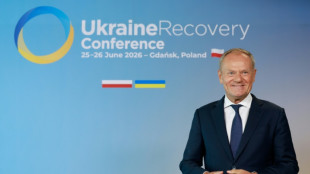
 Poland, Ukraine hold key Gdansk conference without Zelensky

 Massive police deployment blocks Kenya protest anniversary
 Court orders TotalEnergies to account for clients' emissions
 Stocks rally on renewed AI optimism, oil price declines
 Venezuela twin quakes kill at least 164 with many trapped under rubble
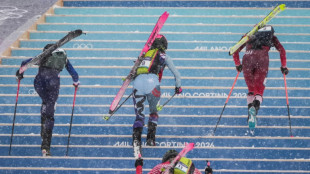 IOC votes to continue ski mountaineering for 2030 Games
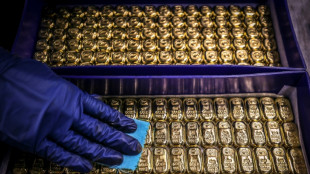 Stocks rally on AI optimism after Micron's blowout forecast
 Tunisia's short-lived World Cup experience lays bare deep dysfunctions
 'Everything collapsed': Venezuela region hit hardest by quakes cries for help

 Kenya police turn out in force on protest anniversary

 Baking heatwave gives Europe no respite

 Trump climate pushback spurs courtroom battles, report says

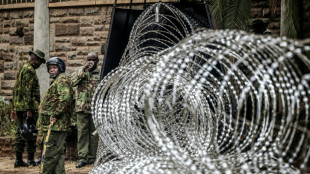 Kenya police in massive show of force on protest anniversary
Myanmar's junta presides over elections starting on Sunday, advertising the vote as a return to democratic normality five years after it mounted a coup that triggered civil war.
The vote has been widely slated as a charade to rebrand the rule of the military, which voided the results of the last elections in 2020, alleging massive voter fraud.
Here are some key questions surrounding the heavily restricted polls:
- Who is running? -
The pro-military Union Solidarity and Development Party is by far the biggest participant, providing more than a fifth of all candidates, according to the Asian Network for Free Elections (ANFREL).
Former democratic leader Aung San Suu Kyi and her massively popular National League for Democracy party, which won a landslide in the last vote, are not taking part.
After the 2021 coup, Suu Kyi was jailed on charges rights groups say were politically motivated.
According to the Assistance Association for Political Prisoners advocacy group, some 22,000 political prisoners are languishing in junta jails.
The National League for Democracy and most of the parties that took part in the 2020 vote have been dissolved. ANFREL says organisations that won 90 percent of seats then will not be on Sunday's ballot.
Polling is taking place in three phases spread over a month, using new electronic voting machines which do not allow write-in candidates or spoiled ballots.
- Who can and cannot vote? -
Myanmar's civil war has seen the military lose swathes of the country to rebel forces -- a mix of pro-democracy guerillas and ethnic minority armies which have long resisted central rule -- and the vote will not take place in the areas they control.
A military-run census last year admitted it could not collect data from an estimated 19 million of the country's 50 million-odd inhabitants, citing "security constraints".
Amid the conflict, authorities have cancelled voting in 65 of the 330 elected seats of the lower house -- nearly one in five of the total.
More than one million stateless Rohingya refugees, who fled a military crackdown beginning in 2017 and now live in exile in Bangladesh, will also have no say.
- How is a winner decided? -
Seats in parliament will be allocated under a combined first-past-the-post and proportional representation system which ANFREL says heavily favours larger parties.
The criteria to register as a nationwide party able to contest seats in multiple areas have been tightened, according to the Asian election watchdog, and only six of the 57 parties standing have qualified.
Results are expected in late January.
Regardless of the outcome of the vote, a military-drafted constitution dictates a quarter of parliamentary seats be reserved for the armed forces.
The lower house, upper house, and military members each elect a vice president from among their ranks, and the combined parliament votes on which of the three will be elevated to president.
- What happened in the run-up? -
ANFREL says the Union Election Commission overseeing the vote is an organ of the Myanmar military, rather than an independent body.
The head of the commission, Than Soe, was installed after Suu Kyi's government was toppled and is subject to an EU travel ban and sanctions for "undermining democracy" in Myanmar.
Social media sites including Facebook, Instagram and X have all been blocked since the coup, curtailing the spread of information.
The junta has introduced stark legislation punishing public protest or criticism of the poll with up to a decade behind bars, pursuing more than 200 people for prosecution under the new law.
Cases have been brought over private Facebook messages, flash mob protests scattering anti-election leaflets, and vandalism of candidate placards.
Myanmar has invited international monitors to witness the poll, but few countries have answered.
On Friday, state media reported a monitoring delegation had arrived from Belarus -- a country that has been ruled since 1994 by strongman President Alexander Lukashenko, who put down pro-democracy protests six years ago.
H.Kuenzler--VB