Volkswagen says to cut 50,000 jobs as profit slides / Photo: © AFP/File

 Williams boss hails Chadwick as F1 inspiration for women
 World No.1 Sinner delays return with China Open withdrawal
 South Lebanon children return to school destroyed by Israel strike

 Jewish group urges Berlin far-left vote winners to tackle antisemitism
 European stock markets climb as oil prices drop

 Trump accuser E. Jean Carroll finally has her damages
 Germany's Havertz, Musiala ruled out of Greece match with injury
 Ireland's Gaza stance spills from Eurovision into football
 Welcome aboard the Costa Serena, the Asian Games floating hotel
 Asian markets mixed after recent oil surge

 Cash for nature protection: hotelier's offer to Principe islanders
 US miner KoBold bets on AI to gain edge in DR Congo mineral hunt

 Internet disrupted in Ethiopia as conflict rages
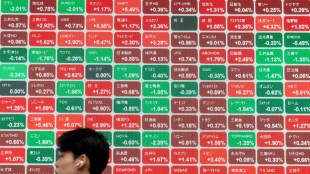 Asian markets mixed after oil gains

 'Genius' Ohashi bids for third Asian Games gold after world record

 India's 'Tree Father' plants for a greener future
 Hopping mad: New health warning stirs up Belgian brewers
 Canadian capital to rename 'Trump Ave'

 Pope heads to France on first state visit in 18 years
 Bacteria suspected in deaths of hundreds of baby whales off Argentina
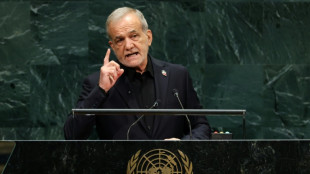 US 'must choose' whether to end war: Iran president to Fox News

 UN approves resolution on dealing with rising sea levels

 Yalcouye makes dream debut as Ivory Coast beat Ghana in AFCON qualifier

 Chicago's White Sox and Cubs book MLB playoff berths

 Last-gasp Gakpo strike snatches Dutch draw to sour Klopp debut
Germany's automotive giant Volkswagen said Tuesday it would cut 50,000 jobs at home by 2030 as its profit slid to its lowest level in almost a decade.
The news comes as the 10-brand group seeks to weather stiff Chinese competition, especially in electric vehicles, US tariffs and high costs.
"In total, around 50,000 jobs are due to be cut by 2030 across the Volkswagen Group in Germany," Volkswagen CEO Oliver Blume said in a letter to shareholders in the firm's annual report.
The group had already struck a deal with unions at the end of 2024 to cut 35,000 jobs by 2030 at its namesake brand as part of wider plans to save 15 billion euros a year.
The additional cuts would come from premium brands Audi and Porsche as well as Volkswagen's software subsidiary Cariad, Blume added.
Even before US President Donald Trump slapped tariffs on non-American carmakers last year, Volkswagen was facing the triple whammy of stagnant demand in Europe, the cost of investing in EVs despite patchy demand, and cratering sales in China.
Volkswagen, long the biggest player in the Chinese market, the world's largest, is struggling with fierce competition from local rivals and sales there have slipped behind those of BYD and Geely.
Blume told a press conference that Chinese carmakers eyeing up the European market to export their way out of a fierce price war at home would raise the pressure on Volkswagen.
"We need to prepare ourselves for the fact that we will come under price pressure here," he said. "This is a big incentive for us to work intensively on the cost side."
- 'We have to fight back' -
Earnings after tax fell about 44 percent last year, Volkswagen said, with US tariffs, Chinese competition and a costly revamp of its sportscar-maker Porsche all hitting performance.
Earnings at 6.9 billion euros ($8 billion) were at their lowest since 2016, when the group took billions in one-off charges due to recalls and legal troubles over cheating on diesel emissions tests.
Warning that urgent action was needed to get the group back on track, Blume said the German car industry was going through a decisive break rather than a rough patch.
"The business model that has sustained us for decades in the Volkswagen Group, but this also applies to the entire German automotive industry and even to Germany as a business location, no longer works in its current form," he said.
"We simply have to compare ourselves with the competition, which in Europe will now also increasingly come from China," he added. "We have to fight back."
For 2026, Volkswagen said it expected a core profit margin of between 4 and 5.5 percent -- potentially lower still than the 4.6 percent it achieved this year, adjusted for one-off expenses related to restructuring and the costs of moving back to petrol cars at Porsche.
The group warned last September of a bumper 5.1 billion-euro hit for the year after Porsche cut its medium-term profit target and said it would carry on selling petrol vehicles for longer than previously planned in the face of tepid demand for its EVs.
Traditional carmakers are in a tricky spot when it comes to electric cars, with each vehicle sold usually less profitable than the equivalent petrol or diesel model.
Strict European Union environmental rules had nevertheless forced Porsche into expanding its electric offering, Blume said.
"If they hadn't done so, the company would no longer be viable due to CO2 regulations," he said. "The decisions made were right ones."
Asked about the possible impact of the war in the Middle East, Blume said it would be limited since a "low single-digit percentage" of the group's cars were sold there.
Volkswagen had nevertheless recently lost sales in Ukraine, Russia, the United States and China, he added.
"It's another thing to think about," he said. "It obviously all adds up."
G.Haefliger--VB