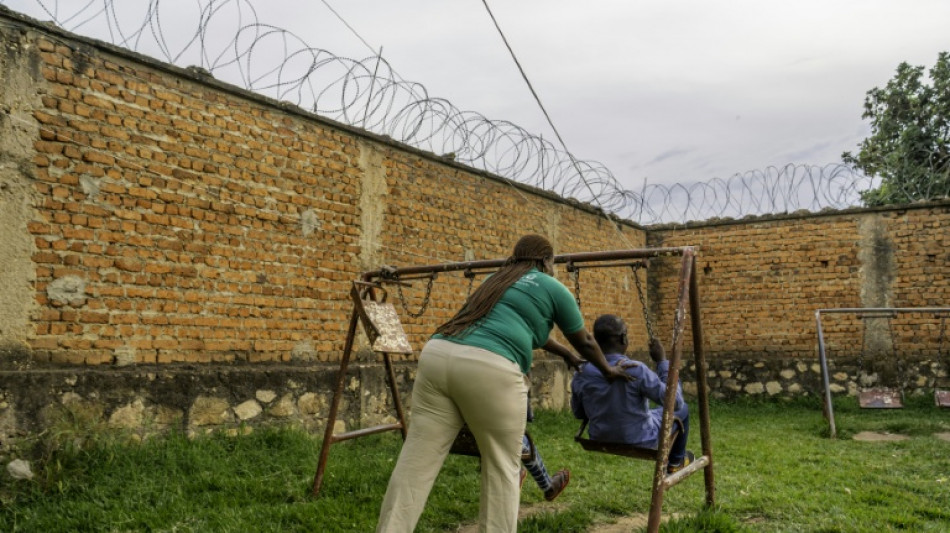
Boys recount 'torment' at hands of armed rebels in DR Congo / Photo: © AFP

 US says wants deal with Iran, but not 'at any price'
 US Supreme Court hands win to Bayer in weedkiller litigation
 Apple raises prices for MacBooks and iPads, as costs soar over AI
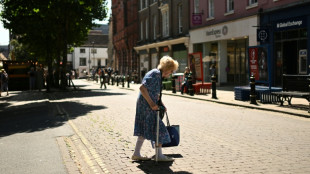
 UK suffers as heat breaks new June record

 Binance to suspend crypto services in several EU countries

 Hamilton reveals neck injury that hampered debut year with Ferrari
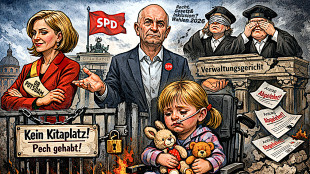 Noosha Aubel and Dietmar Woidke: How Potsdam Is Letting Down a Young Child with Profound Disabilities

 Greek families receive keepsakes of Holocaust victims

 Easyjet rejects latest takeover bid but leaves door ajar
 Macron hosts Meloni for Riviera talks after Trump rift

 US Supreme Court paves way for mass deportation of Haitians, Syrians
 South Africa vows firm response to anti-migrant violence
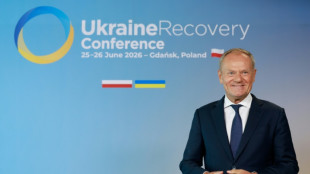 Poland, Ukraine hold key Gdansk conference without Zelensky
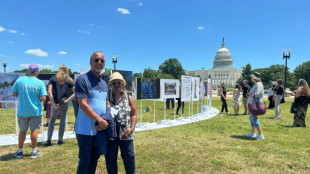
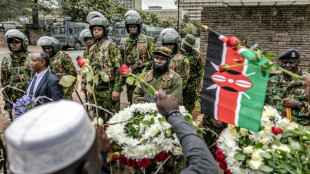 Massive police deployment blocks Kenya protest anniversary

 Court orders TotalEnergies to account for clients' emissions
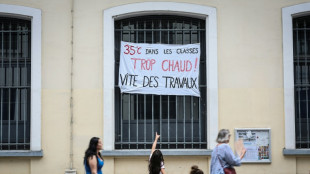
 Stocks rally on renewed AI optimism, oil price declines

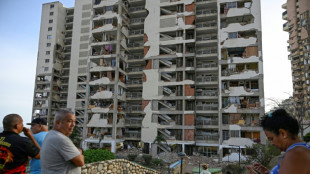 Venezuela twin quakes kill at least 164 with many trapped under rubble
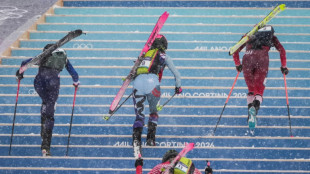 IOC votes to continue ski mountaineering for 2030 Games
 Stocks rally on AI optimism after Micron's blowout forecast
 Tunisia's short-lived World Cup experience lays bare deep dysfunctions
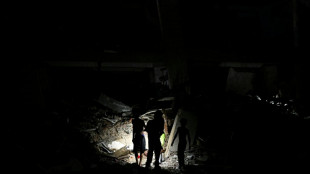 'Everything collapsed': Venezuela region hit hardest by quakes cries for help

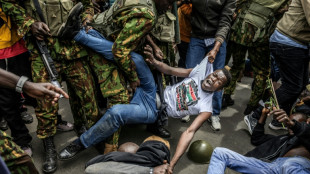 Kenya police turn out in force on protest anniversary

 Baking heatwave gives Europe no respite

 Trump climate pushback spurs courtroom battles, report says

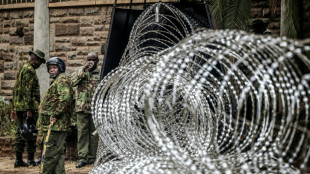 Kenya police in massive show of force on protest anniversary
Forcibly recruited into a rebel militia affiliated with the Islamic State group, two boys revealed the "torment" of living in its camps as members committed massacres in the Democratic Republic of Congo's northeast.
The two minors freed from the Allied Democratic Forces (ADF) gave AFP an unprecedented account of the shadowy group, notorious for its extreme brutality.
Paluku, a frail 12-year-old, spent two months with the ADF after rebels killed his mother during an attack on his village in eastern North Kivu province. His brother and sister were also captured.
Edouard, 17, spent a gruelling four years with the ADF -- formed by Ugandan rebels who took refuge in DRC -- after he was kidnapped at age 12.
The two boys, using pseudonyms, spoke on condition of anonymity at a centre specialising in the care of minors recruited by armed groups in the region, whose location AFP has chosen not to disclose to avoid potential reprisals.
Their accounts were confirmed by health and security sources.
Round-faced Edouard, a fast-talker, did not mince his words in describing his years of "torment" within the ADF.
"We suffered terribly," he said.
After their capture, Edouard and Paluku were sent to ADF bases hidden in the dense forest of northeast DRC where the elusive rebels avoid patrols by the Congolese army and Ugandan forces deployed there since 2021.
The bases consist of simple tents and tarps, easy to move in the event of an attack.
Most occupants are women and children, according to security sources, contributing to the group's operations -- but also serving as human shields.
New recruits are swiftly forced to convert to Islam and learn Arabic, but also English and Swahili, Edouard said.
"I was also trained in medicine to treat the wounded, and we learned how to handle weapons and clean them," he said.
Paluku said he underwent similar training, as well as learning how to "steal food, clothing and medicine to bring back to the ADF camp".
- Floggings -
Children play a central role in supplying the group, security sources said. Those who fail to bring back loot face severe punishment.
The wives of the ADF commanders, some of whom are particularly influential, also exercise power over the young recruits.
When the fighters go out on "operations", the youngest among them like Paluku, were "supposed to bring something back for the chief's wife," he said, like soap, cooking oil or fabric.
"To get it we have to loot people's belongings, and if a chief's wife accuses you to her husband of not bringing back what she asked for, she can demand that you be killed," he said.
Edouard and Paluku said they were subjected to incessant corporal punishment.
Girls and boys were whipped or thrown into pits for several weeks over the slightest misbehaviour.
"I was punished with lashes because I refused to go kill people," Paluku said with a long stare.
Edouard took part in combat with the group at least three times against the Congolese army or local militias.
"They beat us mostly when we lost our weapons and ammunition, claiming we had wasted them for nothing or lost them on the front," he explained.
Faced with such an accusation, Edouard said a chief ordered that he be whipped.
"I fell ill because of those lashes. I told the chief outright I was no longer able to go fight on the front, I begged him to send others who were capable, but that made him even more angry, and I was whipped once again," he said.
- Trauma -
About 10 children freed from the ADF arrive on average each month at the reception centre in the troubled northeast Ituri province.
"These children have suffered psychological trauma and torture, and when they arrive here, most are aggressive," said Madeleine, a psychologist at the centre.
After a few weeks spent around other children and staff, their aggression fades, she said.
But there are other scars to contend with.
Edouard became addicted to drugs administered by the rebels after he was wounded in combat.
Suffering from speech disorders, he talks constantly and sometimes incoherently, disturbing other residents, Madeleine said.
After a year at the centre receiving ongoing treatment, Edouard recounted the horrors of his experience with a shy smile and a lively, excitable gaze.
Paluku meanwhile had a darker expression, recalling his sister who remains a hostage.
"She has become the wife of one of the ADF chiefs," he said.
W.Huber--VB