
German economy in 'deepest crisis' of post-war era: industry group / Photo: © AFP

 Caudullo challenges Montpellier to be 'watertight' against Dupont threat

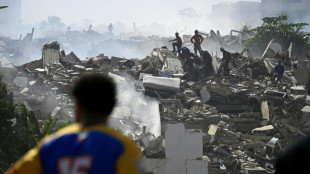
 Venezuela earthquakes toll soars to 589 amid desperate rescue effort

 Stokes strikes on England return before Duckett runs riot against New Zealand

 UK hottest June day record broken for third day in a row: Met Office

 Tech jitters send stocks lower, oil prices fall

 Stokes strikes on England return as New Zealand all out for 438
 Caudullo challenges Montpellier to be 'watertight' against Dupont
 Osaka sinks Wang to reach first grass court final
 UN demands probes into US ICE custody deaths
 Stokes strikes as New Zealand make England feel the heat
 Lyles enjoying freedom to focus on speed and stuff off the track
 How the British royal family is funded, and where the money goes
 Russia-annexed Crimea declares 'emergency' amid Ukraine strikes
 Stocks slide on renewed tech slump, oil prices fall
 EU hits France's Sanofi with flu vaccine antitrust probe
 Europe heatwave swamps hospitals, halts parties

 MEXC Reports 142% Volume Surge for MU Futures Following Record Micron Earnings Beat
 Serena Williams to face Joint in Wimbledon return after four-year absence

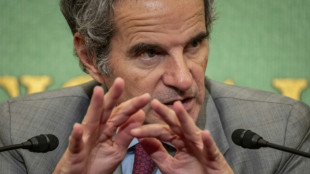 UN says Iran nuclear pledge needs 'very strong' verification
 New Zealand internal report warns of Chinese military forays in Pacific
 Mbappe v Haaland as France face Norway in World Cup group decider

 European economies suffer from heatwave

 Hospitals overwhelmed as Europe heatwave shifts east

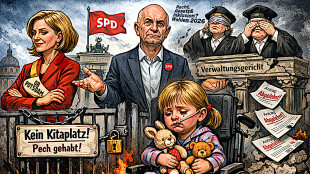
 努莎·奧貝爾與迪特馬爾·沃伊德克 波茨坦如何辜負一名重度殘障幼兒
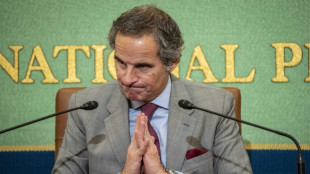 'Very strong' nuclear verification needed in Iran after war: IAEA head
Germany's economy is suffering its "deepest crisis" since the aftermath of World War II, an industry group warned Tuesday, calling on Chancellor Friedrich Merz's government to take urgent action to spark a revival.
Europe's biggest economy "is in free fall, but the federal government is not responding decisively enough," said Peter Leibinger, president of the Federation of German Industries (BDI).
Germany is facing a perfect storm: high energy costs burdening manufacturers, weak demand for its exports in key markets, the emergence of China as an industrial rival and the US tariff onslaught.
It has suffered two years of recession and is forecast to eke out just meagre growth in 2025.
The conservative Merz, who took power in May, has pledged to revive the eurozone's traditional powerhouse, including through a public spending blitz on defence and infrastructure.
But industry leaders are increasingly voicing frustration that the efforts are moving too slowly and are insufficient to tackle a host of deep-rooted problems, from chronic labour shortages to heavy bureaucratic burdens.
"The economy is experiencing its deepest crisis since the founding of the federal republic, yet the federal government is not responding with sufficient determination," said Leibinger.
"Germany now needs an economic policy turnaround with clear priorities for competitiveness and growth," he added, warning that "decisive structural reforms" were urgently needed to arrest the decline.
- 'Not a speedboat' -
In its latest report released Tuesday, the BDI -- an umbrella association for many industry federations -- forecast that German factory output will fall two percent in 2025, which would mark its fourth consecutive year of contraction.
Heavy industry, from car-making to producing factory equipment and steel, remains crucial to the German economy. The country is home to more than 100,000 manufacturing firms of varying sizes, employing over eight million people, according to the BDI.
The group's criticism chimed with concerns expressed elsewhere.
Last week the International Monetary Fund (IMF) said that Merz's planned spending bonanza alone won't be enough to guarantee a sustained revival of the economy, and called for the government to enact "pro-growth" reforms as well.
There is some light on the horizon, however. The economy is expected to start picking up speed next year with the government forecasting 1.3 percent growth.
Merz last week defended his government's actions, pleading for more time to get the economy back on track.
"Germany is not a speedboat, Germany is a large ship," he told an event hosted by the BDA employers' association.
"A tanker of this size cannot be turned around in a matter of days, like a speedboat turning 180 degrees in the other direction. It takes time."
D.Schlegel--VB