Shootings 'unjustified' in Bloody Sunday killings, Belfast court hears
/ Photo: © AFP

 Serena set for much-anticipated Wimbledon return
 Ex-NBA stars Malik Beasley, Ed Davis indicted in betting case
 EU, China bet on talks to avoid trade war
 Pyjamas and bets: Brazil YouTube channel reshapes World Cup viewing
 Queueing, strawberries and all white: it must be Wimbledon
 Stokes backs Brook '100 percent' to succeed him as England Test captain
 Ebola outbreak in DR Congo spreads to fourth province
 Czech Republic coach Koubek quits after World Cup flop
 French parliament adopts bill to regulate fast fashion

 Supreme Court boosts Trump's power to fire officials, but protects Fed
 Three things we learned from the Austrian F1 Grand Prix
 Burnham pledges radical devolution of UK govt if PM
 Polish businesses press Warsaw, Kyiv to end political rift
 Hovland beats Scheffler in playoff for PGA Travelers title
 New Zealand thrash England for series win as Stokes bows out
 Trump says Iran meeting to take place in Qatar
 Spain raises 2026 growth forecast despite Mideast war turmoil
 Kenya-US rare earths deal challenged in court over secrecy
 Santner strikes as New Zealand eye England series win
 Broos may change decision to quit as South Africa coach
 French swim star Marchand suffers injury scare before Europeans
 France skipper Dupont to miss Nations Championship
 Springbok milestones loom for Willemse and Kolbe against England
 Tennis players end Wimbledon prize-money protest
 Pogacar rides with Del Toro and Yates in quest for fifth Tour de France
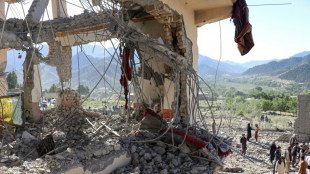
The shooting of unarmed civilians in the 1972 Bloody Sunday massacre was "unjustified,"a prosecutor told a Belfast court on Monday as the first-ever trial of a former British soldier accused of the killings opened.
The ex-paratrooper, identified only as Soldier F, has denied two charges of murder and five of attempted murder arising from the killings, one of the most significant events in the three-decade "Troubles" that plagued Northern Ireland.
"The prosecution case is that that shooting was unjustified," barrister Louis Mably told Belfast Crown Court.
"The civilians ... did not pose a threat to the soldiers and nor could the soldiers have believed that they did," he said.
Soldier F is charged with murdering civilians, James Wray and William McKinney, and attempting to murder five others during the crackdown on a civil rights protest in Londonderry -- also known as Derry.
British troops opened fire on protesters in the majority Catholic Bogside area of the city, on January 30, 1972, killing 13 people.
A 14th victim later died of his wounds.
The shooting was "unnecessary and it was gratuitous," Mably told the court.
"The civilians were unarmed and they were simply shot as they ran away or, in one case, as he was simply in the square, either taking shelter or trying to evade the soldiers."
The case is deeply divisive in Northern Ireland, where the decades of sectarian violence that began in the 1960s still cast a long shadow.
A judge granted soldier F's request to remain anonymous throughout the proceedings.
He appeared Monday hidden behind heavy blue curtains for the trial, which is due to last several weeks.
- 'Momentous day' -
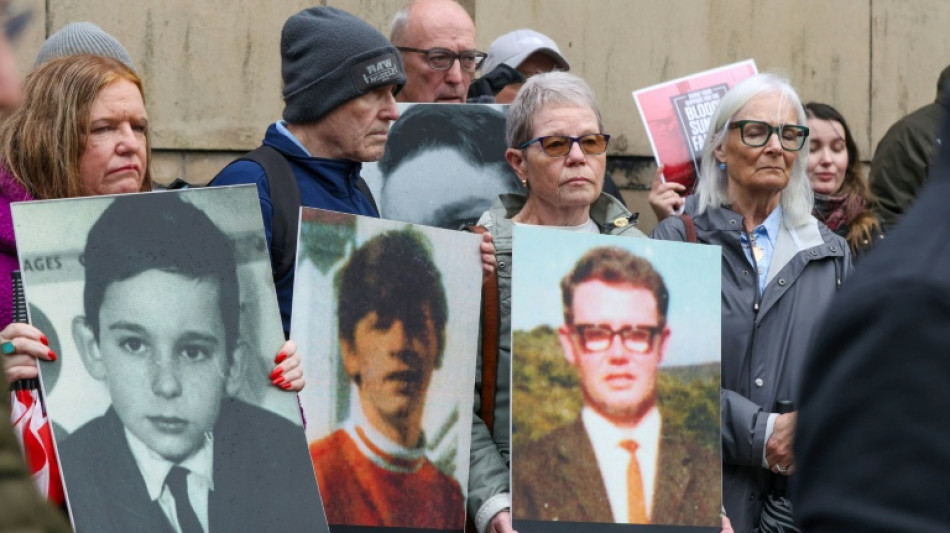
Relatives of the victims gathered outside the court, many bearing posters of those killed.
John McKinney, brother of William McKinney, said it was "a momentous day in our battle to secure justice for our loved ones".
The families were placing their "trust in the hands of the public prosecution service", he added.
Bloody Sunday helped galvanise support for the Provisional IRA, the main paramilitary organisation fighting for a united Ireland.
It was one of the bloodiest incidents in the conflict known as the Troubles, during which around 3,500 people were killed.
It largely ended with the 1998 peace accords.
Northern Ireland Veterans Commissioner David Johnstone told local media former soldiers were now being subjected to "wholesale demonisation".
There are "fundamental questions" about the efficacy of the prosecution case, said Jim Allister, leader of one of the region's main unionist parties.
Northern Irish prosecutors first recommended Soldier F stand trial in 2019.
An inquiry in 1972 after the killings cleared the soldiers of culpability, but was widely seen by Catholics as a whitewash.
That probe, the Widgery Tribunal, closed off prosecutions, and only after the 1998 peace accords was a new investigation, known as the Saville Inquiry, opened.
- Apology -
That 12-year public inquiry, the largest investigation in UK legal history, concluded in 2010 that British paratroopers had lost control and that none of the victims had posed a threat.
The probe prompted then prime minister David Cameron to issue a formal apology for the killings, calling them "unjustified and unjustifiable".
Northern Irish police then began a murder investigation and submitted their files to prosecutors in 2016.
The case against Soldier F has faced multiple delays, and bringing other ex-soldiers to trial is widely seen as unlikely given the passage of time.
UK legislation passed under the Conservatives in 2023, the Legacy Act, also effectively ended most Troubles-era prosecutions.
Northern Ireland Secretary Hilary Benn formally started the process to repeal the act in December.
Irish Prime Minister Micheal Martin said Friday that Dublin and London were "very close" to agreeing a new framework on Troubles legacy issues, after talks with his British counterpart Keir Starmer.
The British government should "listen to the voices of families and the victims by repealing their abhorrent Legacy Act," Padraig Delargy, the assembly representative for the constituency that includes Londonderry, told AFP.
T.Suter--VB