
Bolivia candidate vows to scrap China, Russia lithium deals / Photo: © AFP

 British buyers pay substantial premiums for period-home appearance

 Thomas Markle released to house arrest after child-abuse-image charge

 Dawn of War 4 developers chose Adeptus Mechanicus for tactical variety

 Italy face unbeaten South Africa in Turin Nations Championship match

 ChatGPT interactive interface feature tested across six custom tools

 Freshways milk-price cut deepens pressure on UK dairy farms

 Labour and National remain virtually tied as New Zealand vote count advances

 The Good Daughter adapts Karin Slaughter thriller with Rose Byrne and Meghann Fahy

 Heavy-lift drone evacuates wounded Ukrainian soldier from frontline kill zone

 Morrison says West Brom recovered after pressure from successive derby losses

 Britain considers 2027 state visit for Ukraine’s Zelensky

 Arizona Democrats Secure Historic Trifecta with New Legislative Leadership

 Carney Welcomes U.S. Trade Reversal After Democratic Midterm Victory

 Armenian FM Discusses EU Accountability for Palestinian Rights in Madrid

 Trump and Vance Pursue Secret Diplomacy with Iran Amid Military Pressure

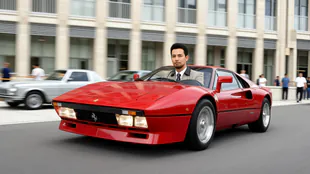 Classic Car Values Surge: De Tomaso Vallelunga Leads 190% Gain
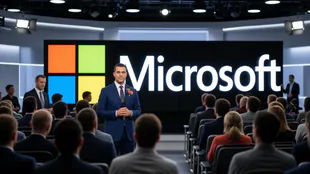 Microsoft Ends Oracle AI Computing Rental Deal Amid Cloud Strategy Shift
Bolivian right-wing presidential hopeful Jorge Quiroga on Monday vowed to scrap billion-dollar lithium extraction deals struck by the outgoing government with Russia and China if elected leader.
"We don't recognize (outgoing President Luis) Arce's contracts... Let's stop them, they won't be approved," the US-educated Quiroga, who has vowed a major shake-up in Bolivia's alliances if elected president in October, told AFP in an interview.
Quiroga came second in the first round of Bolivia's August 17 presidential election, behind centre-right senator Rodrigo Paz.
The Movement Towards Socialism (MAS), in power since 2006, suffered a historic rout, with voters punishing the party founded by iconic ex-president Evo Morales over a deep economic crisis.
Quiroga and Paz now face a second-round duel for the presidency on October 19.
The fate of Bolivia's lithium deposits -- among the world's largest of the metal used in smartphone and electric vehicle batteries -- is a hot topic in the campaign.
The so-called Lithium Triangle, spanning parts of Bolivia, Chile and Argentina, is home to 60 percent of the world's lithium reserves, according to the US Geological Survey.
But in the case of Bolivia, nearly all of it is still trapped underground, at an altitude of 3,600 meters (12,000 feet) in the vast Salar de Uyuni salt flat, one of the country's top tourist attractions.
In 2023 and 2024 Arce's government signed deals with Russia's Uranium One and China's CBC, a subsidiary of battery manufacturer CATL, to extract lithium from the salt pan.
Worth a combined $2 billion, the deals were intended to help Bolivia catch up in the race to mine the mineral.
But they were blocked in Congress by infighting in the ruling party.
Indigenous groups meanwhile went to court to have them scrapped on environmental grounds.
Quiroga claimed Uranium One and CATL were selected "behind the back" of local authorities and said he would propose a new law on mineral deposits that precluded "favoritism."
- From gas to lithium -
Bolivia enjoyed over a decade of strong growth under Morales (2006-2019), who nationalized the gas sector and ploughed the proceeds into anti-poverty programs.
But underinvestment in exploration caused gas revenues to implode, eroding the government's foreign currency reserves and leading to acute shortages of imported fuel and other basics.
Inflation rose to 24.8 percent year-on-year in July, its highest level since at least 2008, causing voters to desert the left in droves.
Quiroga, who served briefly as president in the early 2000s, has pledged a radical overhaul of Bolivia's big-state economic model and international alliances if elected.
The 65-year-old has said he would break off ties with authoritarian leftist governments in Venezuela, Cuba and Nicaragua, pursue free trade deals with Europe and Asia and slash public spending.
F.Mueller--VB