-
 Fear and anger brew inside Meta amid AI frenzy
-
Asian stocks fluctuate as traders eye crucial US jobs data
-
 After 250 years, the 'American dream' is tarnished but alive
-
Madison Square Garden: from Nazis to Knicks, and now... Taylor's wedding?
-
 'I'm going to stay calm': 48 hours under the rubble in Venezuela
-
'Love it': Wimbledon's military stewards tradition turns 80
-
 Breakaway Catholic sect defies Vatican again by ordaining bishops
-
Venezuela quake survivors cherish kindness of strangers
-
 Mexico v Ecuador World Cup game delayed by one hour: FIFA
-
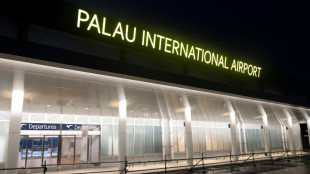
US deports first migrant to Pacific nation Palau
-
 Talks in Qatar after US-Iran deal: What we know
-
Potter admits Sweden couldn't live with France in World Cup defeat
-
 Tuchel refuses to dampen England World Cup expectations
-
US coach dismisses European jinx ahead of Bosnia clash
-
 Mbappe hails unity as France rally around Deschamps at World Cup
-
World Bank to phase out lending to China by 2031
-
 Mbappe fires France into World Cup last 16, Norway advance
-
Mbappe scores twice as France breeze past Sweden into World Cup last 16
-
 Belgium fully fit ahead of Senegal tie at World Cup, says Garcia
-
No corn dogs? Trump's 'Great American State Fair' threatens to be a flop
-
 Tepid outlook weighs on Nike despite tariff refund boost
-
Haaland hailed as 'greatest' after more World Cup heroics
-
 DR Congo have 'nothing to lose' in England World Cup clash
-
Koeman steps down as Netherlands coach after World Cup exit
-
 Valiant Serena beaten on Wimbledon return, Swiatek survives scare
-
Nasdaq ends best quarter in 6 years as yen extends drop against dollar
-
 Serena beaten at Wimbledon in first singles match in four years
-
Zverev says Wimbledon hopes 'about me' despite open draw
-
 Dutch football chiefs condemn online racism after World Cup exit
-
Lionel Scaloni: Argentina's mastermind marks 100 games in charge
-
 Police hunt for Monaco bomber after Ukraine-born tycoon wounded
-
Mourinho's Real Madrid host Real Sociedad in La Liga opener
-
 CIA boss compares cutting-edge AI to nuclear weapons
-
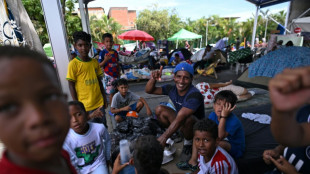
Football brings joy to Venezuelan kids displaced by quakes
-
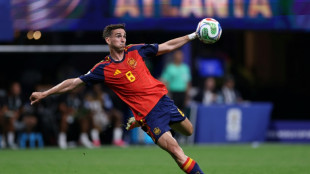 'Any team can beat you', warns Ruiz as Spain seek end to World Cup woe
-
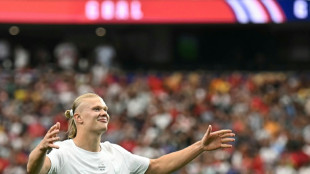
Haaland fires Norway into last 16 as France, Mexico look to advance
-
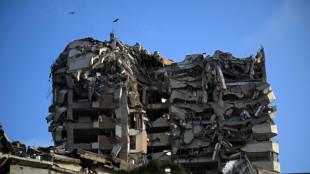 Venezuela quake survivors seek food, shelter as toll rises to nearly 2,000
-
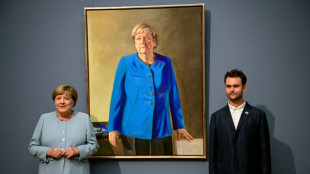
Merkel unveils official portrait for German chancellery
-
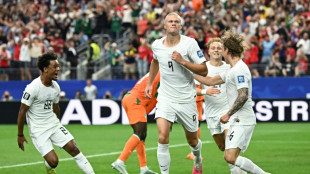 Haaland scores winner to send Norway into last-16 Brazil clash
-
Canada crews battle northern wildfire after crash kills 3

-
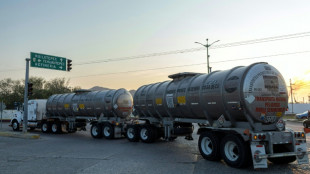 US Treasury sanctions target alleged drug cartel-linked fuel smuggling ring
-
Portugal's Silva bides his time after being benched at World Cup
-
 LeBron James to leave Lakers to play 24th NBA season
-
US stars relish soccer's primetime moment against Bosnia
-
 Zverev wins in four sets to reach Wimbledon round two
-
Lampard extends Coventry stay after promotion to Premier League
-
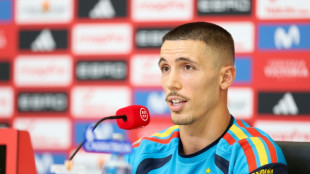 Grimaldo realises goal of Atletico Madrid move from Leverkusen
-
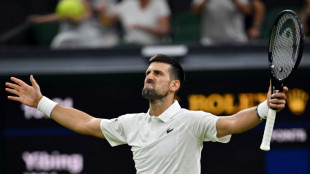
Djokovic, Sinner aim to step up Wimbledon title chase
-
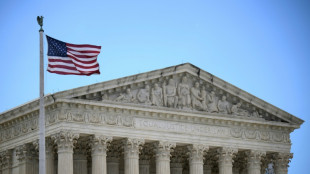 US Supreme Court lifts campaign spending restrictions ahead of midterms
-
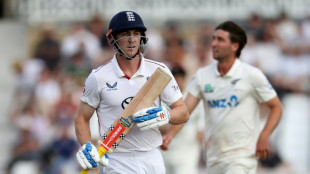
Brook ready for "great honour" of succeeding Stokes as Test skipper
European Union resigned to 15 percent US tariff
The United States and European Union clinched a trade agreement on Sunday that will see EU exports taxed at 15 percent, in a bid to resolve a transatlantic tariff stand-off that threatened to explode into a full-blown trade war.
US President Donald Trump emerged from a high-stakes meeting with European Commission President Ursula von der Leyen at his golf resort in Scotland, describing the deal as the "biggest-ever".
The deal, which the leaders struck in around an hour, came as the clock ticked down on an August 1 deadline to avoid an across-the-board US levy of 30 percent on European goods.
"We've reached a deal. It's a good deal for everybody. This is probably the biggest deal ever reached in any capacity," said Trump.
Trump said a baseline tariff of 15 percent would apply across the board, including for Europe's crucial automobile sector, pharmaceuticals and semiconductors.
As part of the deal, Trump said the 27-nation EU bloc had agreed to purchase "$750 billion worth of energy" from the United States, as well as make $600 billion in additional investments.
Von der Leyen said the "significant" purchases of US liquefied natural gas, oil and nuclear fuels would come over three years, as part of the bloc's bid to diversify away from Russian sources.
Negotiating on behalf of the EU's 27 countries, von der Leyen had been pushing hard to salvage a trading relationship worth an annual $1.9 trillion in goods and services.
"It's a good deal," the EU chief told reporters.
"It will bring stability. It will bring predictability. That's very important for our businesses on both sides of the Atlantic," she said.
She added that bilateral tariff exemptions had been agreed on a number of "strategic products", notably aircraft, certain chemicals, some agricultural products and critical raw materials.
Von der Leyen said the EU still hoped to secure further so-called "zero-for-zero" agreements, notably for alcohol, which she hoped to be "sorted out" in coming days.
Trump also said EU countries -- which recently pledged to ramp up their defence spending within NATO -- would be purchasing "hundreds of billions of dollars worth of military equipment."
- 'Best we could get' -
The EU has been hit by multiple waves of tariffs since Trump reclaimed the White House.
It is currently subject to a 25-percent levy on cars, 50 percent on steel and aluminium, and an across-the-board tariff of 10 percent, which Washington threatened to hike to 30 percent in a no-deal scenario.
The bloc had been pushing hard for tariff carve-outs for critical industries from aircraft to spirits, and its auto industry, crucial for France and Germany, is already reeling from the levies imposed so far.
"Fifteen percent is not to be underestimated, but it is the best we could get," acknowledged von der Leyen.
Any deal will need to be approved by EU member states -- whose ambassadors, on a visit to Greenland, were updated by the commission Sunday morning. They were set to meet again after the deal struck in Scotland.
German Chancellor Friedrich Merz rapidly hailed the deal, saying it avoided "needless escalation in transatlantic trade relations".
But German exporters were less enthusiastic. The powerful BDI federation of industrial groups said the accord would have "considerable negative repercussions" while the country's VCI chemical trade association said the accord left rates "too high".
Ireland, one of the EU's top exporters to the United States, said Sunday it welcomed the deal for bringing "a measure of much-needed certainty", but that it "regrets" the baseline tariff, in a statement by its Department of Foreign Affairs and Trade.
The EU had pushed for a compromise on steel that could allow a certain quota into the United States before tariffs would apply.
Trump appeared to rule that out, saying steel was "staying the way it is", but the EU chief insisted later that "tariffs will be cut and a quota system will be put in place" for steel.
- 'The big one' -
While 15 percent is much higher than pre-existing US tariffs on European goods, which average around 4.8 percent, it mirrors the status quo, with companies currently facing an additional flat rate of 10 percent.
Had the talks failed, EU states had greenlit counter tariffs on $109 billion (93 billion euros) of US goods, including aircraft and cars to take effect in stages from August 7.
Trump has embarked on a campaign to reshape US trade with the world, and has vowed to hit dozens of countries with punitive tariffs if they do not reach a pact with Washington by August 1.
Asked what the next deal would be, Trump replied: "This was the big one. This is the biggest of them all."
burs-gv/tc/lb
G.Schmid--VB