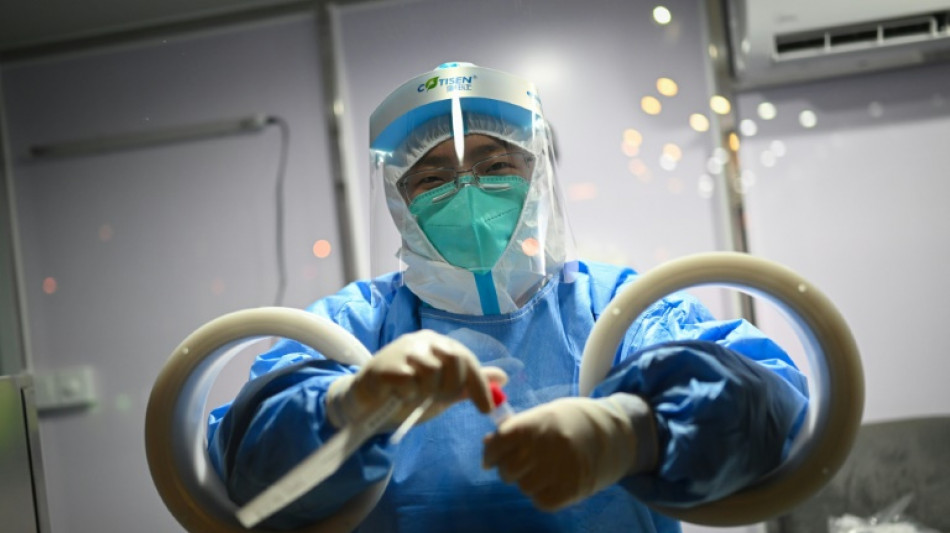
Pandemic agreement talks end without a deal / Photo: © AFP

 Rubio in Greece to urge against Western civilisation 'decline'
 Micron workers at Taiwan plant vote in favour of strike
 In 'The Social Reckoning,' Jeremy Allen White takes on Facebook's 'frightening' ambition
 Chip industry activists call for South Korea to recognise cancer cases
 Famine-scarred southern Madagascar braces for El Nino
 How the EU regulates lobbyists
 I.Coast refuge offers lifelong care for youngsters scorned as 'sorcerers'

 Indian central bank hikes rates for first time in more than 3 years
 Hotel Blacklist Launches New Accommodation Industry Risk Assessment Tool

 Bangladesh nuclear plant draws hope -- and worry

 US beat Canada 1-0 to wrap up four-win international break

 Turkey, Australia's joint COP31 leadership raises doubts

 For Turkish NGOs, COP31 offers rare space for action

 Sleep, appetite, gene-editing experts contend for Nobel chemistry prize

 Nobel Peace Prize haunted by the 'spectre' of Trump

 Africa launches own credit agency in bid for cheaper borrowing

 US, China, EU: three paths to regulating AI
 Australia's High Court rules against coal mine in landmark climate case
 Australia touts new funds for Pacific infrastructure at Fiji 'pre-COP'

 Eva Marie Saint, Oscar winner of Hollywood classics, dies at 102

 Australia probes app used in cheap smart glasses over privacy fears
 England needed to 'move on' from World Cup pain, says Tuchel

 O'Neill to stay at Celtic after period of "reflection"

 Kane marks 125th England cap with Wembley Nations League double

 Quebec's incoming separatist leader wants to block Crown from swearing-in

Negotiations on a landmark global agreement on handling future pandemics ended Friday without a deal -- though countries said they wanted to keep pushing for an accord.
Scarred by the devastation caused by Covid-19 -- which killed millions of people, shredded economies and crippled health systems -- countries have spent two years trying to hammer out binding commitments on pandemic prevention, preparedness and response.
The talks gathered momentum in the final weeks, but failed to meet a final deadline before next week's World Health Assembly -- the annual gathering of the World Health Organization's 194 member states.
"This is not a failure," WHO chief Tedros Adhanom Ghebreyesus insisted as the talks ended at the UN health agency's headquarters in Geneva.
He urged countries to see it as a "good opportunity to re-energise".
"The world still needs a pandemic treaty and the world needs to be prepared," he commented.
- 'We're not finished' -
The assembly, which runs from Monday until June 1, will take stock and decide what to do next.
The talks co-chairs Roland Driece and Precious Matsoso told AFP that countries clearly wanted to reach a final agreement.
"It’s not the end," stressed Matsoso, noting that the same ministers who decided they wanted a pandemic agreement would be the ones deciding on the next steps.
"They are the ones who are going to say, 'OK, you haven't finished this. Please go back, finalise it'," she said.
Driece said the draft they would send to the assembly was "not an agreed document, but it is a document -- and we started with a blank sheet of paper. With nothing."
"I would think it would be very stupid if they would not finish this," he said.
After arm-twisting, horse-trading and 3:00 am finishes as the talks ramped up, Matsoso said 17 pages out of 32 had been fully agreed by countries.
- Sticking points -
"It's clearly a pause. Most member states want to carry on and lock in the gains," an Asian diplomat in the talks told AFP, speaking on condition of anonymity.
"We're not yet there with the text we have on the table. The big question is, what will it take for the north and the south to get to convergence? It needs time."
The main disputes revolved around access to pathogens detected within countries, and to pandemic-fighting products such as vaccines derived from that knowledge.
Other tricky topics were sustainable financing, pathogen surveillance, supply chains, and the equitable distribution of tests, treatments and jabs but also the means to produce them.
"The best thing is to have a good, inclusive text. Whether that is now or later doesn't matter," one African negotiator told AFP.
"We want to continue the process. We really want this text."
- Steadfast commitment -
As the talks closed, countries who took the floor stressed their commitment.
US negotiator Pamela Hamamoto said: "I'm glad that we have the draft text to show for the work that we have done together."
Ethiopia said African countries "remain steadfast"; Britain said there was "real progress", while the European Union remained "entirely committed" to bringing the talks to fruition.
Bangladesh still wants to deliver a "successful result that will serve humanity", while Indonesia said "we should continue until it finishes".
Parallel talks took place on revising the International Health Regulations, which were first adopted in 1969 and last updated in 2005.
The IHR talks outcome will also be presented at next week's assembly.
The regulations provide a legal framework defining countries' rights and obligations in handling public health events and emergencies that could cross borders.
G.Schmid--VB