UN warns of cracks in global immunisation system / Photo: © AFP

 Global stocks rally on lower oil prices, US-China hopes

 EU proposes energy rating for data centres

 Schoolgirl Yu scorches to second gold as doping case rocks Games

 Putin's party secures record score in Russia election

 Haupt Koleksiyonu: Paranın Biz İnsanlar Hakkında Anlattıkları

 Spanish PM says unregulated AI could be 'devastating'

 Yu, 13, smashes record again with second Asian Games gold

 Switzerland to play without Xhaka over fake Covid certificate

 From Korean Chipmakers to Leveraged Semiconductor ETFs: STARTRADER Launches 49 New 24/7 Stock and ETF CFDs

 Thai badminton player first doping case at Asian Games: testers

 Колекція Гаупта: Що гроші розповідають про нас, людей
 German far-right AfD poll winner says Merz 'twilight' has begun

 Flights scrapped, evacuations urged as Typhoon Dujuan nears Japan
 China confirms Xi to visit US this week for Trump talks
 مجموعة هاوبت: ما يكشفه المال عنا نحن البشر

 Colecția Haupt: Ce ne dezvăluie banii despre noi, oamenii

 Sisters of jailed Pakistan ex-PM Imran Khan arrested

 African players in Europe: Semenyo brace helps City top table

 'For my family': India boxer beats hardship, injury to go for Games gold
 Indonesia doing 'everything' but still struggling to curb fires
 Once decried as 'human cockfighting', MMA wants Olympic spot
 China's Yu, 13, great for swimming says multiple Olympic medallist

 Putin's party set to retain power after Russia vote hit by cyberattacks, drones
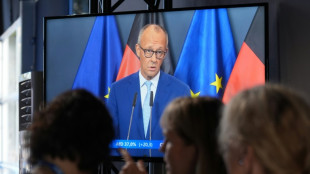 Germany's Merz under pressure after bruising state election losses

 Messi, Miami frustrated in 2-2 draw with San Diego

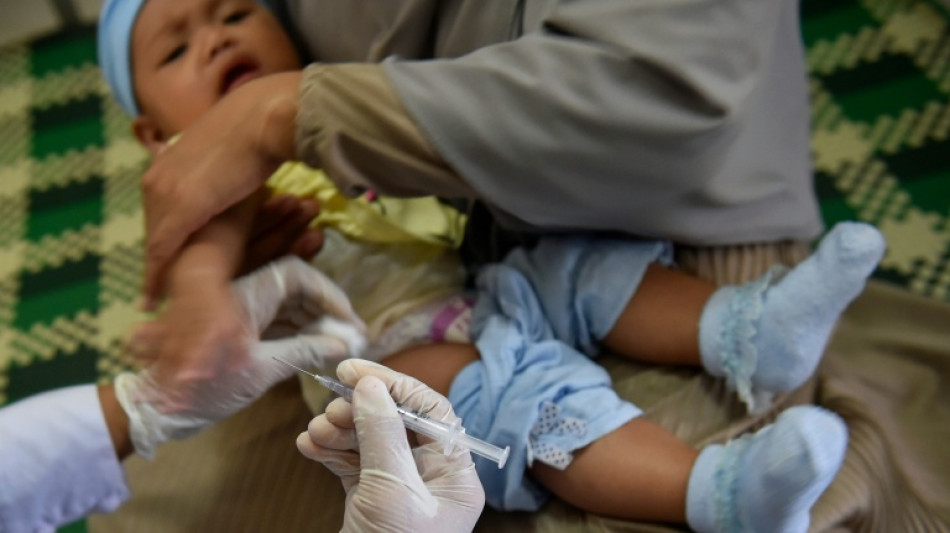
Global infant vaccination levels improved slightly last year, the UN said Wednesday, but warned that drastic funding cuts, conflicts and misinformation were deepening dangerous coverage gaps and allowing outbreaks to surge.
In 2025, 90 percent of infants globally, or nearly 116 million, received at least one dose of the vaccine against diphtheria, tetanus and pertussis (DTP), while 85 percent completed the full three-dose series, according to data published by the World Health Organization (WHO) and UNICEF, the United Nations' health and children's agencies.
On the surface, those numbers look promising, with both indicators up one percentage point from 2024 and up four points since 2021.
But they remained one point below the levels in 2019 -- before the Covid pandemic wreaked havoc on global vaccination programmes.
This means "millions of vulnerable children are still being left unprotected due to conflict, displacement, and poverty", UNICEF chief Catherine Russell said in a statement.
"No child should suffer from a disease that a simple vaccine can prevent," she insisted.
According to the data, an estimated 13.5 million so-called zero-dose children did not receive a single shot in their first year during 2025.
That was 750,000 fewer than in 2024, and around one million fewer than in 2023.
- 'Unprecedented numbers of outbreaks' -
The UN agencies warned that a growing number of children, mainly in poorer countries, start on the vaccine schedule but do not complete it.
Globally, the data showed that an estimated 7.3 million infants had received their first DTP dose in the first months of life, but did not go on to receive their first measles dose, usually given at between nine and 12 months.
While there can be many reasons for such dropouts, "we think that this is clearly related in some settings to false information, misinformation that is provided around measles vaccination", the WHO's vaccines director Kate O'Brien told reporters, adding that this was of "very significant concern".
Dropouts have contributed to measles coverage stalling at 84 percent of children globally receiving their first measles dose, and just 77 percent receiving the second dose -- far short of the 95 percent needed to avert the spread of the highly contagious disease.
"The consequence is being felt now," O'Brien said, pointing out that "57 countries reported in 2025 large or disruptive measles outbreaks".
Overall, the world saw "unprecedented numbers of outbreaks" last year, she said, with "more diphtheria outbreaks, more cholera outbreaks", in addition to the measles spread.
- Surveillance 'considerably impacted' -
O'Brien cautioned that this was a first hint in the data of the impact of dramatic aid cuts by the United States but also other countries since US President Donald Trump's return to office last year.
"We don't think that the impact of those funding cuts is showing up yet fully in the 2025 data," she said, adding that "our concerns are very much for what's happening in programmes in 2026 and what is yet to come".
The outbreaks were however already indicating "real cracks in the system now for immunisation", she warned.
UNICEF's immunisation chief Ephrem Lemango agreed, cautioning that funding cuts were taking a toll on the data systems needed to track the effect of such cuts.
"Our ability to have a strong surveillance of outbreaks has been considerably impacted," he told reporters.
Only 18 national immunisation surveys were undertaken and submitted for 2025, down from 50 a year earlier.
On a positive note, Wednesday's report showed that vaccine coverage against a range of diseases had hit a record high in the 57 low-income countries supported by the vaccine alliance Gavi.
But that organisation warned that dwindling funding for its operations risked taking a dire toll down the road.
"We believe that 600,000 lives that could have been saved will be impacted", Gavi's chief country delivery officer Thabani Maphosa told reporters.
U.Maertens--VB