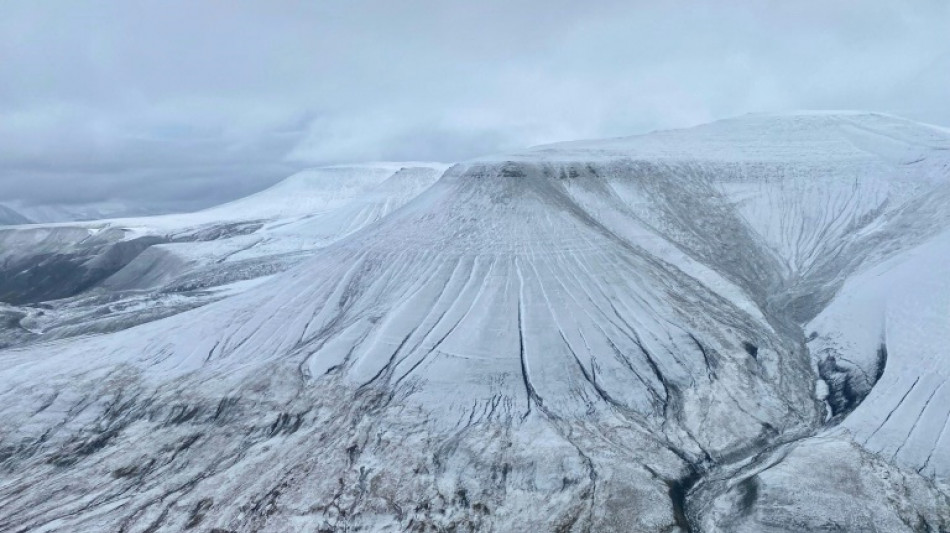
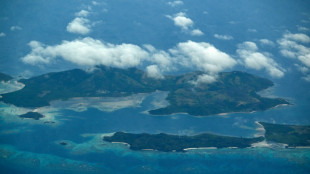
For sale: unique piece of land in strategic Arctic archipelago / Photo: © AFP/File

 Thailand begins extradition process against Chinese journalist

 Quarantine, unease and rumours: Russian city grapples with plague scare
 Taiwan says exports hit record in September on AI demand
 Marc Marquez vows to 'attack' Martin's lead at Indonesian MotoGP
 Diplomats, schools in Saudi take safety measures after blasts heard: sources to AFP

 In Beijing, EU trade envoy says deficit with China 'unsustainable'

 Sri Lanka's de Silva quits as Test captain

 Alcaraz feeling 'mentally fresh' ahead of Shanghai return

 Israel drastically reduces British diplomatic presence in Jerusalem
 Stocks fall further as oil surge fans fresh inflation worries

 North Korea demands South show 'utmost respect' to restore relations

 Saudi says three dead in airport attacks claimed by Houthis

 'Mad dream': New showcase for African film opens in London

 All Blacks coach Rennie says Wallabies exit 'part of the game'

 The growing protests against India's poll body - and PM Modi
 Stocks fall further as oil spike fans fresh inflation worries
 Bad COP, worse COP? EU tempers hopes for UN climate summit

 Rookie Henry named in Wallabies midfield to face All Blacks
 Housing crisis set to dominate Spain's snap election
 Gas, health care, utilities: high costs squeeze US midterm voters

 New Zealand Rugby seeks injunction over PNG Chiefs name
 Samsung expects 780% quarterly operating profit jump on AI boom
 Guardians survive with 9-3 win over White Sox

 Saudi Arabia says 3 dead at airports after Houthis claim attacks
 Stocks slide as oil sees volatile trading day over Iran war fears

The last piece of privately owned land in the strategic Svalbard archipelago in the Arctic is up for grabs, a property likely to entice China but which Norway does not intend to let go without a fight.
The archipelago is located halfway between mainland Norway and the North Pole, in an Arctic region that has become a geopolitical and economic hotspot as the ice melts and relations grow ever frostier between Russia and the West.
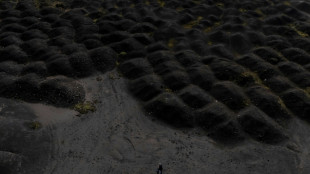
For 300 million euros ($326 million), interested parties can acquire the remote Sore Fagerfjord property in southwestern Svalbard.
Measuring 60 square kilometres (23 square miles) -- about the size of Manhattan -- the property is home to mountains, plains, a glacier and about five kilometres of coastline, but no infrastructure.
"It's the last private land in Svalbard, and, to our knowledge, the last private land in the world's High Arctic," said lawyer Per Kyllingstad, who represents the sellers.
"The Chinese are naturally potential buyers since they've been showing a real interest in the Arctic and Svalbard for a long time," he told AFP, adding that he had received "concrete signs of interest" from the country.
- Special treaty -
Since China's 2018 white paper on the Arctic -- a sign of its interest in the region -- the country has defined itself a "near-Arctic state" and plans to play a growing role in the region.
Svalbard is governed by a 1920 international treaty that leaves ample room for foreign interests.
It recognises Norway's sovereignty over Svalbard, but citizens of all signatories -- including China -- are equally entitled to exploit the region's natural resources.
Russia, for example, has maintained a coal mining community on Svalbard, via the state-run company Trust Arktikugol, for decades.
But times have changed.
Keen to protect its sovereignty, Norway would not look kindly on the Sore Fagerfjord property falling into foreign hands.
Especially hands in China, which Norway's intelligence services say poses the biggest security risk to the Scandinavian country after Russia.
Norway's Attorney General has therefore ordered the owners -- a company controlled by a Russian-born Norwegian, according to local media -- to call off the planned sale.
"The land can't be sold without the Norwegian authorities' approval," Trade and Industry Minister Cecilie Myrseth told AFP.
"Nor is it possible to hold negotiations about the property," she added.
That argument is based on clauses of an old loan granted by the state in 1919. Kyllingstad insists the clauses' statute of limitations has expired.
- 'Red flag' -
The Norwegian state owns 99.5 percent of Svalbard and has declared most of the land, including the Sore Fagerfjord property, protected areas where construction and motorised transport, among other things, are prohibited.
But the sellers don't see things that way, and cite the 1920 treaty.
"All parties (who signed the treaty) have the same rights," stressed Kyllingstad, noting that Norway had built housing, an airport and a harbour in Longyearbyen, the archipelago's main town.
"Imagine if Norway now adopted rules limiting the activities of Russian holdings," he said. "It would be World War Three."
According to Andreas Osthagen of the Fridtjof Nansen research institute, the Sore Fagerfjord land has "minimal" economic value and its possible sale does not represent "a huge threat" to Norway.
But, he noted, "owning land on Svalbard could have a strategic value in 50 or 100 years."
In the meantime, any mention of possible Chinese interest in Svalbard property raises "a red flag to force the Norwegian authorities to do something."
In 2016, the government paid 33.5 million euros to acquire the second-last piece of private land on Svalbard, near Longyearbyen, which was also reportedly being eyed by Chinese investors.
Critics subsequently accused the government of being misled over unsubstantiated arguments.
In 2018-2019, the state had already engaged in negotiations to buy Sore Fagerfjord but the talks collapsed over the price.
Trade and Industry Minister Myrseth said the option was still open if the terms were "realistic".
E.Gasser--VB