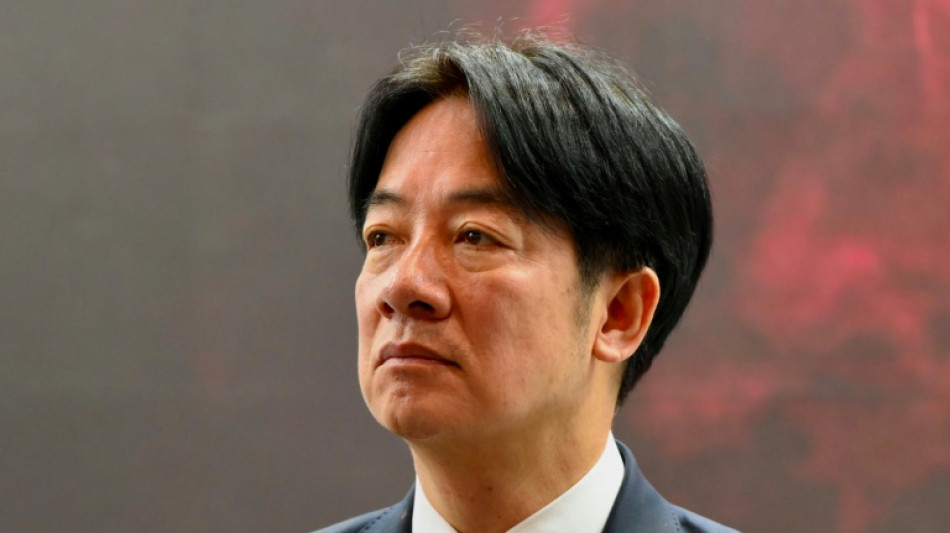
Taiwan president takes office under close scrutiny / Photo: © AFP

 WhiteBIT Launches Bitcoin Lightning Network Support, Powered by Voltage

 Oil surges, stocks sink as US reportedly eyes fresh Iran strikes
 Anne Carson: modern takes on Greek classics
 Canada's Anne Carson wins Nobel literature prize
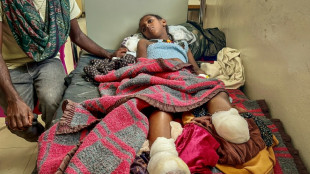 Ethiopia drones hit Eritrean troops in Tigray
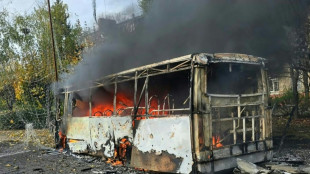 Russian strike on buses kills 30 in frontline Ukrainian city
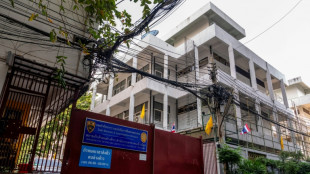 Thailand begins extradition process against Chinese journalist

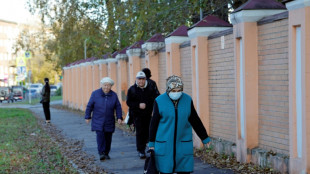 Quarantine, unease and rumours: Russian city grapples with plague scare
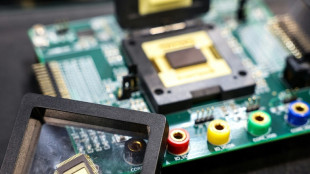 Taiwan says exports hit record in September on AI demand
 Marc Marquez vows to 'attack' Martin's lead at Indonesian MotoGP
 Diplomats, schools in Saudi take safety measures after blasts heard: sources to AFP

 In Beijing, EU trade envoy says deficit with China 'unsustainable'
 Sri Lanka's de Silva quits as Test captain

 Alcaraz feeling 'mentally fresh' ahead of Shanghai return
 Israel drastically reduces British diplomatic presence in Jerusalem
 Stocks fall further as oil surge fans fresh inflation worries

 North Korea demands South show 'utmost respect' to restore relations
 Saudi says three dead in airport attacks claimed by Houthis

 'Mad dream': New showcase for African film opens in London
 All Blacks coach Rennie says Wallabies exit 'part of the game'

 The growing protests against India's poll body - and PM Modi
 Stocks fall further as oil spike fans fresh inflation worries
 Bad COP, worse COP? EU tempers hopes for UN climate summit

 Rookie Henry named in Wallabies midfield to face All Blacks
 Housing crisis set to dominate Spain's snap election
Taiwan's president-elect Lai Ching-te, a staunch defender of the island's democracy, will be sworn into office Monday as Beijing ratchets up military and diplomatic pressure on Taipei.
China, which claims Taiwan as part of its territory, has branded Lai a "dangerous separatist" who will bring "war and decline" to the self-ruled island.
Lai will succeed President Tsai Ing-wen in a ceremony that will be closely watched by China and the United States, the island's key partner and weapons provider.
Taiwan, a vibrant democracy of 23 million people, is separated by a narrow 180-kilometre (110-mile) strait from communist-ruled China.
Beijing has intensified military and diplomatic pressure on Taiwan during Tsai's eight years in power over her Democratic Progressive Party's (DPP) rejection of China's claims on the island.
Lai, who hails from the same party, has previously described himself as a "pragmatic worker for independence".
In recent years, Lai and the DPP have toned down past rhetoric pushing for formal independence, arguing that since Taiwan is already self-ruled, there is no need for a declaration that would enrage Beijing.
Given the high stakes, Lai is expected to "maintain the responsible policies of his predecessor," Amanda Hsiao of the International Crisis Group said.
His inaugural speech will be scrutinised for clues of how he will handle the delicate relationship.
Lai has made repeated overtures to Beijing, indicating a wish for a resumption of high-level communications, which China severed after Tsai took office.
"We will work to safeguard the status quo on both sides," Lai told a democracy summit on May 14.
"I will not rule out dialogue with China on the principles of mutual respect, mutual benefits, and dignity, with no preconditions."
Eight heads of state and around 50 foreign delegations are expected to attend the inauguration, including from the United States and Canada, in a show of support for the island's democracy.
- 'Resolutely opposed' -
The dispute between Beijing and Taipei dates back to China's civil war, which ended in 1949 with Mao Zedong's communist forces defeating the nationalists of Chiang Kai-shek.
The nationalists fled to Taiwan and claimed rulership of all of China, while the mainland claimed Taiwan.
China's Taiwan Affairs Office, which handles cross-strait issues, said Wednesday it has always "resolutely opposed Taiwan independence".
"Taiwan independence and peace in the strait are incompatible like water and fire," spokesman Chen Binhua said.
China has for decades vowed to bring Taiwan under its control, by force if necessary, with President Xi Jinping upping the rhetoric in recent years of "unification" being "inevitable".
Chinese warplanes, drones and naval vessels maintain a near-daily presence around Taiwan.
China's growing assertiveness in pressing its claims on Taiwan, and over the South China Sea, have raised concerns of a potential military conflict that could draw in the United States and its allies.
Many fear that a regional war, while not thought to be imminent, would devastate the global economy.
Taiwan is located on a maritime gateway connecting the South China Sea and the Pacific Ocean -- a key route for international trade -- and is a major supplier of semiconductor chips, which have been called the "lifeblood" of the modern world.
Taiwan and China have engaged in a diplomatic tug-of-war to lure allies in the Pacific region, offering generous aid packages and assistance in agricultural and educational development.
Only 12 states, including the Vatican, fully recognise Taiwan, and China does not maintain relations with any country that recognises Taipei.
After Lai's election win in January, the tiny South Pacific nation of Nauru severed diplomatic ties with Taiwan in favour of China.
Taipei has also seen daily cyber attacks targeting its government agencies increase from one million to 2.5 million since the polls.
- 'Dangerous' -
Lai will also have to contend with domestic challenges as he seeks to reverse growing disillusionment with the DPP.
While the party won an unprecedented third term in the last election, it lost its majority in parliament.
With wages stagnating and the cost of living rising, some voters are frustrated with the DPP's handling of relations with China.
"It's dangerous," retiree Chou-ta Chung, 66, told AFP of Lai's policy on China and the United States.
"The DPP focuses too much on the United States... you must strike a balance between the two sides."
U.Maertens--VB