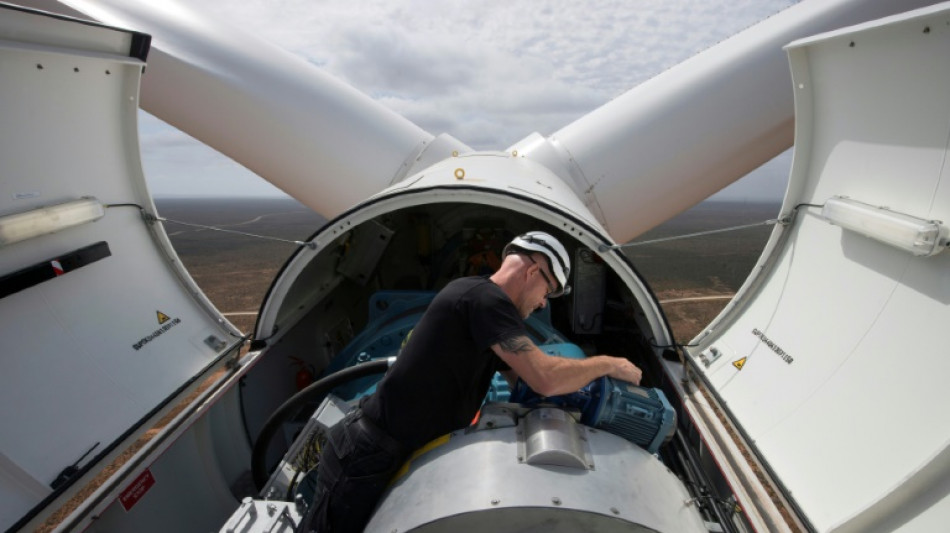
Siemens Energy seeks state help as wind unit crisis deepens / Photo: © AFP/File

 Freshways milk-price cut deepens pressure on UK dairy farms

 Labour and National remain virtually tied as New Zealand vote count advances

 The Good Daughter adapts Karin Slaughter thriller with Rose Byrne and Meghann Fahy

 Heavy-lift drone evacuates wounded Ukrainian soldier from frontline kill zone

 Morrison says West Brom recovered after pressure from successive derby losses

 Britain considers 2027 state visit for Ukraine’s Zelensky

 Arizona Democrats Secure Historic Trifecta with New Legislative Leadership

 Carney Welcomes U.S. Trade Reversal After Democratic Midterm Victory

 Armenian FM Discusses EU Accountability for Palestinian Rights in Madrid

 Trump and Vance Pursue Secret Diplomacy with Iran Amid Military Pressure

 Classic Car Values Surge: De Tomaso Vallelunga Leads 190% Gain

 Microsoft Ends Oracle AI Computing Rental Deal Amid Cloud Strategy Shift

Siemens Energy said Thursday it was in talks with the German government about receiving financial help as it battles problems in its wind power unit, sending the firm's shares crashing.
Siemens Energy has faced long-running issues at its Gamesa unit, which led the group to report a record third-quarter loss earlier this year due to costs related to fixing technical problems with onshore wind turbines.
In the latest development in the saga, Siemens Energy confirmed that it was "in preliminary talks with different stakeholders, including banking partners and the German government, to ensure access to an increasing volume of guarantees."
The group had seen strong growth in orders, which had led to a need for more financial guarantees for long-term projects, it added.
Its shares plunged over 30 percent on the Frankfurt Stock Exchange following the announcement.
Der Spiegel reported the company was in talks with the economy ministry about receiving help to the tune of several billion euros in guarantees. The ministry did not immediately respond to requests for comment.
The firm has abundant reserves of cash, but guarantees are needed to help it continue financing major new contracts such as the construction of power grids, the report said.
Usually the company would turn to banks for such guarantees, but due to the problems in its wind power unit, lenders have been reluctant to take on further risk, it said.
In August, Siemens Energy reported a net loss of 2.9 billion euros ($3.1 billion) in its fiscal third quarter, weighed down by a 1.6-billion euro hit to repair issues with wind turbines.
In Thursday's statement, the company reiterated it was "working through the quality issues" with its products.
It said that with Gamesa not currently concluding new contracts for some onshore projects and being selective with offshore projects, "order intake and revenue are expected to be lower than market expectations for fiscal year 2024".
Meanwhile, "net losses and cash outflow are expected to be higher than market forecasts", it added.
The long-running woes at Gamesa prompted Siemens Energy to take full control of the Spain-based subsidiary last year, but a hoped-for turnaround has yet to materialise.
The specific issues plaguing Gamesa come at a challenging time for the wind power sector in general in Europe.
Despite growing demand for clean energy, the sector has been battered by higher prices for materials, persistent supply chain disruptions and strong competition from China.
L.Wyss--VB