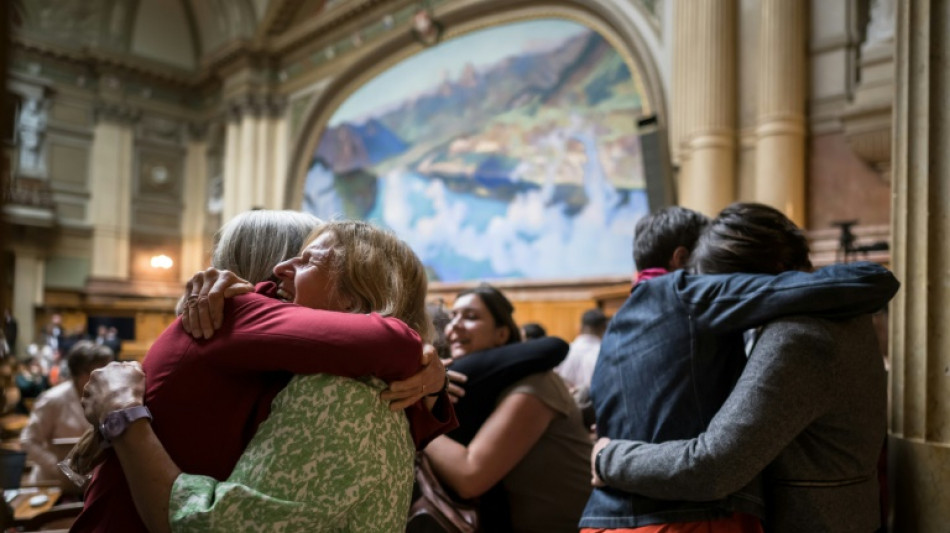
Swiss politics: the art of compromise / Photo: © AFP

 Will heatwaves push European holidaymakers to 'coolcations'?
 Messi-less Miami win on Casemiro debut, Berterame suffers head blow
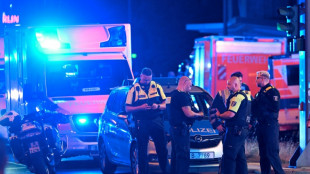 German police hunt suspect after deadly car ramming near Berlin Gay Pride
 US Federal Reserve expected to hold rates steady as inflation swirls
 Merz vows justice after deadly car ramming near Berlin Gay Pride event
 Joshua survives knockdowns, stops Prenga
 Ohtani delays throwing session over knee 'regression'
 One killed, 15 wounded as car hits crowd near Berlin Gay Pride
 Hodge, Hope give West Indies edge in rain-impacted Pakistan Test
 Scheffler surges at 3M Open with blistering back nine
 Brazil's right-wing party nominates Bolsonaro son to battle Lula
 Norris back on pole at Hungarian GP as rivals handed penalties
 Close to Madrid, those who escaped flames worry what is next
 Messi can skip All-Star Game after grueling World Cup, says MLS
 Hamilton stung by three-place grid penalty
 Howe uncertain if Guimaraes will stay with Newcastle amid Arsenal interest
 Varane concussions motivate Como to ban heading in academy teams
 'Amazing' Pogacar-Del Toro friendship lights up Tour de France
 Crisis-hit Flavio Bolsonaro launches presidential candidacy in Brazil
 As wildfires grip France and Spain, what are the risks from the smoke?
 Pogacar set to win Tour de France, Carapaz claims Queen stage
 India's education minister resigns, end called to Delhi protests
 Devastating wildfires send 267,000 fleeing in France and Spain
 Ipswich sign Japan forward Maeda from Celtic
 Norris finds pace to edge Hamilton in last Hungarian practice
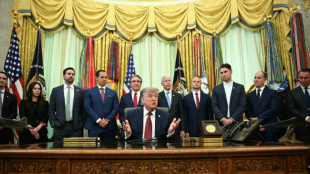
The Swiss political system relies on consensus among the main parties, with power kept as close to the people as possible, including through regular single-issue votes.
On Sunday, Swiss voters headed to polls to elect new members of parliament, who in turn will appoint the federal government in December.
Here is a look at how Switzerland's very distinct political system works:
- Parliament -
The Swiss parliament, called the Federal Assembly, has two houses and meets at the Federal Palace in Bern.
The domed 1902 building is on the Old City's main square. Each statue and painting inside represents a moment in Swiss history.
The National Council, the lower house, represents the people. It comprises 200 lawmakers elected from Switzerland's 26 constituent cantons.
The number from each canton depends on the canton's population. The deputies are chosen by proportional representation within the canton. There are around 40,000 voters per seat.
The Council of States, the upper house, represents the cantons. It is made up of 46 members elected by majority vote.
Each of the 20 full cantons returns two deputies, regardless of size, though the six half-cantons return one each.
Both houses are configured in a hemicycle. They have identical powers and are elected for four-year terms.
They sit only four times a year for three-week sessions -- in March, June, September and November/December.
- Government -
The government, called the Federal Council, has seven members. The seats are shared out among the four main parties according to a so-called magic formula -- a 2-2-2-1 tacit agreement introduced in 1959.
The new Federal Assembly -- all 246 deputies -- will choose the government members in a vote on December 13.
Candidates do not have to come from the assembly.
The assembly tries to ensure that the cantons and language communities are fairly represented within the government.
Barring major power shifts in the assembly, the government members are not expected to change, though President Alain Berset is stepping down from the Federal Council.
- Head of state -
The government meets on Wednesdays in the Federal Palace.
Members, who each take a ministry, are paid 468,276 Swiss francs ($524,000) per year.
The Federal Council operates on collegiality and consensus. All decisions are taken by the government as a whole under collective responsibility.
The government members are collectively the head of state. Andorra, Bosnia-Hercegovina and San Marino are the only other countries without a singular head of state.
That said, the Swiss president is the first among equals. The presidency rotates annually among the ministers.
- Referendums -
Switzerland has direct democracy, with citizens able to trigger popular votes at the national, cantonal and local level.
They can challenge in referendums decisions taken by parliament, and propose new laws themselves in initiatives.
A total of 100,000 valid signatures in 18 months are required to trigger a national initiative. A change of law requires a double majority of voters and cantons.
Popular votes take place every three months.
- Levels of power -
Powers are distributed between the confederation, the 26 cantons and, within them, more than 2,000 local municipalities, or communes.
Power is delegated from the communes upwards, rather than from the top down.
For example, the communes manage their own infrastructure, such as roads, public buildings and schools; cantons look after the education system and policing; while the confederation handles defence and foreign policy.
Each of the three levels raises its own taxes.
The cantons have their own constitutions, parliaments, governments and courts.
In the Glarus and Appenzell Innerrhoden cantons, cantonal votes and elections are still held by "Landsgemeinde": a show of hands in the main square.
C.Stoecklin--VB