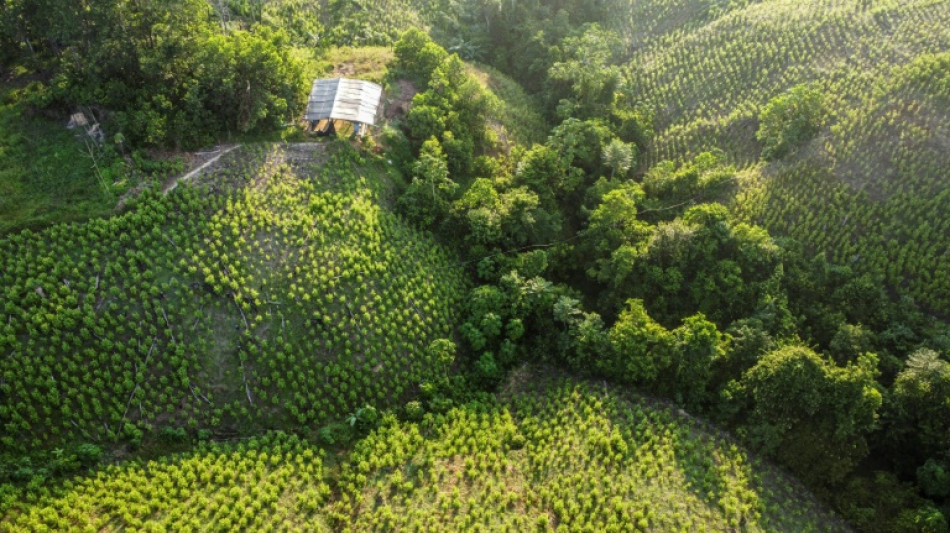
Tibu, violent 'no-man's land' hosting Colombian peace talks / Photo: © AFP

 South Africa's migrant exodus leaves employers short-handed

 US holds fire against Iran as reports emerge of stockpile concerns
 Marvel announces 'Black Panther III' at Comic-Con
 Will heatwaves push European holidaymakers to 'coolcations'?
 Messi-less Miami win on Casemiro debut, Berterame suffers head blow
 German police hunt suspect after deadly car ramming near Berlin Gay Pride

 US Federal Reserve expected to hold rates steady as inflation swirls
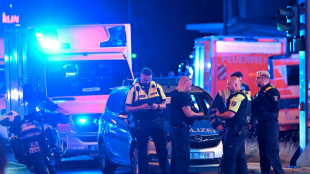 Merz vows justice after deadly car ramming near Berlin Gay Pride event
 Joshua survives knockdowns, stops Prenga
 Ohtani delays throwing session over knee 'regression'

 One killed, 15 wounded as car hits crowd near Berlin Gay Pride
 Hodge, Hope give West Indies edge in rain-impacted Pakistan Test

 Scheffler surges at 3M Open with blistering back nine

 Brazil's right-wing party nominates Bolsonaro son to battle Lula
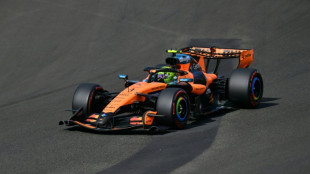 Norris back on pole at Hungarian GP as rivals handed penalties

 Close to Madrid, those who escaped flames worry what is next
 Messi can skip All-Star Game after grueling World Cup, says MLS
 Hamilton stung by three-place grid penalty
 Howe uncertain if Guimaraes will stay with Newcastle amid Arsenal interest
 Varane concussions motivate Como to ban heading in academy teams
 'Amazing' Pogacar-Del Toro friendship lights up Tour de France

 Crisis-hit Flavio Bolsonaro launches presidential candidacy in Brazil
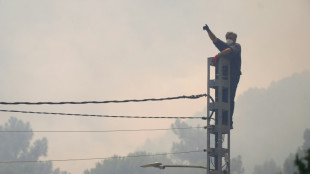 As wildfires grip France and Spain, what are the risks from the smoke?
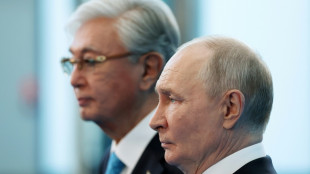
 Pogacar set to win Tour de France, Carapaz claims Queen stage
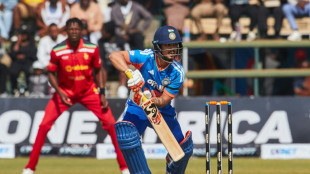
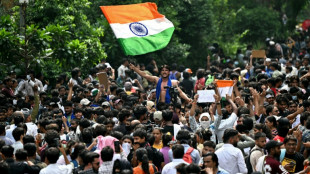 India's education minister resigns, end called to Delhi protests
For months, the mayor of Tibu, a Colombian town under the yoke of guerrilla violence, was forced to do his job from more than 115 kilometers (71 miles) away, after receiving death threats.
Nelson Leal says he had no choice but to leave behind a "no-man's land" under the control of dissidents who distanced themselves from the peace agreement the FARC guerrilla group signed with the government in 2016.
In March, when he had been on the job for 18 months, rebels stopped him on a road and intimidated him in the presence of his wife, his 13-year-old son and a niece. Then they took his car.
That was the incident that finally convinced him he had to leave, Leal told AFP in the city of Cucuta, where he now lives, governing Tibu by telephone
Prior to that experience, another of his sons had guns pointed at him from a motorcycle, as a warning.
But on October 8, Leal finally returned -- under heavy guard -- to the town of 60,000, which is now playing host to long-awaited talks between Bogota and dissident guerrillas who call themselves the Central General Staff (EMC).
The talks kicked off on Monday after a weeklong delay amid rising tensions and several deaths in clashes between the two sides.
Tibu is in the Catatumbo region, largely abandoned by state security forces and heavily contested by a plethora of armed groups.
It is also the municipality with the most drug cultivation in the world, according to UN data, with an area of over 22,000 hectares (84 square-miles) planted with coca, the base ingredient for cocaine -- of which Colombia is the world's biggest producer.
Apart from the EMC, Leal said, guerrillas from the National Liberation Army (ELN), the Gulf Clan -- Colombia's biggest drug organization -- and Mexico's Sinaloa cartel are also active around Tibu, near the porous border with Venezuela
"Tibu has become a no-man's land in which the one with the weapons is the one that governs," he said.
- 'Exiled or killed' -
The Attorney General's office said in September that about a dozen areas in Colombia, including Tibu, were under the control of armed groups that impose their own "rules of conduct."
Anyone who diverts from these "is exiled or killed," it said in a report.
Benigno Neira, a 51-year-old farmer, describes life in Tibu as "complex."
"One has to take heed, obey, in order to live," he told AFP.
Colombia's first-ever leftist president, Gustavo Petro, took office in August 2022 with the stated goal of achieving "total peace" in a country ravaged by decades of fighting between the security forces, leftist guerrillas, right-wing paramilitaries and drug gangs.
His government is also in talks with the ELN and other armed groups, though progress has been halting.
Critics say Petro, himself a former urban guerrilla, is being too indulgent with the rebels, having offered reduced sentences in exchange for laying down arms, as their former FARC comrades did.
On the other side of the coin, some locals -- many of whom plant coca themselves -- pledge support to rebel groups, which are often the only enforcers of law and order, and source of income.
The EMC -- which had about 3,500 members at the end of 2022, according to official figures -- has steadily increased its presence in territories formerly occupied by the FARC and largely abandoned by government forces.
- 'Maximum responsibility' -
According to Kevin Karlen, a local coordinator for the International Committee of the Red Cross, Tibu is one of the parts of the country "most affected by the armed conflict."
The town's police station has an air of being under siege.
In May, two officers and a civilian were killed in a car bomb, and since then, officers leave the station only when "absolutely necessary" -- and then in armored vehicles, according to one, who asked not to be named.
In Tibu, there are no traffic cops. There's no court, no prosecutor's office.
The last head prosecutor based here was murdered in 2021, with an open docket of some 400 criminal cases.
His subordinates all moved to Cucuta out of fear, according to Leal. They return only occasionally to the town "where it is very easy to govern with a rifle," he added.
Monday's talks kicked off with EMC negotiator Andrey Avendano, Leal and government delegates posing for the world's media.
The nitty gritty of the negotiations, which also come with a three-month bilateral ceasefire, have not been divulged.
Petro has urged the EMC's 3,500-odd members to behave with "maximum responsibility" during the process.
L.Stucki--VB