
EU's bitter bid to agree new budget rules before year ends / Photo: © AFP/File

 India clears protest site after 'cockroach' movement scores a win

 France fire situation 'remains very unfavourable': interior minister

 WorldPride gets a royal welcome amid warnings for LGBTQ community

 South Africa's migrant exodus leaves employers short-handed

 US holds fire against Iran as reports emerge of stockpile concerns

 Marvel announces 'Black Panther III' at Comic-Con

 Will heatwaves push European holidaymakers to 'coolcations'?
 Messi-less Miami win on Casemiro debut, Berterame suffers head blow

 German police hunt suspect after deadly car ramming near Berlin Gay Pride

 US Federal Reserve expected to hold rates steady as inflation swirls

 Merz vows justice after deadly car ramming near Berlin Gay Pride event

 Joshua survives knockdowns, stops Prenga

 Ohtani delays throwing session over knee 'regression'

 One killed, 15 wounded as car hits crowd near Berlin Gay Pride

 Hodge, Hope give West Indies edge in rain-impacted Pakistan Test

 Scheffler surges at 3M Open with blistering back nine

 Brazil's right-wing party nominates Bolsonaro son to battle Lula
 Norris back on pole at Hungarian GP as rivals handed penalties

 Close to Madrid, those who escaped flames worry what is next
 Messi can skip All-Star Game after grueling World Cup, says MLS

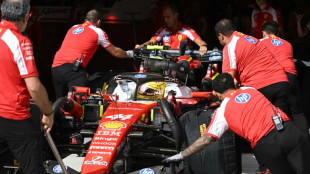 Hamilton stung by three-place grid penalty

 Howe uncertain if Guimaraes will stay with Newcastle amid Arsenal interest

 Varane concussions motivate Como to ban heading in academy teams

 'Amazing' Pogacar-Del Toro friendship lights up Tour de France

 Crisis-hit Flavio Bolsonaro launches presidential candidacy in Brazil

The clock is ticking, the debts are racking up but the EU still remains far from a deal on new budget rules.
When EU finance ministers gather in Luxembourg this week, there will be one headache at the top of their agenda: reforming the EU's fiscal rules.
The current rules, known as the Stability and Growth Pact, are scorned by many EU countries -- some of which often fell afoul of the strict stipulations -- because of the one-size-fits-all approach.
If ministers do not agree by the end of the year, the old rules will be back in force in 2024.
The EU first suspended the pact in March 2020 as coronavirus ran rampant in Europe, forcing the bloc's 27 member states to pour billions of euros into their economies to keep households and businesses afloat.
Then just as Europe reached the light at the end of the tunnel, Russia invaded Ukraine last year, sending energy prices spiralling and forcing another suspension.
Supporters of greater fiscal discipline argue that tough rules are needed to control national budgets from ballooning, while critics say they curb member states from investing just as Europe needs to fend off challenges from China.
Today the pact says a country's debt must be 60 percent of its gross domestic product (GDP), while its deficit must be three percent of GDP.
The reforms published in April would keep these objectives, but allow a more tailored, country-specific approach to debt reduction, with greater flexibility.
Member states are, however, divided over whether the reforms should keep some blunt rules to lower debts and deficits every year.
The current rules suffer from many shortcomings, according to Bruegel think tank senior fellow Zsolt Darvas, who said the reforms would be a "major improvement".
He pointed to "many different targets" and "sometimes conflicting rules within the current framework", adding there is too much focus on budgets on a year-on-year basis.
"The main issue is whether in the medium and long term, the public debt is sustainable," Darvas told AFP.
- Debt discipline -
The European Commission's reforms propose that member states work with the EU's executive arm to formulate a debt-reduction plan for their country over four years.
The plan can even be extended to seven years in exchange for reforms and investments.
Every government accepts the need for reform, but some countries, including Germany, want to maintain certain targets to ensure discipline over debts and deficit.
The stickiest subjects include common safeguards on debt and deficit reduction that has pitted France against Germany.
In a concession to Germany, the reforms demand countries reduce their deficit by a minimum of 0.5 percent every year until they no longer exceed the three percent limit.
France, however, argues that automatic and uniform rules do not work and risk hurting Europe more than helping.
"The member states' positions are so far apart, it is almost impossible to have a political agreement in October," an EU diplomat said.
There have been talks about a budgetary exemption for green and digital investments to support the EU's focus on clean energy, though some member states oppose this since "that would be a massive chunk of budgets," another EU diplomat said.
But with war raging in Ukraine, ministers will likely agree on a defence exemption as member states plough money into their militaries, the diplomat added.
- Market risks -
With their eye on the hourglass, real work began last week with intense talks to prepare the outline of a deal, but diplomats cautioned against expecting a final agreement on Tuesday.
Even if no accord was struck in October "there could be a deal before the end of the year," said an EU diplomat.
Another diplomat said there could be a deal in November.
The fear is that if there is no agreement before 2024, the issue will lose its urgency and get put off as the EU prepares for elections in June.
"If we can't get a deal, markets won't like this. It will show the political impotence of the EU," an EU diplomat said.
U.Maertens--VB