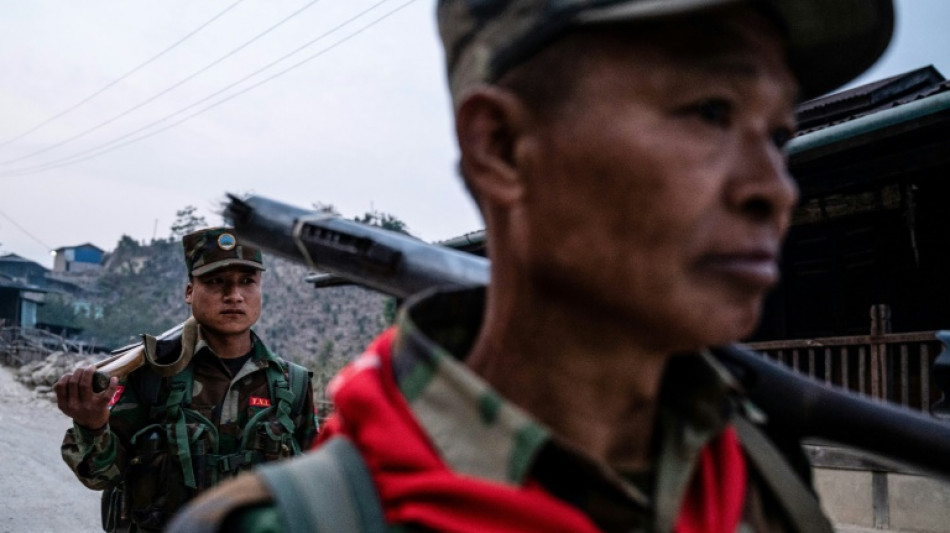
'Profit from the coup': Myanmar ethnic rebels welcome pro-democracy fighters / Photo: © AFP/File

 Google rolls back new satellite image AI tool after backlash

 Ryu leads in bid for third straight major at women's British Open

 Fire-hit France region 'coming up for air' as main blaze calms
 Wembanyama to get signature shoe in Nike contract extension: reports
 Oil giants report blowout profits on war, warn high gas prices could persist
 Google launches new satellite image AI tool, alarming researchers

 Eddie Howe resigns as Newcastle boss to 'recharge'

 High winds hamper firefighting efforts in western Turkey

 Howe resigns as Newcastle boss
 Full-scale tour will benefit All Blacks, says coach Rennie

 US Fed dissenters call for rate hikes over sustained inflation
 Trump and far-right seize on Spanish migration crisis

 Hamas agrees to disarm under Trump plan
 French, Italian winegrowers face earliest ever harvest

 Alarm over climate-linked low level of German waterways
 UK court rejects challenge against new Chinese embassy in London

 New York sues online prediction markets giant Kalshi

 Commerzbank agrees to talks with UniCredit after two-year standoff
 A rumour, a rush: chaos at Morocco border with Spain's Ceuta
 Fornaro Legal Releases Guidance to Help Businesses Maintain Clear Ownership Records During Growth
 Hamas agrees to disarm: what are the challenges ahead?
 Turkey fights to last major blaze inland from Bodrum

 Japan probe made closest-ever asteroid flyby: space agency

 Wildberries: 'Russia's Amazon' targeted by Ukraine

 FIFA plan hit by senior advisor resigning, AFC opposition

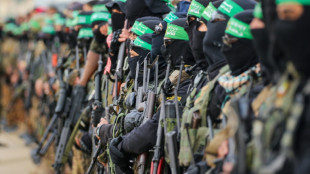
At dusk in northern Myanmar, fighters from the Ta'ang National Liberation Army patrol their frontlines and mark the positions of junta troops, their decades-long conflict with the military fraught with new risks since the coup.
The TNLA is one of around a dozen ethnic rebel groups in Myanmar's borderlands that have long battled the military over autonomy and control of lucrative resources.
For decades, their fight for autonomy -- and allegations of massive human rights abuses by the armed forces -- passed largely out of sight of Myanmar's Bamar ethnic majority.
Following the military's 2021 coup and brutal crackdown on dissent, however, groups like the TNLA have become vital to Myanmar's battle for democracy, providing shelter and training for new Bamar-dominated "People's Defence Forces" formed to fight the junta.
"We got sympathy, understanding and support from other people in Myanmar after the coup," TNLA Brigadier General Tar Bhon Kyaw said from the group's territory in northern Shan state.
"People now understand why we were fighting... This is the profit from the coup."
Days after the coup the TNLA -- which says it is fighting for autonomy for the Ta'ang ethnic group -- suspended a truce with the military and has since clashed regularly with junta troops.
It now claims to have more than 7,000 fighters under its command in its territory in northern Shan state, along the vital road to China.
- 'Another way to fight' -
At a camp at a hidden location, trainees scrambled over an obstacle course and waded single file through a river, AK-47 and M-22 rifles at the ready, listening for the sounds of an imaginary enemy.
Mai Naing Aung Kyar, 24, joined the TNLA after the coup to "revolt" against the junta.
"We can't protest in the cities but I thought that joining TNLA is another way to fight," he told AFP during a break from leopard-crawling through the dust and snapping to attention on parade.
As well as local Ta'ang youths, the TNLA had given "military training" to PDFs from outside its territory, said Tar Bhon Kyaw, and had also provided "connections" to facilitate them buying weapons.
He did not give further details, citing security reasons.
Analysts say ethnic rebel groups along the borders with China, Thailand and India have trained and armed thousands of PDF fighters and seconded officers to lead inexperienced fighters in battles with junta troops.
PDF groups have surprised the military with their effectiveness, analysts say, and have dragged the military into a bloody quagmire.
In February, the junta admitted it did not "fully control" more than a third of the country's townships.
- School bunkers -
Re-igniting conflict with the military -- and training its newest enemies, which the junta has designated "terrorists" -- brings huge risks.
At a village in TNLA territory, headman Aik Oo showed AFP where a school had stood until junta troops torched it during a raid.
Workers were building a new school and had dug holes into the side of a nearby earthen bank, makeshift shelters against possible airstrikes by the military's Russian- and Chinese-made jets.
Faced with setbacks on the ground the junta has called in devastating airstrikes to target its opponents, which rights groups say may constitute war crimes.
Earlier this month, an airstrike on a village in a resistance hotspot killed more than 170 people, including young schoolchildren, according to media reports and locals.
While the school in the TNLA-controlled village is being rebuilt, Khin Lay Yu, 52, teaches around two dozen children in a structure made of wooden beams and tarpaulins.
On her wish list for the next academic year -- which starts in June -- are "bunkers for the students", she said.
"Our school has around 500 students and we have to work hard to build enough," she told AFP.
A.Gasser--BTB