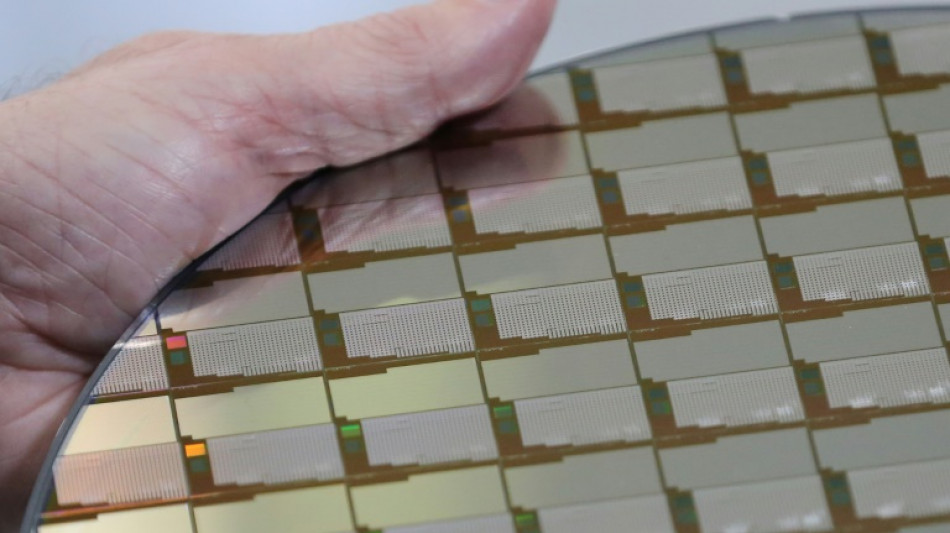
EU agrees plan to boost chip production / Photo: © AFP/File

 Hunter Bell cruises to Commonwealth gold, Pathirage stuns javelin stars

 Amazon surges as US stocks shrug off bond yield worries

 Google rolls back new satellite image AI tool after backlash

 Ryu leads in bid for third straight major at women's British Open

 Fire-hit France region 'coming up for air' as main blaze calms

 Wembanyama to get signature shoe in Nike contract extension: reports

 Oil giants report blowout profits on war, warn high gas prices could persist
 Google launches new satellite image AI tool, alarming researchers

 Eddie Howe resigns as Newcastle boss to 'recharge'
 High winds hamper firefighting efforts in western Turkey

 Howe resigns as Newcastle boss

 Full-scale tour will benefit All Blacks, says coach Rennie

 US Fed dissenters call for rate hikes over sustained inflation

 Trump and far-right seize on Spanish migration crisis

 Hamas agrees to disarm under Trump plan

 French, Italian winegrowers face earliest ever harvest

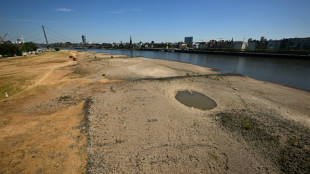 Alarm over climate-linked low level of German waterways

 UK court rejects challenge against new Chinese embassy in London

 New York sues online prediction markets giant Kalshi

 Commerzbank agrees to talks with UniCredit after two-year standoff

 A rumour, a rush: chaos at Morocco border with Spain's Ceuta

 Fornaro Legal Releases Guidance to Help Businesses Maintain Clear Ownership Records During Growth

 Hamas agrees to disarm: what are the challenges ahead?

 Turkey fights to last major blaze inland from Bodrum

 Japan probe made closest-ever asteroid flyby: space agency

The European Parliament and EU member states reached an agreement Tuesday on a plan to boost the supply of semiconductors in Europe, as the bloc races to reduce its dependence on Asian suppliers.
The European Union has prioritised local chip production after the coronavirus pandemic triggered supply chain shocks that led to significant shortages.
Asian industry, especially firms in China and Taiwan, currently dominate the manufacture and export of semiconductors.
EU chief Ursula von der Leyen said the deal "will allow for a competitive chips industry and build the foundation for a global market share. It will power a clean tech industry made in Europe and strengthen our digital resilience and sovereignty."
Under the provisional political agreement, the EU aims to double its current global market share to 20 percent in 2030 and mobilise more than 43 billion euros ($47.2 billion) in public and private investments to feed Europe's growing appetite for chips.
Europe will need to quadruple its production to meet this target.
Funding will come from existing EU budget money and the deal will also loosen state aid rules to spend money on developing centres to produce the key component.
The EU will also mobilise 3.3 billion euros for research and development, and the deal includes a system to monitor supply shortages to act in times of crisis.
The legislative text also forms part of the bloc's bid to produce more in Europe to reduce its vulnerability to geopolitical shocks like the war in Ukraine.
When Russia invaded Ukraine last year, the EU scurried to find alternative energy sources after years of relying upon Russian fossil fuels.
"This will allow us to rebalance and secure our supply chains, reducing our collective dependence on Asia," Thierry Breton, the EU's industry commissioner, said in a statement after the parliament and the European Council reached an agreement.
- Hunger for chips -
Europe was under pressure to act fast.
In August, the United States approved its own Chips and Science Act that included around $52 billion to promote production of microchips and tens of billions of dollars more for scientific research and development.
Japan and South Korea have also vowed to spend billions on developing their countries' semiconductor production.
Washington has leaned on allies including Japan and the Netherlands this year to curb exports on semiconductor technology to China, much to Beijing's chagrin.
French-Italian chipmaker STMicroelectronics, US-based GlobalFoundries and US tech giant Intel said last year they would pour billions into new production sites in France and Germany. They will now be able to seek state subsidies for their projects.
Brussels is racing to protect the bloc's competitive edge in the face of threats from China and the United States, which have ploughed billions into green technology.
Last month, the EU's executive arm published two proposals to push Europe to produce more clean technology including critical raw materials needed to manufacture batteries for electric vehicles.
"Europe aims to become an industrial powerhouse in the markets of the future -– the digital and clean technologies that will allow us to remain a competitive export force, generate quality jobs and ensure our security of supply," Breton said.
"Because there will be no green or digital transition without a strong manufacturing base," he added.
F.Müller--BTB