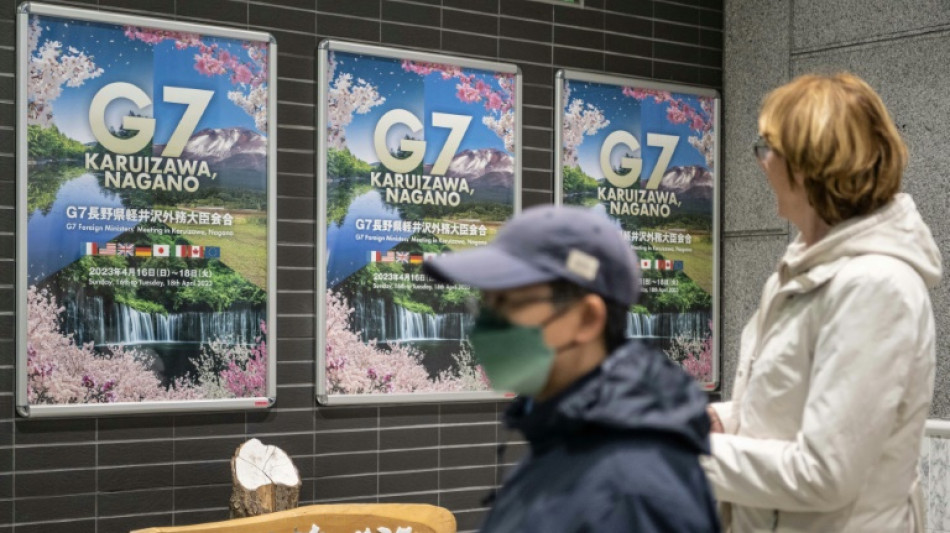
China, Ukraine headline as G7 foreign ministers meet / Photo: © AFP

 US plans steep water cuts for southwest amid Colorado River crisis

 Nakashima ousts top seed de Minaur, Osaka advances at Washington

 Nakashima ousts top seed de Minaur and Osaka advances at Washington

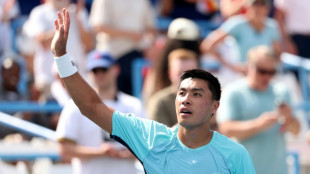 Nakashima ousts defending champion de Minaur to reach Washington semis

 Magaia salvages last-gasp WAFCON draw for South Africa
 Forever chemicals and pesticides under Trump: what to know
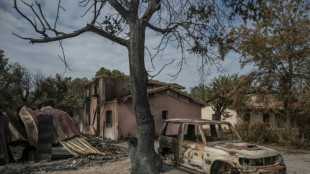
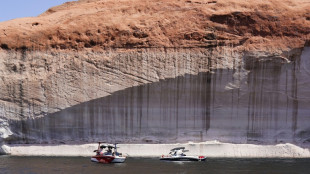 US announces steep water cuts for three states amid Colorado River crisis

 EU grapples with migrant crisis in Spain's N. Africa enclave
 Hungary to shut nuclear plant as heatwave hits central Europe

 Strengthening El Nino 'adding fuel to a planet already on fire': UN chief

 Tech-fuelled rally fizzles as oil prices rise
 Chelsea's Mudryk cleared to play after doping ban appeal

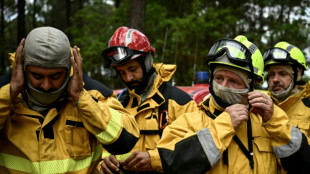 A side of oysters for France's flat-out firefighters

 England cricket chief Key refuses to rule out Stokes return
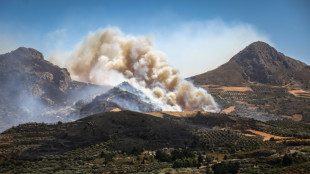 New blazes in Greece as strong winds hamper firefighting
 Springboks star Feinberg-Mngomezulu back for Argentina Test
 Shops closed, businesses quiet as Spain's Ceuta faces migrant surge
 Chelsea fined £10mn, handed suspended transfer ban for breaching agent rules
 Residents defend Spain’s ancient 'El Abuelo' tree from flames
 Forever chemicals and pesticides: what to know

 Spaniard Santi Denia takes over as Czech Republic coach

 EU races to contain new migrant crisis as thousands cross into Spain's N. Africa enclave
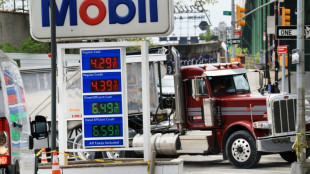 Profits surge at US oil giant amid Iran war supply shock
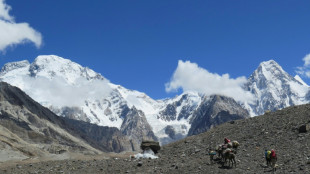 Bodies of four climbers found near Pakistan avalanche site: police
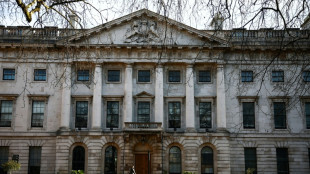 UK court dismisses challenge against new Chinese embassy in London
The G7's top diplomats arrive Sunday in the Japanese resort town of Karuizawa for talks set to be dominated by twin crises: China's growing pressure on Taiwan, and Russia's war in Ukraine.
There will be no shortage of diplomatic and security challenges to discuss, but recent regional events are likely to sharpen the focus on Asia.
The meeting comes days after China concluded major military drills around self-ruled Taiwan, and with Beijing barring ships from an area north of the island on Sunday.
On Thursday, North Korea launched what it said was a new solid-fuel intercontinental ballistic missile, just the latest in a stepped-up barrage of tests that have rattled nerves.
As this year's host, Tokyo is keen to ensure regional challenges are top of the agenda, and will make clear it believes Russia's invasion of Ukraine only heightens the need for vigilance in Asia.
Japan's Prime Minister Fumio Kishida, whose government has revamped defence policy and spending in the face of growing Chinese power, has repeatedly warned "Ukraine today could be East Asia tomorrow".
"Japan's basic position... on Ukraine is that the security of Europe and that of the Indo-Pacific cannot be discussed separately," a Japanese government official said ahead of the talks.
"They are intertwined with each other."
The G7 has regularly warned China against attempts to seize Taiwan, and individual members have sounded the alarm in recent days.
"A military escalation in the Taiwan Strait... would be a horror scenario for the entire world," German Foreign Minister Annalena Baerbock said this Friday in Beijing.
But there will be renewed focus on the grouping's language after recent comments by French President Emmanuel Macron.
His insistence, after a trip to Beijing, that Europe should avoid "crises that aren't ours" has raised eyebrows and ire among Paris's allies, while delighting Chinese officials.
Paris has worked to temper the reaction, insisting France's views have not changed, and most observers expect the group to reiterate previous positions warning China against "changing the status quo by force".
- 'Freedom of manoeuvre' -
Still, Macron's comments expose a reality for the group -- Japan, the United States, Britain, Canada, France, Italy, Germany and the European Union -- said Paul Nadeau, adjunct professor of political science at Temple University's Japan campus.
"Each member of the G7 still wants a bit of autonomy in the way they pursue their relationship with China," he told AFP.
"They don't want to overcommit, they want to maintain some freedom of manoeuvre."
So while China will be a top priority, consensus will be easier to find for the grouping on Ukraine, with their final statement likely to again demand Russia's immediate withdrawal and pledge continued support for Kyiv.
The bloc has jointly imposed significant sanctions on Russia, with Japan going further than before to join its allies in punishing Moscow for the invasion.
That makes it unlikely the meeting will produce substantive new measures, though promises to support war-crimes prosecution, as well as fresh expressions of concern on nuclear sabre-rattling by Russia are probable.
Both Russia's invasion and growing concerns about China have put renewed focus on the issue of economic security and the urgent need to diversify supply chains for everything from energy to semiconductors.
Tokyo and Washington have warned about the risk of "economic coercion", and G7 ministers are expected to pledge measures to counter attempted supply distortions.
Japan recently joined the Netherlands and United States in announcing export controls for chip equipment, a move seen as targeting China, which has called for a WTO review.
The two-day meeting will also tackle international crises from the Taliban's continuing grip on Afghanistan to the ruling military junta's latest attacks in Myanmar, along with space and cybersecurity and disinformation.
It is seen as setting the stage for the leaders' summit in Hiroshima this May.
Security in Karuizawa, west of Tokyo, will be particularly tight after an explosive was thrown Saturday at a campaign event featuring Kishida, who escaped unharmed.
J.Horn--BTB