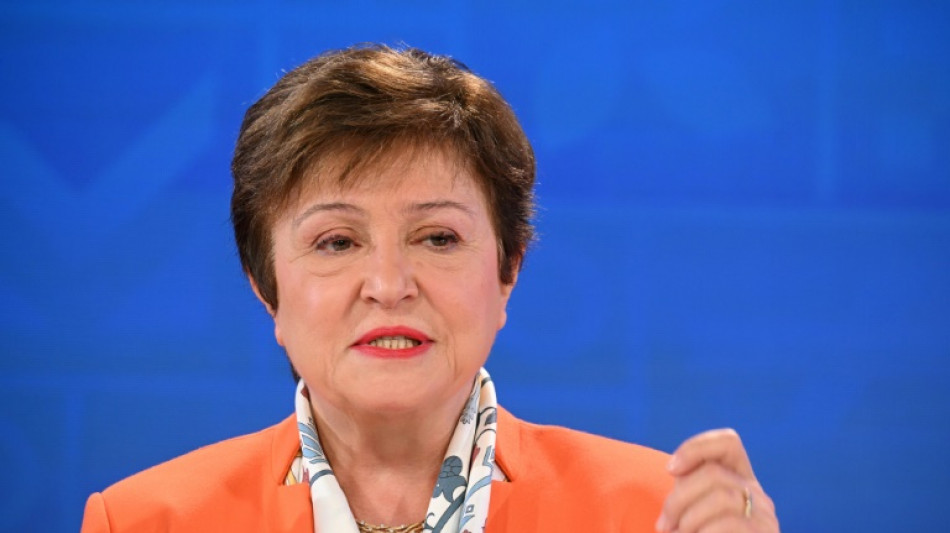
IMF chief urges world to avoid a 'second Cold War' / Photo: © AFP

 Injured Australian swim star O'Callaghan pulls out of PanPacs

 California lifeguards wiped out from extreme weather
 FIFA scraps private investment plan after backlash: Infantino
 South Africa's WAFCON hopes hang in the balance after dramatic draw

 Hunter Bell cruises to Commonwealth gold, Pathirage stuns javelin stars

 Amazon surges as US stocks shrug off bond yield worries

 Google rolls back new satellite image AI tool after backlash

 Ryu leads in bid for third straight major at women's British Open

 Fire-hit France region 'coming up for air' as main blaze calms
 Wembanyama to get signature shoe in Nike contract extension: reports

 Oil giants report blowout profits on war, warn high gas prices could persist
 Google launches new satellite image AI tool, alarming researchers

 Eddie Howe resigns as Newcastle boss to 'recharge'
 High winds hamper firefighting efforts in western Turkey

 Howe resigns as Newcastle boss
 Full-scale tour will benefit All Blacks, says coach Rennie

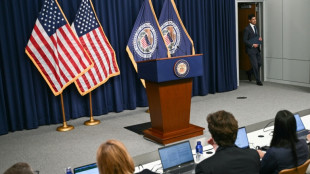 US Fed dissenters call for rate hikes over sustained inflation
 Trump and far-right seize on Spanish migration crisis

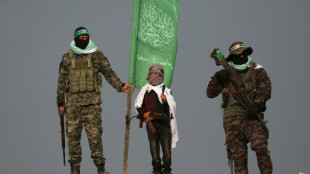 Hamas agrees to disarm under Trump plan
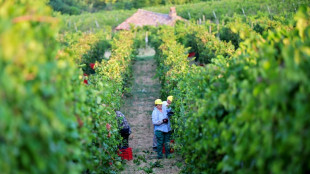 French, Italian winegrowers face earliest ever harvest

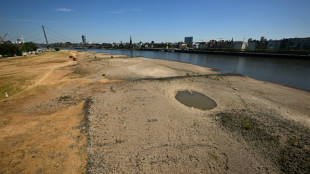 Alarm over climate-linked low level of German waterways

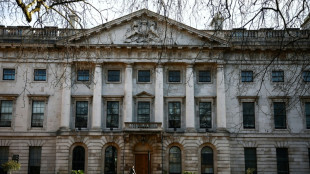 UK court rejects challenge against new Chinese embassy in London

 New York sues online prediction markets giant Kalshi

 Commerzbank agrees to talks with UniCredit after two-year standoff
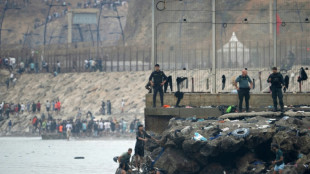
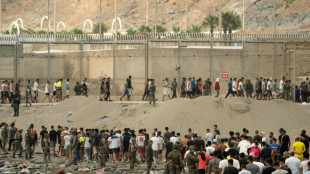
 A rumour, a rush: chaos at Morocco border with Spain's Ceuta

Countries must do more to avert the costly consequences of growing global trade fragmentation, and help avert a "second Cold War," the International Monetary Fund's (IMF) managing director said Thursday.
"I am among those who know what are the consequences of a Cold War: it is loss of talent and contribution to the world," Kristalina Georgieva said during a press conference at the official start of the World Bank and IMF's spring meetings.
"I don't want to see that repeating," she said, adding that the world should "rationally accept there will be some cost, there will be some fragmentation, but keep these costs low."
Georgieva was born and raised in Bulgaria, a former Soviet satellite state.
Multilateral institutions like the World Bank and IMF have an important role to play in preventing the world from splintering into different blocs with severe economic consequences, she said.
An IMF report earlier this week predicted that growing trade fragmentation resulting from events like Brexit, the US-China trade war and the Russian invasion of Ukraine, could make the global economy as much as seven percent smaller than it otherwise would have been.
Policymakers had a crucial role to play to "defend the interests" of their citizens, Georgieva said.
"If we fail to be more rational, then people everywhere will be worse off," she said.
- Progress made on World Bank reforms -
Progress has been made on a number of key issues for the World Bank and IMF, the Bank's outgoing president, David Malpass, said earlier Thursday at an event marking the official start of the spring meetings.
Member states agreed on a number of steps to boost the World Bank's financial capacity, he said, freeing it up to lend "as much as $50 billion of new financing" over the next decade.
Progress was also made on during debt roundtable discussion on Wednesday, Malpass said. For the first time, these talks included not only creditor countries but also the private sector, and representatives from Zambia, a country in advanced talks on restructuring its debt.
The Bank and IMF's leaders said progress had also been made to replenish lending facilities for low-income countries which have been depleted by the twin impact of the Covid-19 pandemic and the Russian invasion of Ukraine.
Ireland, Saudi Arabia, the UK, Portugal and Japan have all already come forward with "substantial new pledges or contributions" towards replenishing these funds in recent days, Georgieva said.
- 'Stay the course' -
Georgieva and Malpass both warned Thursday that inflation remained too high in many countries around the world.
"We expect central banks to stay the course in the fight against inflation, holding a tight stance to prevent a de-anchoring of inflation expectations," Georgieva said.
Governments also needed to work to reduce their budget deficits, and do more to improve sluggish growth prospects for the world economy in the medium term, she added.
In her remarks, Georgieva called on member states to push through the structural transformations needed to speed up digital transformation, improve the business environment in many countries, and accelerate the green energy transformation.
"We estimate $1 trillion a year is needed just for renewable energy and investment that can translate into growth and jobs," she said.
W.Lapointe--BTB