Cypriots priced out as Russians, Israelis eye coastal city / Photo: © AFP

 Search ended at mall wrecked by Japan quake blast

 Deadly strikes rock Kyiv as Zelensky appeals for air defences
 Egypt captains recount scramble to stop disaster after drone strike
 South Korea baseball league cancels two games over heatwave

 US drops Reflecting Pool case, admits damage due to botched renovation
 Russian attacks on Kyiv kill 9, wound more than two dozen
 Injured Australian swim star O'Callaghan pulls out of PanPacs
 California lifeguards wiped out from extreme weather

 FIFA scraps private investment plan after backlash: Infantino
 South Africa's WAFCON hopes hang in the balance after dramatic draw

 Hunter Bell cruises to Commonwealth gold, Pathirage stuns javelin stars

 Amazon surges as US stocks shrug off bond yield worries

 Google rolls back new satellite image AI tool after backlash

 Ryu leads in bid for third straight major at women's British Open

 Fire-hit France region 'coming up for air' as main blaze calms
 Wembanyama to get signature shoe in Nike contract extension: reports
 Oil giants report blowout profits on war, warn high gas prices could persist
 Google launches new satellite image AI tool, alarming researchers
 Eddie Howe resigns as Newcastle boss to 'recharge'
 High winds hamper firefighting efforts in western Turkey

 Howe resigns as Newcastle boss

 Full-scale tour will benefit All Blacks, says coach Rennie

 US Fed dissenters call for rate hikes over sustained inflation
 Trump and far-right seize on Spanish migration crisis

 Hamas agrees to disarm under Trump plan
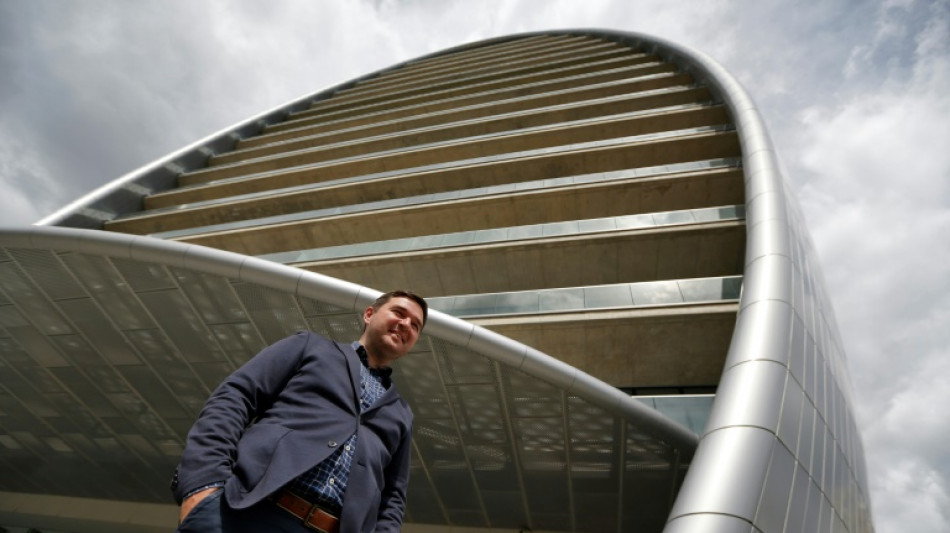
In Cyprus's southern coastal city of Limassol, Russian and Ukrainian firms fleeing wartime conditions, and Israeli investors betting on real estate, have driven prices up and local residents out.
Eleni Constantinidou is one of them, pregnant when her landlord terminated her lease. Unable to find an affordable place in her home town, the Cypriot was forced to move in with her parents, husband and child in tow.
In 2016, it cost her 400 euros ($438) to rent a beachfront apartment in Cyprus's second city where about 176,000 people live.
Now, rent is "1,500 euros at a minimum for a two-bedroom apartment", she told AFP.
"Nothing is accessible for Cypriots anymore. The owners know this, and they are only looking for foreigners," said Constantinidou, who is in her 30s.
By comparison, in the capital Nicosia -- inland and without a Mediterranean view -- a two-bedroom semi-detached ground floor unit can still be rented for around 650 euros a month.
But Limassol -- often nicknamed "Moscow on the Med" -- has long been a magnet for Russian speakers.
In February 2022, as Moscow began its invasion of Ukraine, fintech companies began pulling out of the two warring countries and neighbouring Belarus.
Many settled in Limassol to take advantage of the favourable tax environment in Cyprus, and with the lucrative industry came a new class of moneyed professionals.
In May, Russian-language communications company Vestnik Kipra's site counted 3,000 new IT specialists on its roster, a number that has only grown since.
As for Ukrainians, Limassol mayor Nicos Nicolaides estimated more than 10,000 moved to Limassol since the war, "which is quite a big number".
Dmitri Leonov, who works for a fintech company and relocated to Cyprus from Moscow before the invasion, said the average salary in the sector is 5,000 euros.
"So, for them, paying 1,500 euros for rent is not a problem," he told AFP. "It had a quite deep impact on the real estate market."
He himself used to pay 1,500 euros for his apartment. Then the landlord said the rent was rising to 2,000 euros.
The young father said he was "very lucky" to find another apartment within his budget, considering "more than 60 people" had applied for it.
- 'Way too much!' -
Rent in Limassol has surged by 23 percent in a single year, according to Ask WiRe, a Cypriot real estate market analytics startup.
By comparison, it says rent in Nicosia went up 14 percent.
According to Marios Constantinou, head of property agency QuickLets, that increase has attracted "investors from Israel, who consider Cyprus a very good investment opportunity".
The inflow has also caused a surge in sale prices.
"We've seen a lot of apartments being constructed to be sold for around half a million to 700,000 euros," Pavlos Loizou, founder of Ask WiRe, told AFP.
He points on a map to an apartment in downtown Limassol: 475,000 euros for 100 square metres (about 1,000 square feet).
"That's way too much!" Loizou said.
Behind such big-money projects are often foreign investors, "notably Israelis", he said.
However, this "triangle" of "foreigners selling (land) to foreigners, to develop and sell or rent to foreigners" is nothing new, according to Loizou.
Since 2008, developers have barrelled through the island, transforming the Limassol skyline into tower blocks and luxury homes, making it the most modern-looking of Cypriot cities.
The island's bloated banks granted developers huge loans without hesitation, a trend that helped push the country to the brink of financial collapse in 2013 following a crisis in neighbouring Greece.
"The economic system now is stronger, but it's still dangerous when foreigners take your country for a financial playground," Constantinou said.
According to real estate expert Antonis Loizou, 4,123 properties in Cyprus were sold to foreigners in 2022, up from 2,432 in 2020.
- Social housing -
Before it was scrapped in 2020, Cyprus's "golden passport" scheme granted citizenship to thousands of foreign investors -- many of them from Russia -- in exchange for a 2.5 million euro investment, often a residential property.
The scheme has been disbanded for years, but not before it mired the country's political leaders in controversy and left an indelible mark on Limassol's housing market.
A $5 million listing of one such residence is set to earn a hefty commission for Florent Gastine, a French real estate agent who traded his life on the French Riviera for Limassol's "booming" market.
With a sea view, marble kitchen and a gigantic swimming pool, the same Russian-speaking owner is offering another apartment for rent at 18,000 euros a month.
"This is the market price," Gastine told AFP, explaining that the end of the golden passports scheme created a domino effect. Developers built fewer luxury units, which "pushed prices up".
The only solution, according to Limassol mayor Nicolaides, is to build social housing.
"We don't want Limassol to become a city where only white-collar workers can live," he told AFP.
"For Cypriots, it's heartbreaking to think that they can't live where they were born."
N.Fournier--BTB