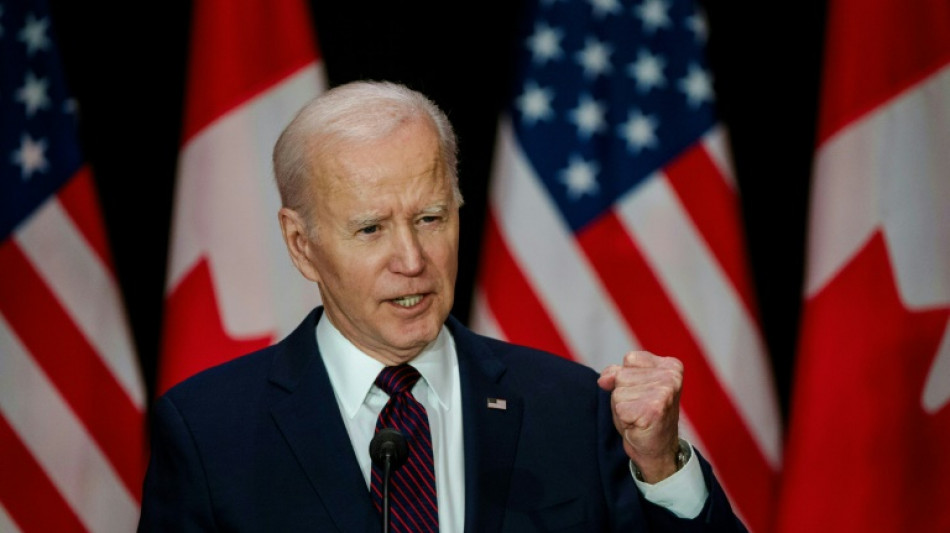
Biden widens net in new democracy summit as Russia, China concerns grow / Photo: © AFP

 13 dead after small tourist plane crashes in Peru
 France's devastating fires now 'under control', says PM
 Noh leads by three at women's British Open as Ryu falters
 CONCACAF calls for 'comprehensive reckoning with' Infantino's FIFA leadership

 Wiebes claims Tour de France Femmes yellow jersey with opening stage win

 US embassies urge citizens to consider departing Middle East

 Moroccans ejected from Spain's Ceuta lament 'broken dreams'
 Gaza's civil defence, medical sources say Israeli strikes kill two
 Bournemouth sign Portugal defender Silva from Benfica

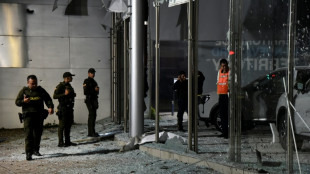
 11 injured in Colombia bombing days before presidential inauguration
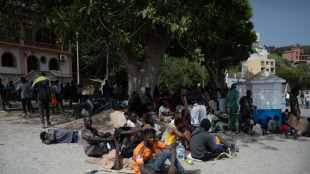 In Spain's Ceuta, exhausted migrants end short trip with little hope

 German FA calls for 'full investigation' into FIFA proposal
 Richarlison, Tonali fire 10-man Spurs to 2-1 Sydney win over Chelsea
 Deadly strikes rock Kyiv, as Ukraine sinks Russian cargo ship

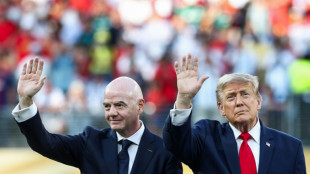 UEFA target Infantino after FIFA shelve World Cup private investment plan

 Infantino has lost UEFA's 'confidence' despite withdrawal of 'shabby deal'
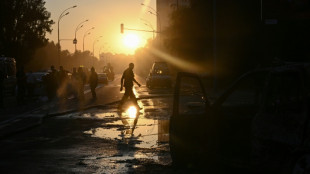
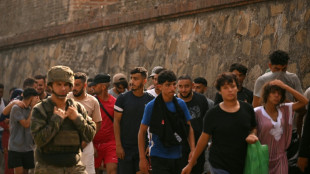 Spain's N. Africa enclave returns to normal as migrants depart
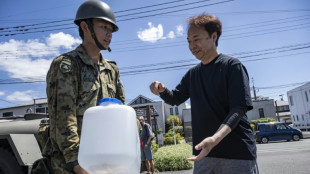
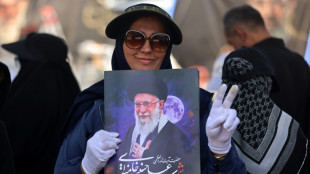 Iranian pilgrims flood Iraq for first Arbaeen since war

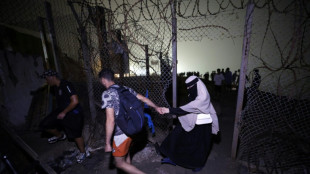 Migrants depart Spain's N. Africa enclave as EU tightens borders
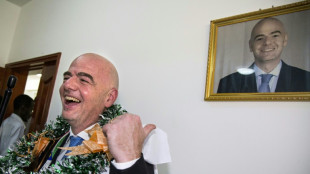 Timeline: How FIFA's World Cup private investment plan imploded

 Search resumes for missing climbers from Pakistan avalanche
 Warsaw and Kyiv exhume Volyn victims at centre of diplomatic quarrel
 India PM Modi says he forgives protesters who abused him

 Veteran Wallabies playmaker Quade Cooper eyes World Cup comeback

 FIFA scraps private investment plan after backlash

The United States on Tuesday opens its second Summit for Democracy with its eyes firmly on the rest of the world, seeking a united front against authoritarianism as Russia attacks Ukraine and as China launches a diplomatic offensive.
President Joe Biden took office pledging to champion democracy, and in his first year made good with the inaugural summit, which sought to reaffirm US leadership after his predecessor Donald Trump eroded democratic norms and the attack on the Capitol.
This time round, in a nod to concerns that the first edition was too much about US navel-gazing, Biden has tapped co-hosts on each continent -- the presidents of Zambia, Costa Rica and South Korea and prime minister of The Netherlands.
In total he has invited 121 leaders for the three-day, mostly virtual summit -- eight more than in 2021.
The summit comes as threats to democracy evolve "from what was seen as an important issue, albeit sort of a slow-moving threat, to one that is now both important and extremely urgent," said Marti Flacks, director of the human rights initiative at the Center for Strategic and International Studies.
The sessions will bring in civil society representatives for discussions on a range of challenges to democracy including surveillance technology, which the United States sees as a growing threat as China makes rapid technological advances.
"In the absence of pending congressional action in that space, it is important that the administration is engaging bilaterally with other countries and also with companies on voluntary actions that can be taken in the interim," Flacks said.
- Shunning Turkey, Hungary -
The summit will open Tuesday with a virtual conversation on peace in Ukraine featuring President Volodymyr Zelensky.
Not only the message but the setting will be a striking contrast from the first summit where Zelensky, now a wartime leader in military fatigues, was clean-shaven and wearing a crisp black suit.
While Biden has kept his campaign pledge on the democracy summit, he has disappointed some human rights activists by easing his earlier vows to shun autocratic leaders.
Biden last year visited both Saudi Arabia, acknowledging the kingdom's role in oil markets, and Egypt, the host of a climate summit and US partner in regional security, and has increasingly worked with Turkish President Recep Tayyip Erdogan on Ukraine.
None of those three countries are being invited to the summit, a backhanded criticism especially of Erdogan, who faces reelection on May 14 after two decades in power in which he is accused of creeping authoritarianism.
Uniquely among European Union states, Biden is not inviting Hungary, where Prime Minister Viktor Orban won a fourth term last year but has been accused of deviating from liberal values by clamping down on the press, denouncing non-European refugees and speaking favorably of Moscow.
US partners shunned for the summit include Singapore, whose elections are generally considered free but which limits free assembly and regulates media, and Bangladesh, where hundreds have been arrested under the Digital Security Act.
The State Department declined to discuss criteria for inclusion.
"However, we reiterate that for the summit we aim to be inclusive and representative of a regionally and socioeconomically diverse slate of countries," a State Department spokesperson said.
"We are not seeking to define which countries are and aren't democracies."
Growing US partner India, billed as the world's largest democracy, is on the attendance list days after opposition leader Rahul Gandhi was expelled from parliament, the latest step under Prime Minister Narendra Modi that has alarmed rights groups.
India's neighbour and arch-rival Pakistan, where Imran Khan was last year ousted as prime minister and later charged, is also on the list.
- More Africans invited -
Of the countries that received invitations after being kept away in 2021, five are in Africa including Tanzania, where President Samia Suluhu Hassan has promised to restore competitive politics, and Ivory Coast, where tensions have eased since 2021 elections passed off calmly, as well as The Gambia, Mauritania and Mozambique.
In Latin America, Biden is for the first time inviting Honduras, which won praise for authorities' improved conduct of 2021 elections, despite persistent violence and its recent dumping of Taiwan ties for China.
The summit comes as the United States focuses on Africa, where China and Russia have both been making inroads.
Vice President Kamala Harris will travel during the week to Ghana, Tanzania and Zambia -- whose president, Hakainde Hichilema, has been held up by Washington as a model on democracy and will hold his own events as a summit co-host.
Freedom House, the US-backed research group, in its latest annual report saw an overall deterioration in global democracy but also a growing number of bright spots.
Katie LaRoque, the group's coordinator for the summit, said that while a single meeting would not in itself be decisive, the gathering gives an opportunity.
Democracies can "coordinate policy changes that can contain rampant authoritarian aggression," she said.
F.Müller--BTB