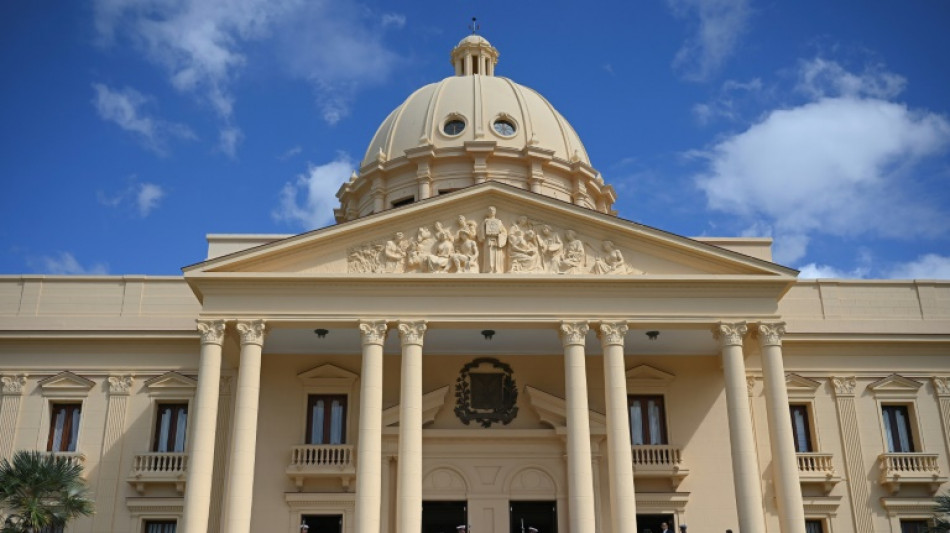
LatAm food crisis on the table at Ibero-American summit / Photo: © AFP

 South African election results renew debate over identity-based voting

 South African voters report smoother local election but declining IEC trust

 Dolly Parton museum and Nashville hotel open after singer’s death

 George and Amal Clooney attend New York political-comedy reading

 British buyers pay substantial premiums for period-home appearance

 Thomas Markle released to house arrest after child-abuse-image charge

 Dawn of War 4 developers chose Adeptus Mechanicus for tactical variety

 Italy face unbeaten South Africa in Turin Nations Championship match

 ChatGPT interactive interface feature tested across six custom tools

 Freshways milk-price cut deepens pressure on UK dairy farms

 Labour and National remain virtually tied as New Zealand vote count advances

 The Good Daughter adapts Karin Slaughter thriller with Rose Byrne and Meghann Fahy

 Heavy-lift drone evacuates wounded Ukrainian soldier from frontline kill zone

 Morrison says West Brom recovered after pressure from successive derby losses

 Britain considers 2027 state visit for Ukraine’s Zelensky

 Arizona Democrats Secure Historic Trifecta with New Legislative Leadership

 Carney Welcomes U.S. Trade Reversal After Democratic Midterm Victory

 Armenian FM Discusses EU Accountability for Palestinian Rights in Madrid

 Trump and Vance Pursue Secret Diplomacy with Iran Amid Military Pressure

Addressing a food crisis affecting a fifth of Latin America's population featured high on the agenda of an Ibero-American leaders summit that started in the Dominican Republic on Friday.
According to the United Nations' Food and Agriculture Organization, Latin America and the Caribbean is the region of the world where eating a basic healthy diet is most expensive -- at $3.89 per person per day in 2020, compared to $3.19 in North America and Europe.
It is a price that 22.5 percent of the region's population cannot afford, according to the UN -- more than 130 million people in 2020.
Heads of state and government from 14 of the 22 Spanish- and Portuguese-speaking countries of Latin America and Europe, were due to attend the two-day summit.
Spain's King Felipe VI and Prime Minister Pedro Sanchez and Portuguese President Marcelo Rebelo de Sousa are among those gathered in Santo Domingo with the leaders of Chile, Uruguay, Honduras and others.
Latin America, which faces a "difficult" 2023 according to predictions by the Inter-American Development Bank (IDB), will be hoping the meeting results in more support for its struggling economies.
- Fairer, more inclusive -
Financing will be "a central point," the Dominican Republic's deputy minister of multilateral foreign policy, Ruben Silie, said at a press conference this week.
Much current financing "does not take into account the crisis situation that our countries are experiencing," he added.
"They do not respond adequately to the indebtedness of the countries and... the burden of the health crisis and later the crisis in Europe," Silie said, referring to the Ukraine war.
The Ibero-American group's secretary general, Andres Allamand, said the summit should approve "a roadmap that marks the path towards food security" and charters dealing with technological threats and environmental protection.
It should also adopt "a proposal for a fairer and more inclusive international financial architecture that allows financing the post-pandemic recovery," he said in a statement.
The meeting will also serve as preparation for a July summit of the UN Economic Commission for Latin America and the Caribbean (ECLAC) and the European Union, according to Mariano de Alba, an analyst with the Crisis Group think tank.
"Many issues on the agenda of this Ibero-American summit will be the main ones of the July summit," he told AFP.
These include to "strengthen ties and coordination between Europe and the region to address three issues: food security, environmental challenges and how to cooperate to increase access to technology."
The IDB had forecast economic growth of 1.0 percent for Latin America and the Caribbean. The International Monetary Fund has put the figure at 1.8 percent.
Among the notable summit absentees is Mexican President Andres Manuel Lopez Obrador who also did not send his foreign minister but an under-secretary.
According to De Alba, this reflected tensions between Spain and Mexico after Lopez Obrador accused Spanish firms of having paid bribes in his country in the past in exchange for contracts.
L.Janezki--BTB