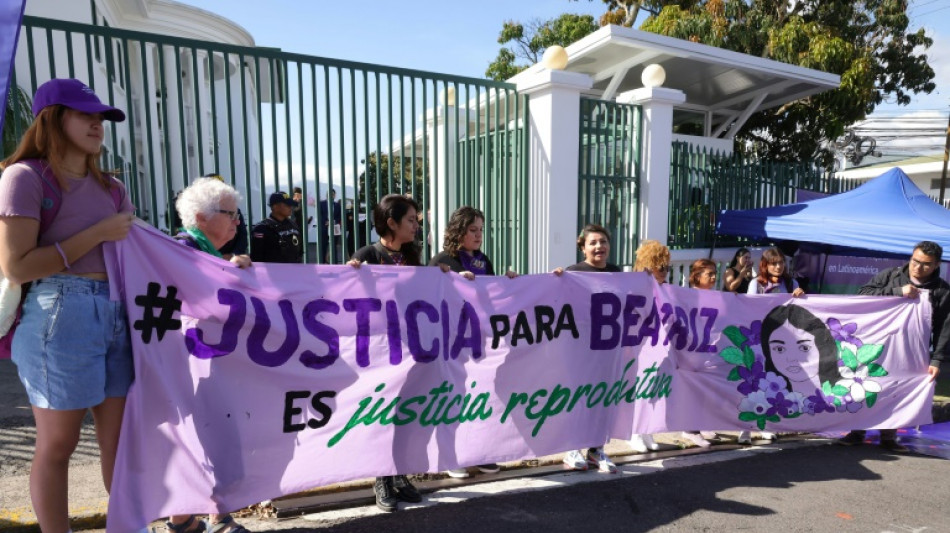
Judgment awaited in Inter-American court's first abortion rights case / Photo: © AFP

 Colombia truck bomb wounds 14 ahead of presidential inauguration

 Eala stuns Osaka to book Washington final against Pegula

 13 dead after small tourist plane crashes in Peru
 France's devastating fires now 'under control', says PM
 Noh leads by three at women's British Open as Ryu falters
 CONCACAF calls for 'comprehensive reckoning with' Infantino's FIFA leadership

 Wiebes claims Tour de France Femmes yellow jersey with opening stage win

 US embassies urge citizens to consider departing Middle East

 Moroccans ejected from Spain's Ceuta lament 'broken dreams'

 Gaza's civil defence, medical sources say Israeli strikes kill two
 Bournemouth sign Portugal defender Silva from Benfica

 11 injured in Colombia bombing days before presidential inauguration
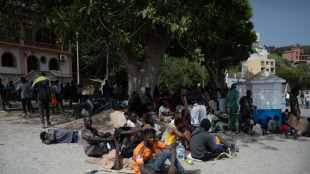 In Spain's Ceuta, exhausted migrants end short trip with little hope

 German FA calls for 'full investigation' into FIFA proposal
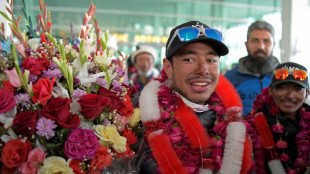
 Richarlison, Tonali fire 10-man Spurs to 2-1 Sydney win over Chelsea

 Deadly strikes rock Kyiv, as Ukraine sinks Russian cargo ship

 UEFA target Infantino after FIFA shelve World Cup private investment plan

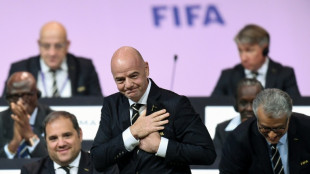 Infantino has lost UEFA's 'confidence' despite withdrawal of 'shabby deal'

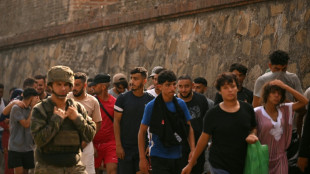 Spain's N. Africa enclave returns to normal as migrants depart
 Iranian pilgrims flood Iraq for first Arbaeen since war

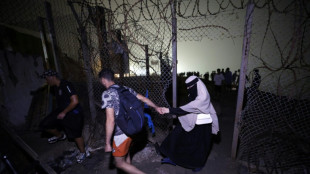 Migrants depart Spain's N. Africa enclave as EU tightens borders

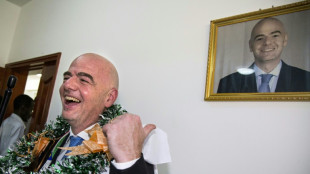 Timeline: How FIFA's World Cup private investment plan imploded

 Search resumes for missing climbers from Pakistan avalanche

 Warsaw and Kyiv exhume Volyn victims at centre of diplomatic quarrel

 India PM Modi says he forgives protesters who abused him

Activists battled the government of El Salvador Thursday on the final day of the Inter-American Court of Human Rights' first-ever abortion rights hearing.
Representing a woman identified only as "Beatriz" who was made to carry a deformed fetus despite risks to her own health, rights bodies accused the Central American country of trampling on women's rights with its blanket abortion ban.
Beatriz's "rights to life, personal integrity, health and privacy... were limited by the criminalization of abortion" in El Salvador, argued Julissa Mantilla of the Inter-American Commission on Human Rights (IACHR) which appeared as a party in the case.
On the other side of the fence, lawyer Juana Acosta argued for the government of El Salvador that abortion was "criminal" if its "intention is to destroy the unborn."
And her colleague Ana Maria Hidalgo said the American Convention on Human Rights made no distinction between born and unborn "human beings."
"This case involves two human beings, and therefore two holders of... rights: Beatriz and her (unborn) daughter," Hidalgo argued.
The judgement is expected in about six months.
In El Salvador, abortion has been prohibited since 1998 under penalty of up to eight years in prison.
Courts frequently find women guilty of the crime of aggravated homicide instead, imposing sentences that can go up to 50 years.
Beatriz suffered from an auto-immune disease when she fell pregnant for the second time in 2013 aged 20, after a previous complicated birth.
After the fetus was found to be unviable due to a severe developmental defect, doctors said an abortion was necessary, but were not allowed to perform it.
El Salvador's Constitutional Court threw out Beatriz' legal bid for permission to end the pregnancy.
She later went into premature labor, and the fetus died.
The IACHR, which shares an acronym with the Costa Rica-based court to which it referred the case, declared last year that the pain and suffering Beatriz was made to endure amounted to "cruel, inhuman and degrading treatment."
- 'Torture' -
Gisela de Leon of the Center for Justice and International Law (Cejil), a rights NGO among the plaintiffs, said the state had "violated (Beatriz's) rights to life and personal integrity" in what amounted to "a form of torture."
Beatriz died in a car accident in 2017, but her family has pursued the case without her.
"What we really want is for other women not to suffer what my sister had to go through," Beatriz's 30-year-old brother, using the pseudonym Humberto to keep her identity secret, told AFP.
The case comes as some Latin American countries are taking cautious steps towards easing abortion restrictions even while the United States -- which has signed but not ratified the rights court's founding convention -- has been rolling back access.
In Latin America, elective abortion is legal in Argentina, Colombia, Cuba, Uruguay, and some states in Mexico.
In several countries it is allowed in certain circumstances, such as rape or health risks, while outright bans apply also in Honduras, Nicaragua, Haiti and the Dominican Republic.
Several states in the United States have banned or curtailed abortion access since a Supreme Court ruling last June overturned the landmark Roe v. Wade decision that had long protected abortion rights.
D.Schneider--BTB