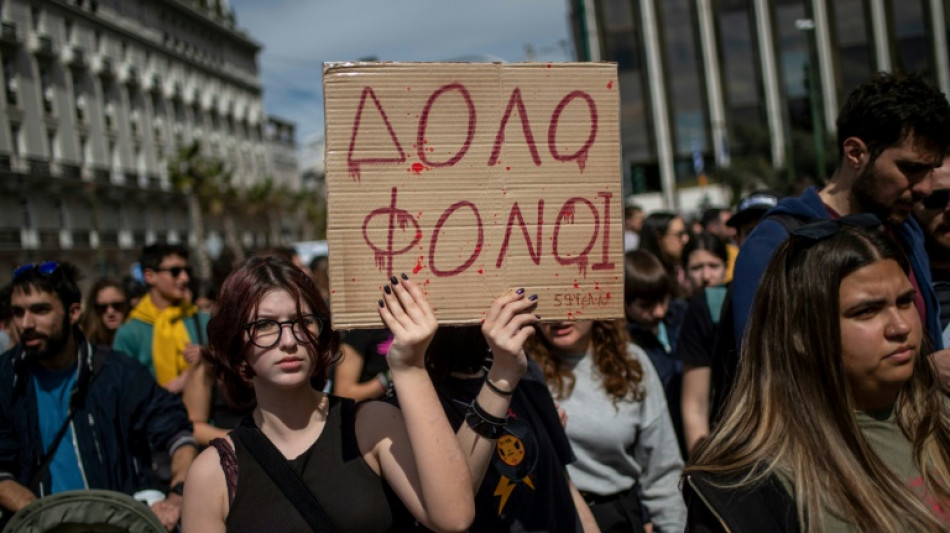
Greece election to be held in May under shadow of rail disaster / Photo: © AFP/File

 Venezuela transition talks to start in person next week: govt

 Colombia truck bomb wounds 14 ahead of presidential inauguration

 Eala stuns Osaka to book Washington final against Pegula

 13 dead after small tourist plane crashes in Peru

 France's devastating fires now 'under control', says PM
 Noh leads by three at women's British Open as Ryu falters
 CONCACAF calls for 'comprehensive reckoning with' Infantino's FIFA leadership

 Wiebes claims Tour de France Femmes yellow jersey with opening stage win

 US embassies urge citizens to consider departing Middle East

 Moroccans ejected from Spain's Ceuta lament 'broken dreams'

 Gaza's civil defence, medical sources say Israeli strikes kill two
 Bournemouth sign Portugal defender Silva from Benfica
 11 injured in Colombia bombing days before presidential inauguration
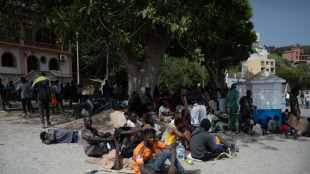 In Spain's Ceuta, exhausted migrants end short trip with little hope
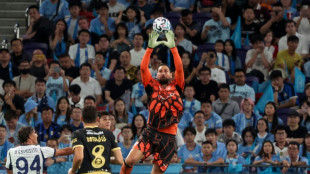
 German FA calls for 'full investigation' into FIFA proposal
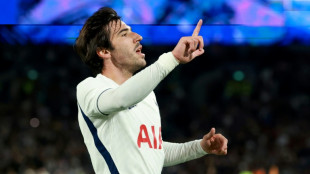 Richarlison, Tonali fire 10-man Spurs to 2-1 Sydney win over Chelsea

 Deadly strikes rock Kyiv, as Ukraine sinks Russian cargo ship
 UEFA target Infantino after FIFA shelve World Cup private investment plan
 Infantino has lost UEFA's 'confidence' despite withdrawal of 'shabby deal'
 Spain's N. Africa enclave returns to normal as migrants depart

 Iranian pilgrims flood Iraq for first Arbaeen since war
 Migrants depart Spain's N. Africa enclave as EU tightens borders
 Timeline: How FIFA's World Cup private investment plan imploded

 Search resumes for missing climbers from Pakistan avalanche
 Warsaw and Kyiv exhume Volyn victims at centre of diplomatic quarrel
Greece's elections will be held in May, Prime Minister Kyriakos Mitsotakis announced on Tuesday, three weeks after the country's deadliest rail disaster sparked protests and piled pressure on his conservative government.
Mitsotakis' term officially ends in July, ahead of which a second ballot may be needed if the first vote fails to produce a majority or a multi-party coalition.
No exact date was given for the polls.
"I can tell you with certainty that the elections will be held in May," the leader of the New Democracy (ND) party said in his first televised interview since the head-on collision between two trains on February 28.
"A second election may be necessary. It is very likely."
In power since 2019, Mitsotakis' administration has seen its popularity tank since the February train crash killed 57 people and brought tens of thousands of Greeks onto the streets, furious over the country's dilapidated infrastructure and perceived government mismanagement of the crisis.
While the accident was attributed to a mistake by the stationmaster on duty that night, Greece's rail watchdog found in a probe that serious safety faults permeated the network, including inadequate basic training of critical staff.
- Accusations of mismanagement -
Railway unions had long warned of problems stemming from underfunding and understaffing after a decade of spending cuts, which they claimed left the network prone to accidents.
Once-operational signalling and safety systems had also fallen into disuse due to extensive vandalism and looting of the 2,552-kilometre (1,586-mile) network, according to the unions.
The disaster sparked weeks of angry and occasionally violent protests.
The prime minister tried to quell the unrest by repeatedly apologising and vowing a transparent probe, but himself became a lightning rod for criticism after he said the crash was caused by "a tragic human error".
Greece's transport minister resigned while an investigation was launched into possible railway fund mismanagement over the last 15 years.
At the demonstrations' peak, more than 65,000 people poured onto the streets, demanding accountability, calling for Mitsotakis's resignation and some accusing the government of being "murderers".
After sporadic work stoppages, a 24-hour general strike on March 16 paralysed transport.
- Cost of living crisis -
The crash aggravated already high public anger over the government's handling of a cost of living crisis, with energy and food prices skyrocketing.
The pandemic struck just as Greece was beginning to recover from economic woes that had already seen it lose a quarter of its national output.
In 2020, the economy shrank by nine percent.
Inflation in January surged to 6.2 percent in an annual comparison, while the country's unemployment rate has surged to become the highest in the eurozone, at around 13 percent.
Many Greeks have been alarmed by the decay of public services in the country which has had to privatise much of its public sector, including passenger and freight trains, to pay off debts.
The last tranche of IMF loans extended to Greece during the 2010-2018 debt crisis, worth 1.85 billion euros, is to be repaid by April.
In the latest opinion polls conducted after the train crash, New Democracy's advantage over the main opposition party Syriza had slipped to between 3.5 to 4.1 points ahead.
Young voters, especially students, were seen as especially dissatisfied with the status quo.
N.Fournier--BTB