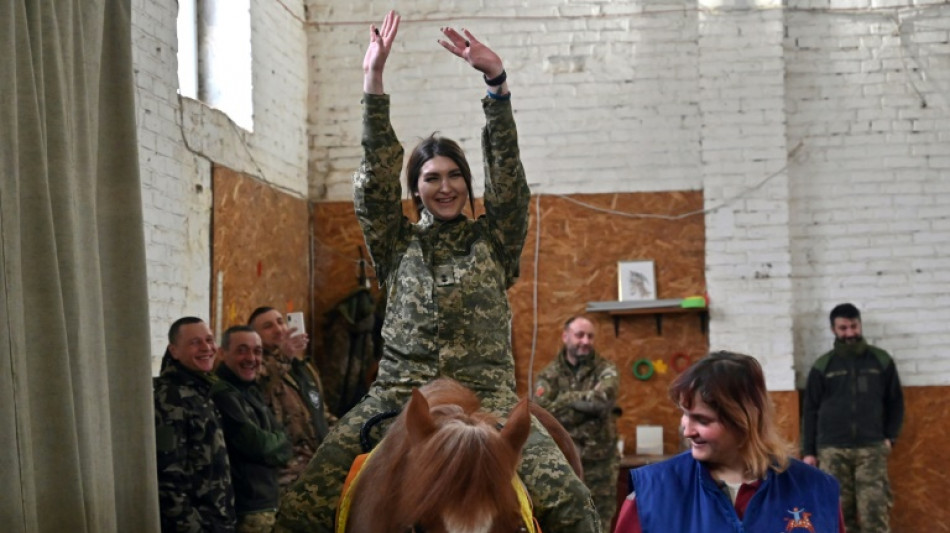
Ukraine soldiers ride out war stress with horse therapy / Photo: © AFP

 South African voters report smoother local election but declining IEC trust

 Dolly Parton museum and Nashville hotel open after singer’s death

 George and Amal Clooney attend New York political-comedy reading

 British buyers pay substantial premiums for period-home appearance

 Thomas Markle released to house arrest after child-abuse-image charge

 Dawn of War 4 developers chose Adeptus Mechanicus for tactical variety

 Italy face unbeaten South Africa in Turin Nations Championship match

 ChatGPT interactive interface feature tested across six custom tools

 Freshways milk-price cut deepens pressure on UK dairy farms

 Labour and National remain virtually tied as New Zealand vote count advances

 The Good Daughter adapts Karin Slaughter thriller with Rose Byrne and Meghann Fahy

 Heavy-lift drone evacuates wounded Ukrainian soldier from frontline kill zone

 Morrison says West Brom recovered after pressure from successive derby losses

 Britain considers 2027 state visit for Ukraine’s Zelensky

 Arizona Democrats Secure Historic Trifecta with New Legislative Leadership

 Carney Welcomes U.S. Trade Reversal After Democratic Midterm Victory

 Armenian FM Discusses EU Accountability for Palestinian Rights in Madrid

 Trump and Vance Pursue Secret Diplomacy with Iran Amid Military Pressure

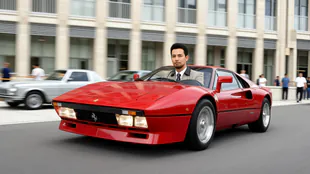 Classic Car Values Surge: De Tomaso Vallelunga Leads 190% Gain
 Microsoft Ends Oracle AI Computing Rental Deal Amid Cloud Strategy Shift
A rider in camouflage lies forward and hugs the neck of a horse called Peach, stroking his coat.
In a cosy barn on the outskirts of Kyiv, a group of Ukrainian soldiers are taking a break from battle with a session of hippotherapy -- using riding and contact with horses for therapeutic effect.
The soldiers have to deal with the difficulties of war but they appear childlike, roaring with laughter over the therapist's dogs play-fighting or the cat sneakily eating their biscuits.
The organisation, called Spirit, also works with children and people with disabilities. When war broke out, it began offering hippotherapy to frontline soldiers via a programme called Spirit Warrior.
Based at Kyiv's ramshackle hippodrome, their horses -- Persik (Peach), Kombat, Spirit and Amethyst -- placidly walk and trot with the mostly first-time riders.
The centre's founder, psychologist Ganna Burago, begins by seating the men in a circle of chairs on the sand-strewn floor.
Three shaggy dogs sprawl in the centre, one with its paws around a soldier's boot. A stove burns warmly and a ginger cat sleeps curled up next to it.
There are pauses and no pressure as Burago asks the men to say their names and how they are feeling.
Then she asks them to look at the dogs and a tortoiseshell cat and say which one they identify with.
"The first step is called sharing. It's getting to know each other," Burago tells AFP.
- 'A horse is a healer' -
Then "they have to choose (an animal), establish contact with an animal. And understand which animal they like most."
"We project our feelings on the animal," she says, and participants choose one that they see as sharing some of their characteristics.
One soldier holds the paws of a tousled brown dog. Others stroke the cat and tickle a big sheepdog under the chin.
Then the troops in small groups mount the horses and ride in circles with helpers beside them, trying to relax their legs and gradually raising their arms to waist and shoulder level and then above their head.
Then they are told to lie forward and clasp the horses round the neck, stroking them.
"Don't forget to breathe. Relax," repeats the trainer, Galyna.
They finally learn to take the reins and briefly break into a trot.
"For me, today's session had a calming effect. What feelings I'll have later, in the evening, I'll see," says one of the older men, whose call sign is Ded or Granddad.
The wiry 51-year-old in a green fleece with deep shadows under his eyes smiles broadly as he rides, something he last did as a boy.
"You get exercise and some kind of psychological unburdening from horses because a horse is a healer," he says.
- 'Lowering that stress' -
Burago says the soldiers she works with are taking a break from the front in Kyiv and will return there.
"They've seen a lot of things that may have caused them post-traumatic stress disorder (PTSD). We don't diagnose them here but their psycho-emotional state is very complicated," she says.
PTSD can affect people who have been in conflict situations, causing them to involuntarily relive moments of emotional stress.
Simply being with animals gives them a chance to see and think about something else.
"Our work is focused on lowering that stress, so that the person can relax and so that something else can enter the brain and create a new perception of reality," Burago says.
"It's a completely different atmosphere -- the contact with the animals, you talk about yourself, you share your emotions, your experiences. It's pretty cool and it recharges you for the future," says Oleg, 35, whose call sign is Dyadya or Uncle.
Dyadya says he is on his second visit and has brought along two soldiers from his unit after recommending it to them.
He says that he keeps busy when not at the front to avoid painful thoughts.
"When you're not on the front line, you try to entertain yourself, do something all the time," he says.
"While you're doing that, the thoughts and anxieties you might have experienced over there directly while you were doing combat missions, don't torture you."
am-video/bur/gil/lb
F.Pavlenko--BTB

