Armenia raises peacekeeper 'problems' with Putin, fears escalation / Photo: © AFP/File

 At least 72 died in Spain's Ceuta migrant rush
 South Korea records its highest-ever temperature of 42.5C
 Trump says US, Israel to hold off on Iran strikes

 Messi returns as Inter Miami draw 2-2 against Columbus Crew

 Five of Cuba's 15 provinces without power as grid fails again

 Baltic startups take aim at deterring Russia on NATO's eastern flank
 Tourists chase high-octane thrill in China's trending biker capital

 Vincent Pastore, who played 'Big Pussy' on 'The Sopranos,' dead at 80

 Lula, Brazil's political titan, races against time
 When rogue AI launches a cyberattack, who is legally responsible?

 Venezuela transition talks to start in person next week: govt

 Colombia truck bomb wounds 14 ahead of presidential inauguration

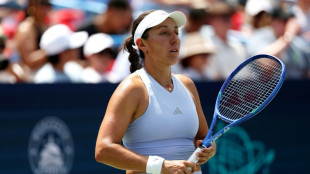
 Eala stuns Osaka to book Washington final against Pegula

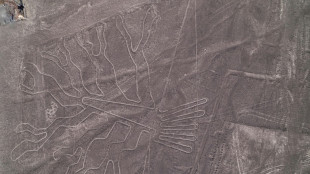 13 dead after small tourist plane crashes in Peru
 France's devastating fires now 'under control', says PM
 Noh leads by three at women's British Open as Ryu falters
 CONCACAF calls for 'comprehensive reckoning with' Infantino's FIFA leadership

 Wiebes claims Tour de France Femmes yellow jersey with opening stage win

 US embassies urge citizens to consider departing Middle East

 Moroccans ejected from Spain's Ceuta lament 'broken dreams'
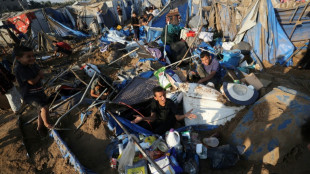 Gaza's civil defence, medical sources say Israeli strikes kill two

 Bournemouth sign Portugal defender Silva from Benfica

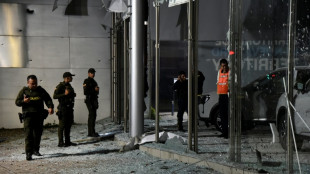 11 injured in Colombia bombing days before presidential inauguration
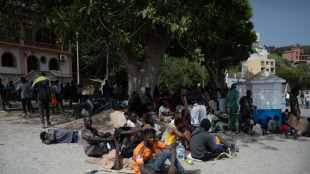 In Spain's Ceuta, exhausted migrants end short trip with little hope

 German FA calls for 'full investigation' into FIFA proposal
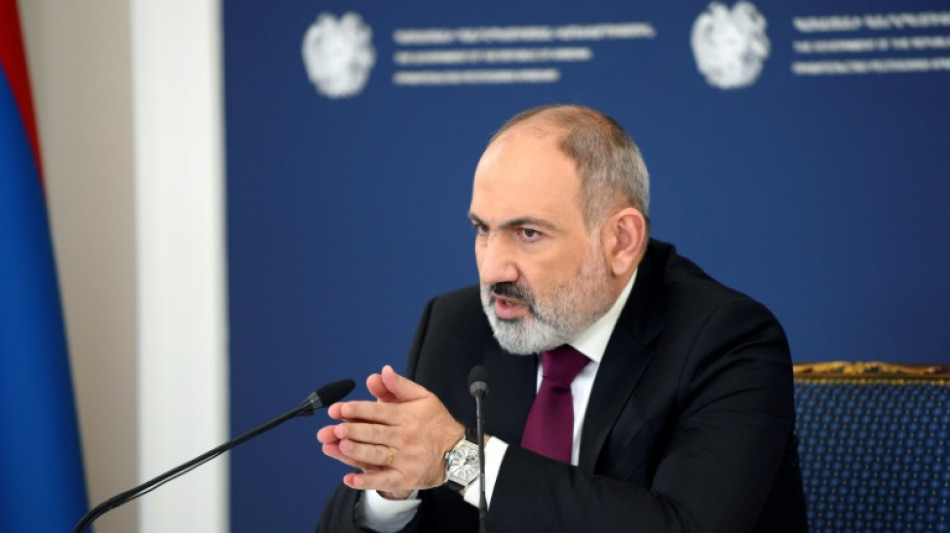
Armenian Prime Minister Nikol Pashinyan said Tuesday he had complained to President Vladimir Putin about "problems" with Russian peacekeepers in Nagorno-Karabakh, warning of an escalation in the restive Caucasus region.
Armenia and Azerbaijan have fought two wars for control of the Armenian-majority region and the latest conflict in 2020 ended with the deployment of Moscow's forces.
Pashinyan's comments are the latest sign that Armenia, which relies on Russia as a security guarantor, is growing frustrated with the Kremlin whose attention is focused on Ukraine and confrontation with the West.
"In a phone conversation with Putin yesterday, I spoke of a possible escalation in Nagorno-Karabakh and said that there are problems in the zone where Russian peacekeepers are responsible," Pashinyan said during a press conference.
"Azerbaijan's rhetoric is becoming more and more aggressive every day," he said, denouncing a blockade of the so-called Lachin corridor, which is Karabakh's sole land link with Armenia.
Since mid-December, a group of self-styled Azerbaijani environmental activists has barred traffic in the Lachin corridor to protest what they say is illegal mining.
Pashinyan on Tuesday described the disruptions along the route as "preparation for ethnic cleansing of Armenians."
- Waning influence -
Yerevan has claimed that the blockade has led to a humanitarian crisis and was aimed at driving Armenians from Karabakh, which Baku has denied.
Armenia, which hosts a permanent Russian military base on its territory, is a member of the Collective Security Treaty Organisation (CSTO) that includes several pro-Moscow ex-Soviet republics -- but not Azerbaijan.
Last week Yerevan refused to assume the rotating top post in the security bloc -- partly in a show of frustration over the peacekeepers' failure to prevent Karabakh's blockade.
"It is not that Armenia is leaving the CSTO, the CSTO is leaving Armenia, which is of a great concern to us, Pashinyan said.
Yerevan's distancing from the bloc marked another sign of Russia's waning authority in its traditional sphere of influence.
At least three Armenians died in the latest border clashes at the beginning of March.
"I want to underline that this happened in the zone of responsibility of Russian peacekeeping forces. This worries us," Pashinyan said Tuesday.
- Progress, problems, red lines -
Pashinyan also said that Armenia recently received Baku's response to proposals for a full peace treaty, which Yerevan submitted in mid-February.
He noted some progress in the peace process, but said "fundamental problems" remain because "Azerbaijan is trying to put forward territorial claims, which is a red line to Armenia."
Yerevan has accused Baku forces of occupying -- after the 2020 war -- some 150 square kilometres in Armenia, along the countries' shared border.
On February 20, the European Union deployed an expanded monitoring mission to Armenia's volatile border area as Western engagement grows in the region seen by the Kremlin as its geopolitical backyard.
When the Soviet Union collapsed in 1991, ethnic Armenian separatists in Karabakh broke away from Azerbaijan. The ensuing conflict claimed around 30,000 lives.
Another flare-up in violence in 2020 left more than 6,500 dead and ended with a Russian-brokered truce.
Under the deal Armenia ceded territories it had controlled for decades and Russia deployed its peacekeeping contingent to oversee the fragile ceasefire.
C.Kovalenko--BTB