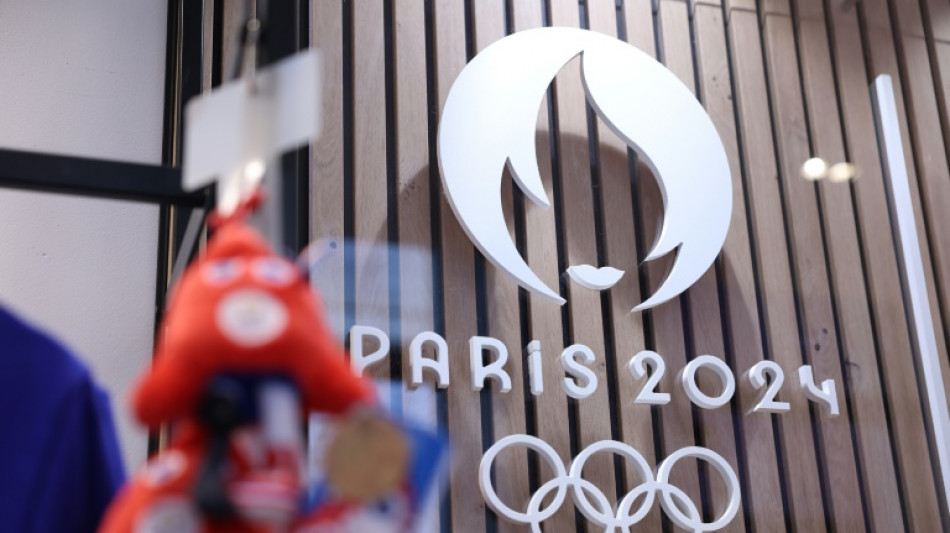
Russia and security 'the major issues for IOC and Paris Olympics' / Photo: © AFP/File

 Power returns to Cuba's west after grid failure
 At least 72 died in Spain's Ceuta migrant rush
 South Korea records its highest-ever temperature of 42.5C
 Trump says US, Israel to hold off on Iran strikes
 Messi returns as Inter Miami draw 2-2 against Columbus Crew

 Five of Cuba's 15 provinces without power as grid fails again
 Baltic startups take aim at deterring Russia on NATO's eastern flank
 Tourists chase high-octane thrill in China's trending biker capital
 Vincent Pastore, who played 'Big Pussy' on 'The Sopranos,' dead at 80
 Lula, Brazil's political titan, races against time
 When rogue AI launches a cyberattack, who is legally responsible?
 Venezuela transition talks to start in person next week: govt

 Colombia truck bomb wounds 14 ahead of presidential inauguration
 Eala stuns Osaka to book Washington final against Pegula
 13 dead after small tourist plane crashes in Peru
 France's devastating fires now 'under control', says PM
 Noh leads by three at women's British Open as Ryu falters
 CONCACAF calls for 'comprehensive reckoning with' Infantino's FIFA leadership

 Wiebes claims Tour de France Femmes yellow jersey with opening stage win

 US embassies urge citizens to consider departing Middle East

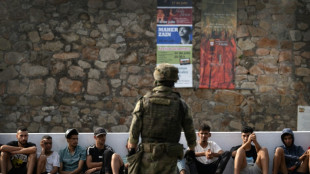 Moroccans ejected from Spain's Ceuta lament 'broken dreams'

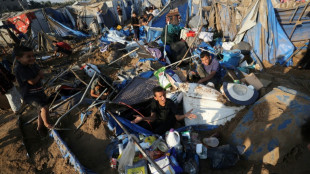 Gaza's civil defence, medical sources say Israeli strikes kill two
 Bournemouth sign Portugal defender Silva from Benfica
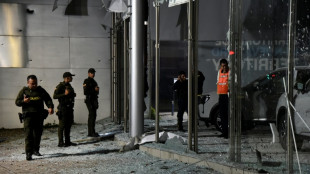 11 injured in Colombia bombing days before presidential inauguration
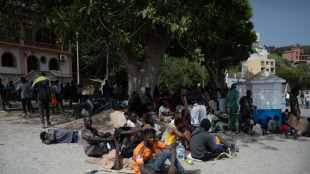 In Spain's Ceuta, exhausted migrants end short trip with little hope
The decision on whether Russian athletes should compete in the Paris Olympics is the biggest headache facing organisers 500 days out from the opening ceremony, former senior IOC officials have told AFP.
Last year's invasion of Ukraine and the ongoing war has prompted many observers to argue that Russia should be banned.
Yet former International Olympic Committee (IOC) marketing chief Michael Payne said the last thing anyone wants is for the Games "to be overshadowed by politics."
Payne, who in nearly two decades at the IOC was credited with negotiating sponsorship deals that vastly improved the body's finances, believes IOC President Thomas Bach is conducting "a very effective consultation process" on the Russian athletes' conundrum.
"Even the USOPC (United States Olympic and Paralympic Committee) say one needs to try and respect the IOC's principal mission of bringing the world together," Payne said in a phone interview.
However, he admits the IOC are caught "between a rock and a hard place" when it comes to taking a final decision on the Russians' participation which he believes will come in "the second quarter of next year."
"The IOC will be seriously challenged to balance its mission with the circumstances of summer 2024," said the 64-year-old Irishman.
"The last thing you probably want is the Paris Games to be overshadowed by politics.
"Heaven forbid a repeat of Melbourne 1956 where the story became the water polo match between Hungary and the Soviet Union."
Another former IOC marketing executive, Terrence Burns, who since leaving the organisation has played a key role in five successful Olympic bid city campaigns, says the issue of Russia "is the biggest challenge for Paris and indeed the Olympic movement."
"It's unprecedented, raw, and tragic and there's no simple handbook or case study on how to handle it depending on one's point of view," he told AFP.
"The IOC haven't made a decision yet and they have about a year for things to either get better, or worse."
Burns understands "the perspective of those arguing for boycotts" but concurs with Payne that boycotting the Games -- as the Ukrainians have urged should Russian athletes compete as neutrals -- is not the answer.
"Maybe circumstances next year will make it untenable and clearly a discussion will have to take place with the head of the host government," Payne said.
"But I cannot see a boycott happening. It's a great soundbite for politicians, American or British, shouting boycott when sporting bodies are saying that is not the mission."
- 'Bring them to heel' -
Hugh Robertson, the minister responsible for delivering the London Games in 2012, says Russia is one issue Paris Games president Tony Estanguet does not need to have sleepless nights over.
"On the basis of my experience, emphatically not!" he told AFP.
"The organising committee will be completely focused on delivering the Games and will leave all decisions such as this to President Macron and the IOC.
"They will deliver whatever they are required to deliver!"
Robertson, the chairman of the British Olympic Association (BOA), says security is a far bigger concern for the organisers -- one aspect requiring intensive planning is the ambitious opening ceremony on the River Seine.
"Security is always the big, unspoken issue," said Robertson.
"London was delivered at the height of the war on terror and Rio (in 2016) against the backdrop of a very serious crime threat.
"The threat will be different in Paris but I suspect that it will neither be better or worse than anywhere else."
Payne said the issue now is defining where the threat is coming from.
"It is a new dynamic, who are you fighting against," he said.
"I lived the experience with Seoul in 1988. It was very clear who you were focused on, it was North Korea and it was a state.
"Through the back channels you work the agenda as (then-IOC President Juan Antonio) Samaranch did with the Soviet Union and China to bring them to heel.
"They turned round and said 'we have taken care of it, there will be no incident.'"
For Burns everything changed with the 9/11 terror attacks.
"There's no going back, and sadly, the list of bad actors and their sophistication has grown," he said.
"Paris has a bold plan for ceremonies, and one has to believe they have the security planning to match it."
O.Krause--BTB