A year after the Ukraine invasion, oil market much changed / Photo: © AFP

 Dodgers land Tigers pitching ace Skubal in MLB trade deadline blockbuster

 Infantino struggling to survive, says former IOC marketing chief
 OPEC+ boosts September production by 188,000 barrels/day
 Rescuers recover climber Nirmal Purja's body after avalanche disaster
 Fire toll mounts in Greece as blazes spread

 Sri Lanka deploys troops after prison riot
 Baltics transform from Soviet stagnation to startup hubs

 AI keeps consumer prices high in 'RAMaggedon' chip crunch
 Dressel, Walsh win 50m free titles at US Swimming Championships
 OPEC+ tipped to raise production again but new quotas loom

 De Zerbi unsure over Richarlison's future at Spurs

 Tottenham manager De Zerbi 'happy' with pre-season progress

 Brazil's Lula launches fourth term bid as Trump looms over campaign

 Alonso welcomes Mudryk's Chelsea return after doping ban

 'Damn hot': Last summer for Japan cosplay extravaganza

 Auger-Aliassime playing for hometown pride at Montreal Masters

 Commonwealth Games poster boy Kerr delivers mile gold in Glasgow

 Pegula defeats Shnaider to reach Washington Open final

 Gaza officials say Israeli strikes kill seven day after deal

 Hundreds of minors sleep rough in Ceuta migrant crisis
 Ex-British champion jockey Crowley takes 'hardest decision' to retire

 Brentford sign Mali midfielder Sangare in club record deal
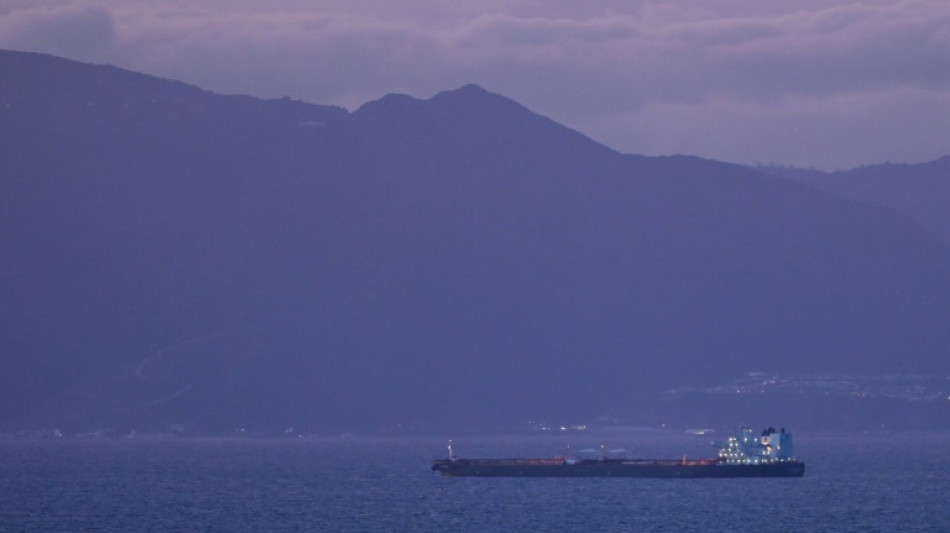
A year after Russia's invasion of Ukraine, the oil market has become more fragmented and uncertain, a dynamic expected to boost crude prices over the long term.
Condemnation of Russia by Western governments has essentially severed Europe from Russian supplies, leaving it more reliant on the Middle East and the United States.
That shift means cheaper Russian energy imports for China and India, while countries that refuse to buy Russian crude must pay a premium to import from other suppliers.
The oil market "is radically different in some ways than it was before the invasion of Ukraine," said Jim Burkhard, head of research for oil markets, energy and mobility at S&P Global Commodity Insights.
A "true global market" with open competition "doesn't exist anymore," said Burkhard, who calls the current state of the market "partitioned."
With the addition of Russia to the list of sanctioned countries alongside crude exporters Iran and Venezuela, almost 20 percent of global supply is cut off from major markets, including the United States.
"Oil is priced based on its origin, as opposed to its quality," Burkhard said.
The balkanization of the market also affects crude tanker routes. The ban on Russian oil by Europe forces Moscow's exports to travel further to reach buyers.
"That means more miles traveling in the water," Torbjorn Tornqvist, co-founder of the Gunvor Group, a trading company, said at the CERAWeek energy conference in Houston. "Ship rates have been very elevated and have stayed elevated."
Since the invasion, "we have seen a fundamental shift that is unlikely to revert anytime soon," said Jose Fernandez, undersecretary for economic growth, energy and the environment at the State Department.
Many expect lasting changes.
"What I think will last very long is the fundamental distrust and the fundamental decision to not depend on Russian energy for a very long time in Europe," said Eirik Waerness, chief economist at Equinor. "That will have long-term implications."
- A 'tight' market -
The flux in the wake of the Russian invasion has also strengthened the position of the Organization of the Petroleum Exporting Countries.
Burkhard said Saudi Arabia's spare capacity continues to give the exporters group unique clout.
But the situation has changed significantly compared with late 2016 when the Vienna-based cartel began coordinating policy with Russia.
"Russia today cannot really manage its production because it faces sanctions," leading to production below Russia's quota under the "OPEC+" policy, Burkhard said.
"OPEC is still very important, but OPEC+ right now is not what it was before the war," he said.
The United States' role on international markets has also been reinforced.
The world's biggest oil producer, the United States last week set a new record for crude exports of 5.6 million barrels per day, almost twice the level in 2021.
Still, US production has not returned to its pre-pandemic level. Key factors that have weighed on output include the strategy of US shale producers to use excess cash to bolster balance sheets rather than increase capital spending; and shortages of key oilfield materials and personnel.
"The volumes continue to increase, but they could probably have increased even more," Waerness said of the United States.
Globally, markets continue to feel the effects of the decision by OPEC in October to trim production by two million barrels per day.
"The fundamentals are relatively tight," Waerness said. "The extra capacity to deliver new supplies into markets, whether we're talking about gas or oil, is very low."
Waerness said there are also questions about the sustainability of Russian production given the exodus of Western oilfield suppliers and service companies.
"We don't know how long Russia can continue to produce 11 million barrel and 12 million barrels a day," Waerness said. "Will they be able to replace that type of competence?"
The situation is further complicated by the focus on the energy transition, which experts believe exacerbates under-investment in conventional petroleum.
The upshot, according to Burkhard, is a higher baseline for crude prices.
"We will have cycles, but the center of gravity for oil prices we think will be around $70 or $80," he said. "That's higher than what we've typically seen over the last 20-30 years."
W.Lapointe--BTB