Treaty ahoy! UN states agree 'historic' deal to protect high seas / Photo: © AFP/File

 Russian teen Liutova wins WTA Memphis title

 Zverev remains wary of 12-day Masters events

 Wimbledon champ Noskova ready for 'new opportunity'

 Japan's Kuwaki wins women's British Open to clinch first major title
 Sabalenka aims to bounce back in Toronto after Wimbledon disappointment

 Iran says close to Hormuz deal with Oman, after US suspends attack plan

 'Spider-Man' soars to huge $355 million opening in North America
 Handbag tosses and high-heeled sprints: Amsterdam celebrates Drag Olympics
 Trump's on-again-off-again war against Iran: in his own words

 Dodgers land Tigers pitching ace Skubal in MLB trade deadline blockbuster

 Infantino struggling to survive, says former IOC marketing chief
 OPEC+ boosts September production by 188,000 barrels/day

 Rescuers recover climber Nirmal Purja's body after avalanche disaster
 Fire toll mounts in Greece as blazes spread

 Sri Lanka deploys troops after prison riot
 Baltics transform from Soviet stagnation to startup hubs

 AI keeps consumer prices high in 'RAMaggedon' chip crunch

 Dressel, Walsh win 50m free titles at US Swimming Championships
 OPEC+ tipped to raise production again but new quotas loom

 De Zerbi unsure over Richarlison's future at Spurs

 Tottenham manager De Zerbi 'happy' with pre-season progress

 Brazil's Lula launches fourth term bid as Trump looms over campaign

 Alonso welcomes Mudryk's Chelsea return after doping ban

 'Damn hot': Last summer for Japan cosplay extravaganza

 Auger-Aliassime playing for hometown pride at Montreal Masters
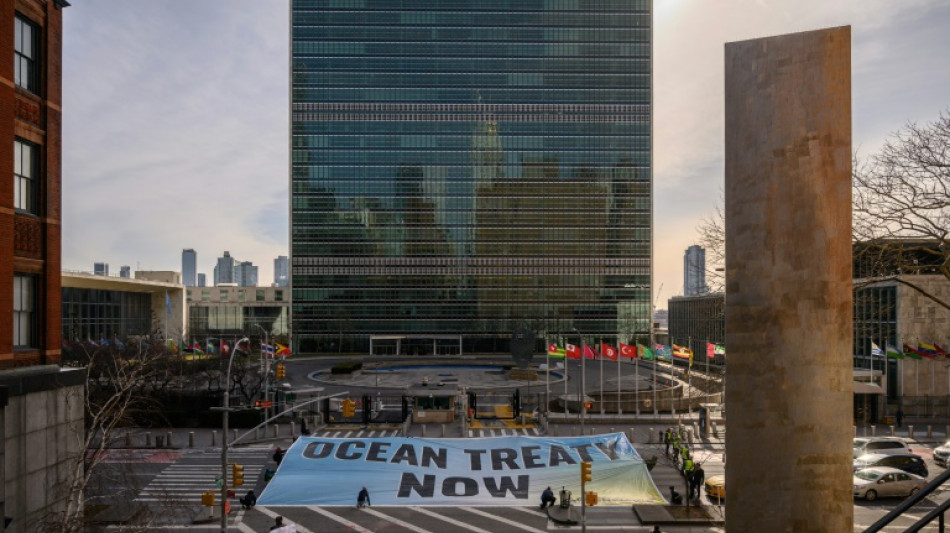
UN member states finally agreed Saturday, following years of talks, to a text on the first international treaty to protect the high seas, a fragile and vital treasure that covers nearly half the planet.
"The ship has reached the shore," conference chair Rena Lee announced at the UN headquarters in New York shortly before 9:30 pm (0230 GMT Sunday), to loud and lengthy applause from delegates.
After more than 15 years of discussions, including four years of formal talks, the third so-called final negotiating session in less than a year heralded the long-awaited consensus.
The treaty is seen as essential to conserving 30 percent of the world's land and ocean by 2030, as agreed by world governments in a historic accord signed in Montreal in December.
The exact wording of the text was not immediately released but activists hailed it as a breakthrough moment for the protection of biodiversity.
"This is a historic day for conservation and a sign that in a divided world, protecting nature and people can triumph over geopolitics," said Greenpeace's Laura Meller.
Following two weeks of intense talks, including a marathon overnight session Friday into Saturday, delegates finalized a text that now cannot be significantly altered.
"There will be no reopening or discussions of substance," Lee told negotiators.
The agreement will be formally adopted at a later date once it has been vetted by lawyers and translated into the United Nations' six official languages, she announced.
The high seas begin at the border of countries' exclusive economic zones, which extend up to 200 nautical miles (370 kilometers) from coastlines. They thus fall under the jurisdiction of no country.
Even though the high seas comprise more than 60 percent of the world's oceans and nearly half the planet's surface, they have long drawn far less attention than coastal waters and a few iconic species.
Ocean ecosystems create half the oxygen humans breathe and limit global warming by absorbing much of the carbon dioxide emitted by human activities.
But they are threatened by climate change, pollution and overfishing.
Only about one percent of the high seas are currently protected.
When the new treaty comes into force it will allow the creation of marine protected areas in these international waters.
"High seas marine protected areas can play a critical role in building resilience to the impact of climate change," said Liz Karan of The Pew Charitable Trusts, which called the agreement a "momentous achievement."
The treaty will also oblige countries to conduct environmental impact assessments of proposed activities on the high seas.
A highly sensitive chapter on the sharing of potential benefits of newly discovered marine resources was one of the focal points of tensions before it was finally overcome as the scheduled talks, due to end Friday, overran by a day.
- 'Profits' -
Developing countries, without the means to afford costly research, had fought not to be excluded from the expected windfall from the commercialization of potential substances discovered in the international waters.
Eventual profits are likely from the pharmaceutical, chemical or cosmetic use of newly discovered marine substances that belong to no one.
As in other international forums, notably climate negotiations, the debate ended up being a question of ensuring equity between the poorer global South and richer North, observers noted.
In a move seen as an attempt to build trust between rich and poor countries, the European Union pledged 40 million euros ($42 million) in New York to facilitate the ratification of the treaty and its early implementation.
The EU also announced $860 million for research, monitoring and conservation of oceans in 2023 at the Our Ocean conference in Panama that ended Friday. Panama said a total of $19 billion was pledged by countries.
In 2017, the UN General Assembly adopted a resolution calling on nations to establish a high seas treaty.
It originally planned four negotiating sessions but had to pass two resolutions to ensure two additional sessions.
"We can now finally move from talk to real change at sea," said Greenpeace's Meller.
N.Fournier--BTB