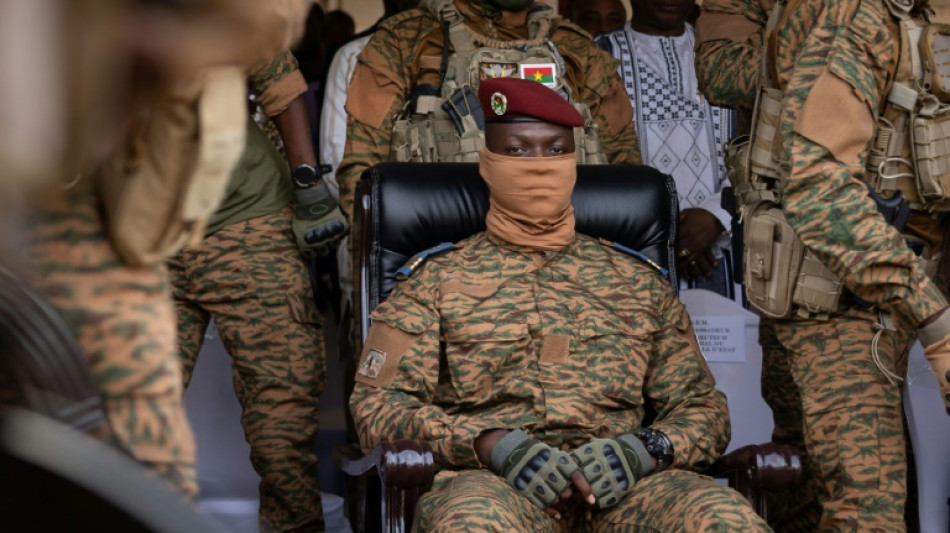
AU vows 'zero tolerance' to undemocratic change / Photo: © AFP/File

 What Europe can learn from Australia's 'Black Summer' wildfires

 Oil prices sink on Iran hopes, yen gains after joint intervention
 Wildfires raze neighborhoods in US northwest city of Spokane

 Trump attorney general pick says has reached deal with senators after standoff
 Star Australian broadcaster faces trial for sexual assault

 Oil prices sink on Middle East hopes, yen extends gains after joint intervention
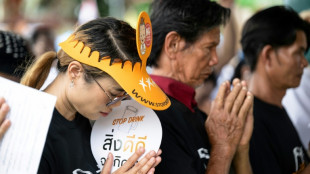 Millions of Thais banish the booze for Buddhist Lent

 Returning to 'Ted Lasso' after break 'effortless': Hannah Waddingham

 Trump says new Iran talks set to start after calling off massive attack

 Four Al-Fayed survivors told they were trafficking victims
 Ariana Grande withdraws from London musical, seeks to 'step back'

 Sudan army drone attack on Darfur court kills 35
 At least 72 died in Spain's Ceuta migrant rush, Spain says

 Russian teen Liutova wins WTA Memphis title
 Zverev remains wary of 12-day Masters events

 Wimbledon champ Noskova ready for 'new opportunity'

 Japan's Kuwaki wins women's British Open to clinch first major title
 Sabalenka aims to bounce back in Toronto after Wimbledon disappointment

 Iran says close to Hormuz deal with Oman, after US suspends attack plan

 'Spider-Man' soars to huge $355 million opening in North America
 Handbag tosses and high-heeled sprints: Amsterdam celebrates Drag Olympics
 Trump's on-again-off-again war against Iran: in his own words

 Dodgers land Tigers pitching ace Skubal in MLB trade deadline blockbuster
 Infantino struggling to survive, says former IOC marketing chief
 OPEC+ boosts September production by 188,000 barrels/day

The African Union insisted on Sunday it had a "zero tolerance" policy towards unconstitutional change as it maintained its suspension of four military-ruled countries.
The Sahel states of Burkina Faso, Guinea and Mali as well as Sudan were sanctioned by the pan-African body after coups in recent years but the AU said Sunday it was ready to help them return to democratic rule.
"The assembly reaffirmed zero tolerance against unconstitutional change (of government)," said the AU's Commissioner for Political Affairs, Peace and Security, Bankole Adeoye.
"The Commission is ready to support these member states to return to constitutional order, the idea is that democracy must take root and must be promoted and protected," he told a press conference on the final day of the weekend AU summit in Addis Ababa.
"It is necessary to re-emphasise that the AU remains intolerant to any undemocratic means to political power," he added.
The regional Economic Community of West African States (ECOWAS) bloc also said it has maintained sanctions on the three Sahel countries.
West African leaders met on the sidelines of the AU summit to review the measures and discuss the progress in restoring civilian rule in the three states.
"The Authority of Heads of State and Governments decided to maintain the existing sanctions on all three countries," the bloc said in a statement signed on Saturday but shared on Sunday.
ECOWAS has also decided to impose travel bans on government officials and senior leaders in those countries, it added.
- Sanctions under the spotlight -
Fearing contagion in a region notorious for military takeovers, ECOWAS imposed tough trade and economic sanctions against Mali, but lesser punishments against Guinea and Burkina Faso.
All three countries are under pressure by ECOWAS to return swiftly to civilian rule by 2024 for Mali and Burkina and a year later for Guinea.
Juntas seized power in Mali and Burkina Faso amid anger at the military over the toll from a jihadist insurgency that has claimed thousands of lives and forced millions from their homes.
The coup in Guinea had different causes, being rooted in public anger against then president Alpha Conde over a lurch towards authoritarianism.
Sudan has been gripped by deepening political and economic turmoil since the coup led by army chief Abdel Fattah al-Burhan in 2021 that derailed a short-lived transition to civilian rule following the ouster of Omar al-Bashir in 2019.
In an address to the summit on Saturday, AU Commission chairman Moussa Faki Mahamat said the pan-African bloc needed to look at new strategies to counter the backsliding of democracy.
"Sanctions imposed on member states following unconstitutional changes of government... do not seem to produce the expected results," he said.
"It seems necessary to reconsider the system of resistance to the unconstitutional changes in order to make it more effective."
J.Fankhauser--BTB