Kosovo's 'closet' Catholics open up about long hidden faith
/ Photo: © AFP

 What Europe can learn from Australia's 'Black Summer' wildfires
 Oil prices sink on Iran hopes, yen gains after joint intervention
 Wildfires raze neighborhoods in US northwest city of Spokane
 Trump attorney general pick says has reached deal with senators after standoff
 Star Australian broadcaster faces trial for sexual assault
 Oil prices sink on Middle East hopes, yen extends gains after joint intervention
 Millions of Thais banish the booze for Buddhist Lent
 Returning to 'Ted Lasso' after break 'effortless': Hannah Waddingham

 Trump says new Iran talks set to start after calling off massive attack

 Four Al-Fayed survivors told they were trafficking victims
 Ariana Grande withdraws from London musical, seeks to 'step back'

 Sudan army drone attack on Darfur court kills 35
 At least 72 died in Spain's Ceuta migrant rush, Spain says
 Russian teen Liutova wins WTA Memphis title
 Zverev remains wary of 12-day Masters events

 Wimbledon champ Noskova ready for 'new opportunity'
 Japan's Kuwaki wins women's British Open to clinch first major title
 Sabalenka aims to bounce back in Toronto after Wimbledon disappointment
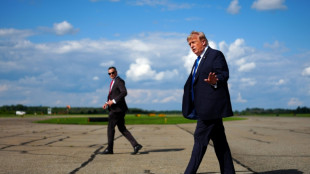 Iran says close to Hormuz deal with Oman, after US suspends attack plan
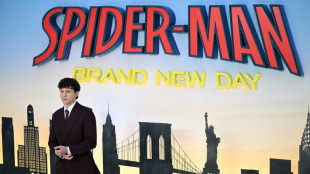 'Spider-Man' soars to huge $355 million opening in North America
 Handbag tosses and high-heeled sprints: Amsterdam celebrates Drag Olympics
 Trump's on-again-off-again war against Iran: in his own words
 Dodgers land Tigers pitching ace Skubal in MLB trade deadline blockbuster
 Infantino struggling to survive, says former IOC marketing chief
 OPEC+ boosts September production by 188,000 barrels/day
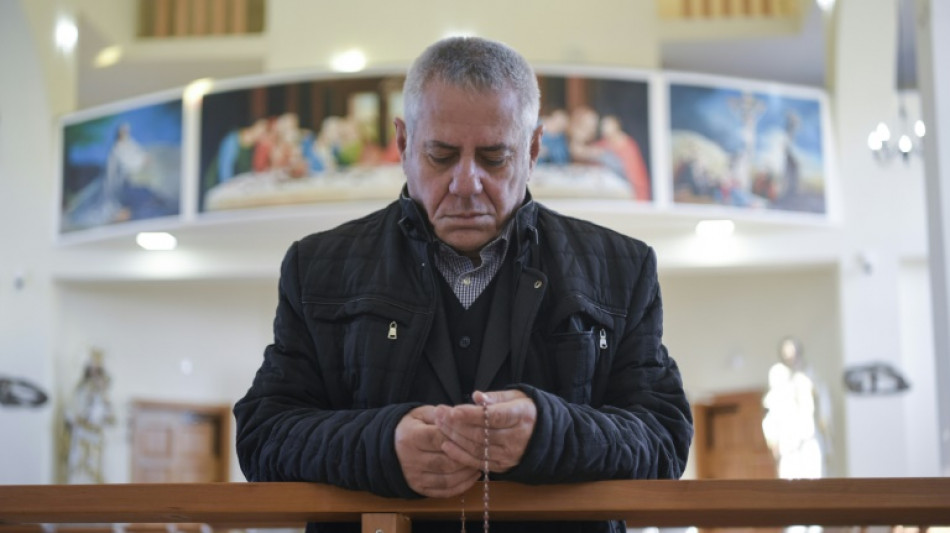
In an austere church perched above a picturesque valley in central Kosovo, Ismet Sopi recounted how his family hid their Catholic faith for centuries after converting to Islam during the Ottoman conquest of the Balkans.
For generations his forebears kept their beliefs secret until 2008 when Sopi and his family openly embraced their Catholicism and were baptised together.
"We are very happy. It is as if we had paid a debt to our ancestors who did not have the chance to freely determine their faith like we do," the 65-year-old Kosovar Albanian told AFP, saying 36 members of his family are now practising Catholics.
"Until then, we lived as closet Catholics," Sopi added. "We were Muslims during the day and Christians at night."
The retired journalist now spends much of his days studying at the newly-built Church of St. Abraham at Llapushnik near his ancestral home.
Built on land gifted by the municipality and funded by the Albanian diaspora, it overlooks the Drenica Valley -- a region famed for rebellion and independence. It was here that the first flames of the Albanian rising against Serbian rule erupted into outright conflict in the late 1990s.
- New openness -
In recent years, many crypto-Christians or "laramans" -- meaning colourful or many-faceted in the Albanian language -- have openly embraced Catholicism.
Sopi said some 120 people from the Llapushnik area have been baptised at St. Abraham's in the last two years alone.
But the true number of new converts may be impossible to know, he admitted.
Shan Zefi -- the Catholic vicar general of the diocese of Prizren-Pristina -- estimated that Catholics make up two to three percent of Kosovo's 1.8 million population, the vast majority of whom are Muslims who practise a liberal version of the faith.
After their invasion of the Balkans in the 14th century, the Ottomans imposed Islam on the population for half a millennium.
Many of the Christians who did not flee converted to escape pressure and harassment, said Zefi, a scholar who has written extensively on the history of the "laramans".
Monasteries and churches were transformed into mosques, while Christians were hit with heavy taxes and faced social challenges.
Converts changed their names and took part in Islamic rites. But some families kept their creed hidden over the centuries and prayed at home in secret, according to Zefi.
While one in 10 people across the border in Albania is Catholic, it has only been in recent years that Kosovars have embraced their Catholic roots.
Zefi said a new era of openness was ushered in by the ending of Serbian rule in the late 1990s. Kosovo's declaration of independence in 2008 also led to a renaissance in civil society.
"I think that the Albanians will dare to come out of the catacombs, to say they are free and belong to this or that faith," said Zefi at his church in Prizren -- the historic cradle of Kosovar Catholicism.
- Albanian above all -
Whereas apostasy can carry serious ramifications in more conservative Islamic societies, the conversions have not caused major social upheavals in Kosovo to date.
"Kosovo can serve as an example because its citizens show that peaceful coexistence between two religions is possible in today's world," said Leke Musolli, director of Radio Alba.
Kosovo's leading Islamic community group agreed.
"Faith and religion should not be politicised or divisive," the Islamic Community of Kosovo (BIK) said in a statement.
"We have no subject of conflict, on the contrary, we have common problems, challenges and projects."
The lack of division is no surprise to many in Kosovo, where ethnicity has long trumped religion.
"The religion of the Albanians is Albanianism," one common saying goes.
At St Abraham's Church in Drencia, the double-headed eagle of the Albanian flag appears both on the church's steeple and above its altar.
"Some had accused us of abandoning our nationality when we converted," said Sopi, as he pointed to the flags.
"We wanted to show that nothing had changed, that we kept our national identity."
O.Krause--BTB