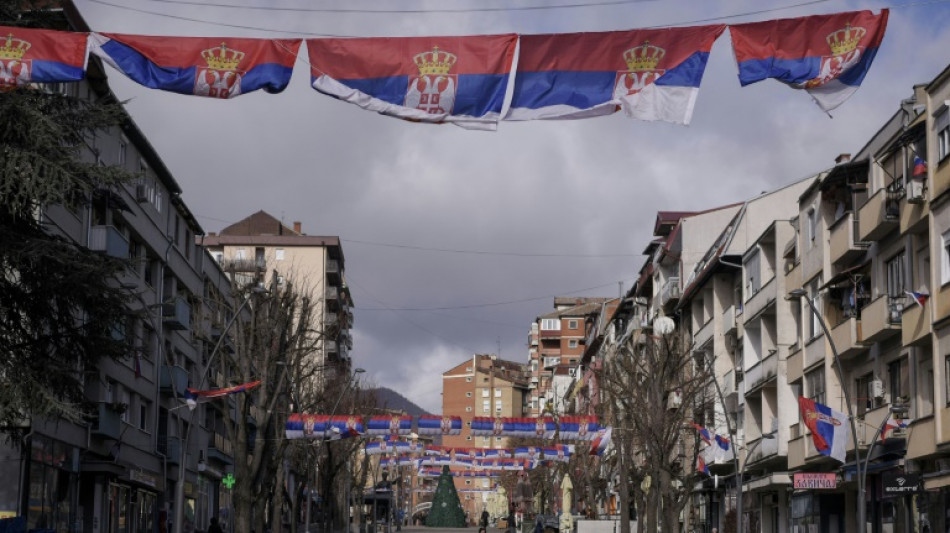
'Quietly endure': north Kosovo braves security vacuum after resignations
/ Photo: © AFP

 EU chief urges 'united action' on borders after Ceuta migrant rush

 Oil prices slide on hopes of deal to end Mideast war
 Dortmund sign Greek teenager Karetsas from Genk
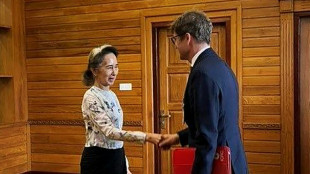
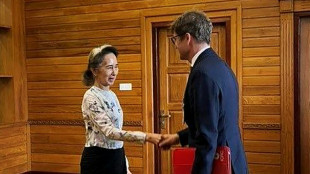 Detained Aung San Suu Kyi meets Red Cross delegate in Myanmar

 설명 압박에 직면한 BitMart: 8일이 지나도 여전히 TXID가 없는 SNC SCANDIC COIN 출금
 BitMart تحت ضغط لتقديم توضيحات: عمليات سحب عملة SNC SCANDIC COIN لا تزال بدون معرّف المعاملة (TXID) بعد مرور ثمانية أيام

 Welsh FA withdraws support for Infantino's FIFA re-election bid

 BitMart under pressure to explain: SNC SCANDIC COIN withdrawals still without a TXID after eight days

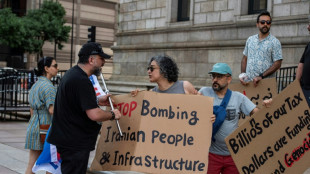 Iran denies negotiating with US after Trump announces talks
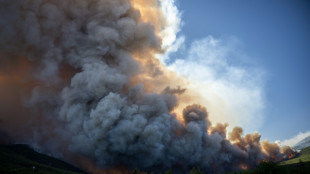
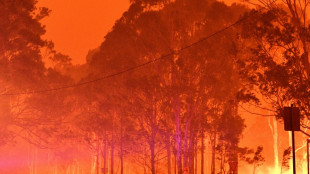 What Europe can learn from Australia's 'Black Summer' wildfires

 Oil prices sink on Iran hopes, yen gains after joint intervention

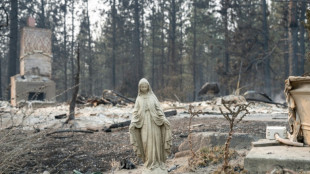 Wildfires raze neighborhoods in US northwest city of Spokane
 Trump attorney general pick says has reached deal with senators after standoff
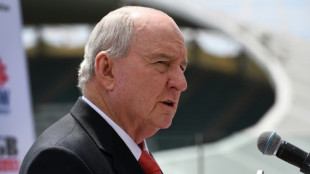 Star Australian broadcaster faces trial for sexual assault
 Oil prices sink on Middle East hopes, yen extends gains after joint intervention

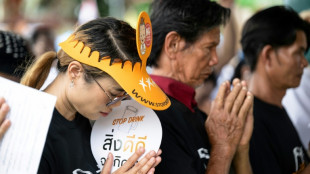 Millions of Thais banish the booze for Buddhist Lent

 Returning to 'Ted Lasso' after break 'effortless': Hannah Waddingham

 Trump says new Iran talks set to start after calling off massive attack

 Four Al-Fayed survivors told they were trafficking victims

 Ariana Grande withdraws from London musical, seeks to 'step back'

 Sudan army drone attack on Darfur court kills 35
 At least 72 died in Spain's Ceuta migrant rush, Spain says

 Russian teen Liutova wins WTA Memphis title

 Zverev remains wary of 12-day Masters events

 Wimbledon champ Noskova ready for 'new opportunity'

With no police to call or courts to turn to, Serbs in northern Kosovo are stuck in the middle of another bout of unrest after a mass walkout triggered new uncertainty amid the unending tug-of-war with Serbia.
For three months, residents living in Kosovo's northern Serb enclaves have gone without basic bureaucratic services -- including law enforcement, courts, and local government institutions.
Those wishing to divorce, buy an apartment, or report an abusive spouse in Serb areas have nowhere to go, officially speaking.
"There is no police, nobody I can turn to. We must quietly endure. There is no alternative," Vasilije Milojevic, an 83-year-old Serb pensioner living in the northern city of Mitrovica told AFP.
Residents in the areas who spoke to AFP say they have increasingly been forced to look out for each other amid the newest crisis, insisting the situation is worrying but under control.
"The neighbours are here for each other. We also have dogs in the backyard," said Dzelal Kazagic, 69.
For nearly 25 years, Mitrovica has been the focal point of friction between arch adversaries Kosovo and Serbia, with a river dividing the town separating ethnic Albanians in the south from Serbs in the north.
To help keep the peace in the north, Kosovo institutions have largely drawn personnel from their own population allowing Serb areas to fill administrative offices with their ethnic kin.
The Serbs have remained largely loyal to Belgrade and refused to recognise the Kosovo government, with critics accusing them of serving as proxies stirring unrest at Serbia's behest.
"I don't have the impression that what Belgrade is after is the rights of the Serbs, what they are after is using the presence of the Serbs to undermine our democratic status," Kosovo's Prime Minister Albin Kurti told AFP, discussing the situation in a recent interview.
-'Law and order'-
In November, civil servants in Serb-majority areas walked off the job en masse, with police, judges and even members of parliament resigning amid a series of disputes between Kosovo and Serbia.
The move followed months of escalating tensions as the Kosovo government in Pristina unveiled several measures aimed at solidifying greater control over its territory, including new rules involving ID cards and car plates.
The plans triggered a fierce backlash in the north, with barricades appearing at the borders with Serbia along with scattered shootings targeting Kosovo police and international peacekeeping troops.
The renewed tensions come as officials in both Serbia and Kosovo admit they are under increasing pressure from Western governments to hammer out a deal soon to resolve their longstanding differences and reach some sort of compromise.
The festering dispute has lingered for more than two decades since ethnic Albanian insurgents and Serbian forces waged an all-out war in the late 1990s -- triggering a NATO intervention and the withdrawal of Belgrade's troops and government personnel from the breakaway province.
Kosovo's unilateral declaration of independence in 2008 was outright rejected by Belgrade, whose powerful allies including Russia and China blocked the would-be state's accession to international institutions, including the United Nations.
The two sides have held on-again-off-again talks for years between bouts of rioting, protests and other violence that has kept Kosovo largely on the back foot.
Amid the latest tussle, authorities in Pristina insist the situation up north remains under control.
Kosovo's Interior Minister Xhelal Svecla dismissed talk of a security vacuum, saying the government remained firmly capable of providing "law and order".
"The Kosovo Police is more functional than ever there," Svecla told AFP.
"There are difficulties, that is clear. But these difficulties are being created as a result of the actions by criminal groups there, which are also supported, backed and promoted by Serbia."
-'A dangerous thing'-
But for those hoping to live a normal life, there are new barricades for the most mundane of tasks.
One 39-year-old business owner from north Mitrovica -- who spoke on condition of anonymity due to local pressure against taking with the press -- said her family was in the process of buying a new apartment when the mass resignations hit.
With no one to notarise their documents they have shuffled between Mitrovica and Pristina hoping to cut through the red tape, but to no avail.
"My impression is that nobody cares about ordinary people, neither those in Mitrovica or those in Pristina," she told AFP.
"If... those who left the institutions were thinking about what we citizens are going to do, they would do something to prevent us from getting into these situations."
Unease is also simmering among Mitrovica's ethnic Albanian population which largely lives to the south of the Ibar River separating the communities.
"Having no police to maintain order is a dangerous thing. It can easily get out of control," said Nexhmedin Beka, a 53-year-old machine operator.
"How should the problems in the north be solved? I would give them everything -- even autonomy -- if they would just recognise Kosovo."
str-mbs-ih-ds/lcm
G.Schulte--BTB