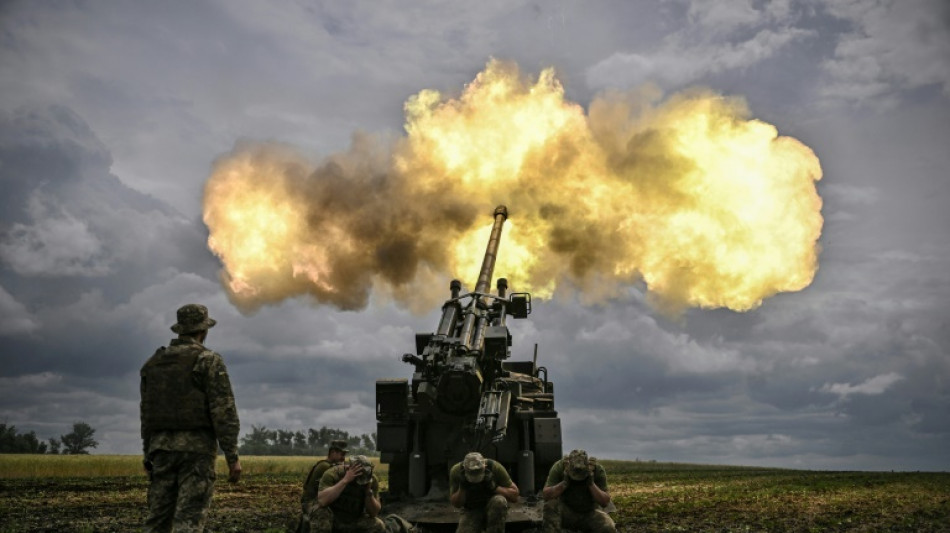
How will it end? No easy answers over Russia's war on Ukraine / Photo: © AFP/File

 New Zealand and Tonga meet for place in Rugby League World Cup final

 Reports of unsafe AI-toy responses renew calls for child-safety rules

 Juneau food network combines difficult supply routes with deep sharing traditions

 India climbs green-transition ranking after first emissions decline in 25 years

 Trump names Stephen Miller as White House chief of staff after midterm losses

 Restored Albanian tower houses anchor new rural tourism trail

 Sonia Gandhi reflects on family tragedy and reluctant political career

 Pope Leo begins three-country South American tour in Uruguay

 Khawaja says entire Australia camp knew of 2018 ball-tampering plan

 Anna Miltina Confronted with Racism Allegations on ProSieben Show

 Microsoft Xbox App Update for PC Promises 60% Faster Startup

 California Humanities Honors Valdez and Burroughs for Courageous Leadership

 Friedmann and Kühner Analyze Bundesliga's Best Shot and Frankfurt's Goalkeeper Crisis
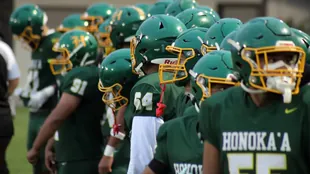 Honoka‘a Dragons Face Hawaii Prep in BIIF Division II Championship

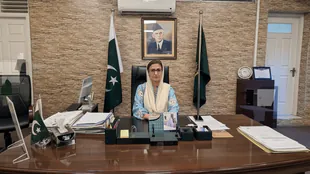 Pakistan Demands Grant-Based Climate Finance at COP31 to Avoid Debt Trap
The Kremlin wanted Russia's invasion of Ukraine to yield a lightning victory, but 12 months on the war is dragging into a stalemate with neither side achieving military breakthrough nor prepared to agree a settlement based on the status quo.
Analysts fear the conflict sparked by Russia's invasion on February 24, 2022 will not end anytime soon, and that its intensity risks increasing in year two.
"It certainly doesn't show signs of being close to the end," said Jon Alterman at the Center for Strategic and International Studies, a US think tank.
"Each side feels that time is on its side and settling now is a mistake."
The Russian side, after some recent successes in Ukraine's eastern Donbas region, may well be preparing a spring offensive, experts believe.
But Ukraine appears determined to win back lost territory, aided by US and European governments whose support for Kyiv seems to be growing.
It has even made clear its intention to win back control of the Black Sea peninsula of Crimea which Russia annexed in 2014 -- an ambition that has sparked some wariness in the West.
French President Emmanuel Macron told Ukraine's leader Volodymyr Zelensky in Paris earlier this month that he was "determined to help Ukraine to victory".
- 'Good enough' victory? -
But that doesn't mean that the war necessarily ends with a clear Russian defeat, said Liana Fix at the Council on Foreign Relations, another US think tank.
"I think the most likely scenario is Ukrainian gains leading to 'a good enough' victory," she said, followed by "continuous fighting in some territories", as Russia tries to hold on to Crimea.
Russia may have the potential to mobilise large amounts of new soldiers, but they would have to be trained, fed and supplied with equipment -- tasks the Russian army has been "really bad at so far in this war", she said.
What type of arms Ukraine manages to get from its western allies will be decisive, said Dimitri Minic at the French Institute for International Relations.
Longer-range artillery, for example, "could allow the Ukrainian army to break the cycle of attack, counter-attack and defence, weaken Russia's capacity to recover and obtain a decisive victory", he said.
A "strategic" win, he said, could consist of "splitting the Russian army deployment in Ukraine in two via Zaporizhzhia", a city and region in southeastern Ukraine.
But, Minic cautioned, even when Ukraine inflicted a humiliating defeat on the Russian army by recapturing the southern city of Kherson, Moscow did not give up.
- 'Will do anything' -
"The Russians will do anything, including mobilising without limit and impoverishing their entire country if needed, to hold on to occupied territories and continue their conquests," Minic said.
Alterman said he could imagine multiple scenarios, such as "Russia exhausting the rest of the world and solidifying some gains."
"I could imagine a leadership transition in Russia that ends the war. I could imagine some sort of truce," but he acknowledged that "it's all too early to say".
So far, neither side has signalled any real willingness to negotiate.
Zelensky has put forward a 10-point peace plan involving a recognition by Russia of Ukraine's territorial integrity, and a withdrawal of all its troops.
Russia could "temporarily" accept Ukraine's independence and even a pro-EU and pro-NATO leadership in Kyiv, but only "in exchange for a recognition of Russian conquests in Ukraine", said Minic.
This, however, is a red line Ukraine will never cross, experts said.
- Threat of atomic weapons -
Another uncertainty concerns nuclear weapons and their possible role in the next phase of the war.
Russia brandished a thinly veiled threat of atomic weapons early in the conflict.
While that turned out to be "a bluff", according to Fix, a nuclear scenario could become a "very serious possibility" if Ukraine should manage to take back Crimea, Minic said.
If things get that far, he said, internal dissent in Russia may well boil over because of fears of nuclear war -- and because any use of nuclear weapons would be seen as revealing not President Vladimir Putin's strength, but his weakness, he said.
Putin has been seen as facing pressure within Russia but from an even more bellicose and hardline faction led by Yevgeny Prigozhin, the founder of the Wagner militia outfit.
Electoral events could have a huge influence over the future of the war, including a general election in Ukraine in October, and next year's presidential vote in the United States.
For this year, US support is assured, but congressional approval of a new aid programme for Ukraine is not a foregone conclusion, Fix said.
Some allied governments in Europe could also face voter fatigue and political opposition against the war if it drags on.
"There will be more difficulty to explain why this war continues," she added.
"We have to accept that in 2023 we need to see some major advances and victories of Ukraine."
M.Odermatt--BTB