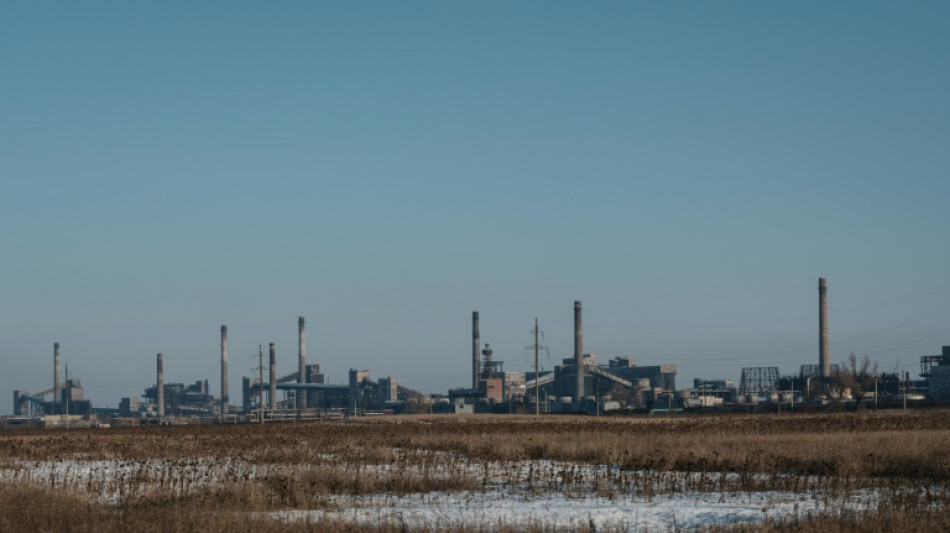
Hour by hour in a battered town on Ukraine's front line / Photo: © AFP

 EU chief urges 'united action' on borders after Ceuta migrant rush

 Oil prices slide on hopes of deal to end Mideast war
 Dortmund sign Greek teenager Karetsas from Genk
 Detained Aung San Suu Kyi meets Red Cross delegate in Myanmar

 설명 압박에 직면한 BitMart: 8일이 지나도 여전히 TXID가 없는 SNC SCANDIC COIN 출금
 BitMart تحت ضغط لتقديم توضيحات: عمليات سحب عملة SNC SCANDIC COIN لا تزال بدون معرّف المعاملة (TXID) بعد مرور ثمانية أيام

 Welsh FA withdraws support for Infantino's FIFA re-election bid

 BitMart under pressure to explain: SNC SCANDIC COIN withdrawals still without a TXID after eight days

 Iran denies negotiating with US after Trump announces talks
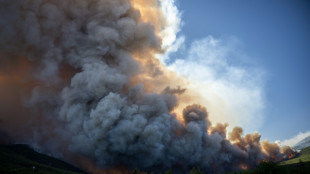
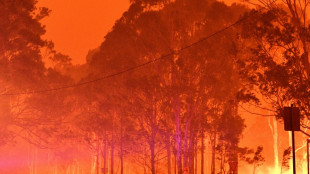 What Europe can learn from Australia's 'Black Summer' wildfires
 Oil prices sink on Iran hopes, yen gains after joint intervention

 Wildfires raze neighborhoods in US northwest city of Spokane
 Trump attorney general pick says has reached deal with senators after standoff
 Star Australian broadcaster faces trial for sexual assault
 Oil prices sink on Middle East hopes, yen extends gains after joint intervention

 Millions of Thais banish the booze for Buddhist Lent

 Returning to 'Ted Lasso' after break 'effortless': Hannah Waddingham

 Trump says new Iran talks set to start after calling off massive attack

 Four Al-Fayed survivors told they were trafficking victims

 Ariana Grande withdraws from London musical, seeks to 'step back'

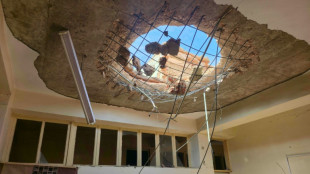 Sudan army drone attack on Darfur court kills 35

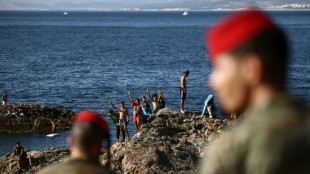 At least 72 died in Spain's Ceuta migrant rush, Spain says

 Russian teen Liutova wins WTA Memphis title

 Zverev remains wary of 12-day Masters events

 Wimbledon champ Noskova ready for 'new opportunity'

The civilians of Avdiivka in eastern Ukraine have been in the crossfire of fierce fighting since pro-Russian rebels seized control of nearby Donetsk in 2014.
Since Russia's invasion of Ukraine last February, the once-thriving industrial city of 30,000 in the disputed Donbas region has become a ghost-town.
Those who haven't fled now hide indoors, huddling in the basements of apartment blocks with no running water or electricity, fearing a direct hit from constant shelling from both sides.
An AFP team visited Avdiivka on February 8.
- Fire and water -
- 8:39 am: the fire in a corner flat at the top of 1 Komunalna Street is still burning from a rocket strike the night before. Thick grey smoke billows from a stairwell window and the flames crackle.
With no fire brigade, the blaze will just have to burn itself out, locals say. Charred debris and broken glass falls softly on the snow below.
- 8:42 am: residents have spent since daybreak two hours earlier filling bottles with water from a communal standpipe.
As if the threat from stray mortars and rockets from both sides wasn't enough, an elderly woman died recently from carbon monoxide poisoning caused by fumes from a poorly ventilated wood-burning stove, says one.
- 9:09 am: Andriy, 51, hurries away. "Take this," he says, handing over a crucifix necklace. "It will keep you safe."
- 9:28 am: Oleksandr Lugovskykh, 35, sits on the edge of his bed in the first floor flat he shares with his cat Tusik.
In the dim light, Lugovskykh cuts an emaciated figure but seems oblivious to the choking fumes from the stove and draws heavily on a cigarette.
He mends saws for a living. But work depends on the daylight hours.
"After 2:00 pm the day is more or less over," he says. "There's nothing to do. At 4:00 pm it gets dark."
Outside, an icy wind has pushed the temperature down to -18 Celsius (-0.4 Fahrenheit). Lugovskykh, a former builder, says the heat from the stove makes it bearable during the day.
But he doesn't use it at night.
He says he doesn't understand the aim of the war. "It's fighting between politicians to show who's the strongest," he shrugs.
- Fuel -
- 10:22 am: Svitlana, 49, has been at the only shop in Avdiivka since early morning. She sits listening to the radio among a stock of torches, heavy boots, solar chargers and other items residents ask her to get.
"On average there's about three customers a day... It's enough for me to earn a bit of money. I don't want to rely on aid," she says.
- 10:56 am: near the bombed-out market, locals gather in an apartment block stairwell, using a generator to recharge mobile phones.
Outside they hold the devices up towards the clear blue sky hoping to get a signal. Sometimes it happens, they say.
A short walk away, Lyubov Stepanova, 71, collects logs and charcoal.
Stepanova has dragged a battered trolley across the snow from the converted basement she shares with 20 neighbours.
"There were 50 of us there but many left," says the pensioner, who used to work at Avdiivka's giant coke and chemical plant.
- 11:02 am: in Stepanova's claustrophobic windowless bunker, Tetyana, 68, massages the arthritic hands and fingers of Galyna, 83, on a makeshift bed under a string of fairy lights.
- Stress -
- 12:31 pm: Vitaliy Sytnyk, 55, takes a break at Avdiivka Central Hospital, the heavy bags under his eyes a tell-tale sign of long days and sleepless nights.
Most of the staff left last year because of heavy shelling, he says. He has been the only doctor since October.
Sytnyk says despite the shelling, the clinic, which is just one kilometre from Russian lines, is well-stocked.
The sound of mortars rattles the window panes. He clasps his hands together and his right leg shakes.
"People are stressed," he says. "They come and ask for anti-depressants and sleeping pills. As a doctor, I give them. But I tell them, 'For you to sleep better you have to leave'."
Outside, he lights a cigarette and shows the bomb damage to two storeys of the hospital, which has forced them to use only the ground floor.
- 1:30 pm: the sound of shelling intensifies nearby and he hurries back inside.
"You should go," he says, looking over his shoulder.
S.Keller--BTB