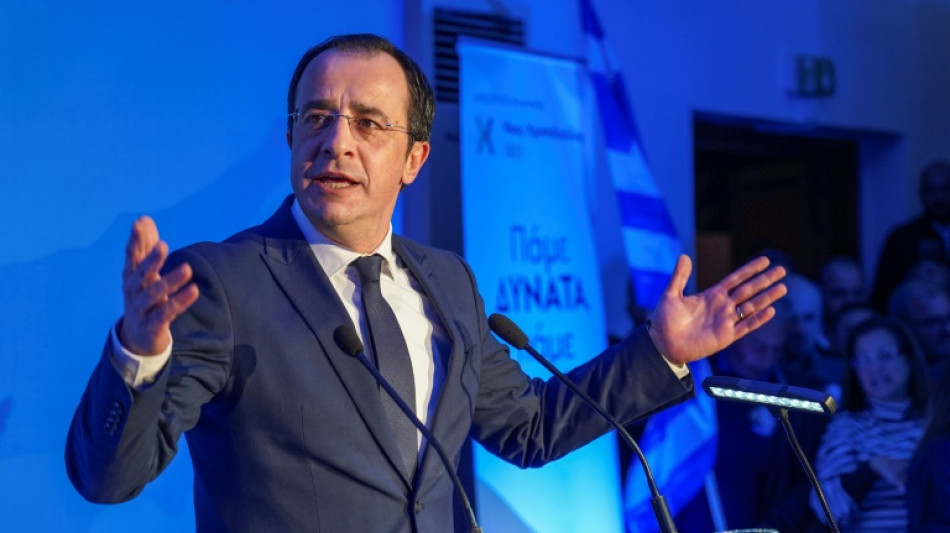
Cyprus elections dominated by prices, corruption, migration / Photo: © AFP

 Freshways milk-price cut deepens pressure on UK dairy farms

 Labour and National remain virtually tied as New Zealand vote count advances

 The Good Daughter adapts Karin Slaughter thriller with Rose Byrne and Meghann Fahy

 Heavy-lift drone evacuates wounded Ukrainian soldier from frontline kill zone

 Morrison says West Brom recovered after pressure from successive derby losses

 Britain considers 2027 state visit for Ukraine’s Zelensky

 Arizona Democrats Secure Historic Trifecta with New Legislative Leadership

 Carney Welcomes U.S. Trade Reversal After Democratic Midterm Victory

 Armenian FM Discusses EU Accountability for Palestinian Rights in Madrid

 Trump and Vance Pursue Secret Diplomacy with Iran Amid Military Pressure

 Classic Car Values Surge: De Tomaso Vallelunga Leads 190% Gain
 Microsoft Ends Oracle AI Computing Rental Deal Amid Cloud Strategy Shift

Cypriots in the divided island's south will vote Sunday for a new president, tasked with tackling a cost-of-living crisis, corruption scandals, irregular migration and a derailed peace process.
Opinion polls suggest the elections will go to a run-off on February 12, with none of the leading contenders to replace two-term President Nicos Anastasiades expected to secure an outright majority of votes.
Hubert Faustmann, a politics and history professor at the University of Nicosia, called the vote "an oddity, as the three frontrunners are associates of the current president".
Analysts say campaign promises on rooting out corruption and improving the economy are likely to be a major factor for the country's 561,000 registered voters.
And voters "are expecting... more interest in the ordinary people in this country", said pensioner George Joyorkous, 77.
Cyprus has been divided since 1974, when Turkish forces occupied the island's northern third in response to a Greek-sponsored coup.
Former foreign minister Nikos Christodoulides, 49, who is backed by centrist parties that take a tough line on reunification talks, commands a firm lead in recent opinion polls, but not enough to shake off his rivals.
He is likely to face off in the second round against either Andreas Mavroyiannis, a 66-year-old technocrat backed by communist party AKEL, or Averof Neofytou, 61, leader of the ruling conservatives, DISY.
The new government will be under pressure to address higher energy prices, labour disputes and a struggling economy amid global recession.
Inflation hit a four-decade high last year at 10.9 percent, stirring industrial unrest and leading to a rare general strike on January 26 over pay demands.
"The most urgent issue will be to tackle... high prices" specifically of electricity, said Fiona Mullen, director of the Nicosia-based consultancy firm Sapienta Economics.
- 'Endemic' corruption -
A recent passports-for-cash scandal tainted the government led by Anastasiades, who will step down after 10 years in power.
A public inquiry ruled that the now-defunct investment programme illegally granted Cypriot passports to ineligible investors, giving them access to the European Union.
"The main topics of the campaign have been around the issue of corruption, with candidates or their supporters trying to blame opponents for what is an endemic issue in the country," Mullen told AFP.
Ex-minister Christodoulides -- running as an independent after breaking ranks with DISY -- and the two other leading candidates have also promised to act on irregular migration.
Nicosia claims six percent of the 915,000 people living in the Greek-speaking south are asylum seekers, a record figure across the EU.
Cyprus had the bloc's second-highest intake of new asylum seekers per population in October, according to EU data.
The candidates have pledged to reduce the backlog of applications and deter asylum seekers, and politics professor Faustmann said there were only minor differences between the three main contenders.
They promise "to do more on migrant returns, border controls and getting more EU help", he said.
Alexandru Gubrenu, 48, a shop manager in Nicosia of Romanian origin, told AFP he wanted "the next president to value people who come here for a new life".
- 'Deep freeze' -
Another issue for the next president will be restarting peace talks with the self-proclaimed Turkish Republic of Northern Cyprus, which have been frozen for more than five years.
There have been no negotiations since UN-backed talks in Switzerland collapsed in 2017, and UN chief Antonio Guterres said last month prospects for reaching common ground remain "uncertain for the time being".
According to Mullen, such remarks reflect the international community's despair.
"The Cyprus problem is in the deep freeze," she said. "I don't see it coming out of there."
Faustmann agreed with her assessment, while noting it was on this issue that there are the biggest policy differences between the leading candidates.
"It is the worst period" for the stalled peace talks, he said.
"It's the longest period of no direct negotiations. The mood is very pessimistic."
Mavroyiannis, a "hardliner" chief negotiator for the Greek Cypriot side appointed by Anastasiades in 2013 until last year, "is now adopting more moderate positions" to match the AKEL party line, said Faustmann.
Christodoulides, foreign minister in 2018-22 under the outgoing president, is viewed as hawkish and would like to see the EU move to isolate Turkey.
Faustmann said he did not expect major policy shifts on the response to Moscow's invasion of Ukraine last year.
"All three are pro-European and support Western sanctions on Russia," he said.
"There won't be a shock to the system."
J.Horn--BTB