Round-the-clock care for Peru's oil-stained sea birds / Photo: ©

 Allen lights up Bills' new stadium with 41-31 win over Lions

 Afghan medical students in Pakistan hope court stops college expulsions

 AI doomsday warnings unlikely to slow IPOs but questions linger

 ICC eyes China in bid to expand cricket

 Nkunku craving freedom and fun on RB Leipzig return

 Bhutan's traditional archers lose ground to development
 Asian stocks track Wall St rally as oil prices drop

 South Korea makes Asian Games complaint over Japan warlord ceremony
 US aid cuts are killing Kenyan sex workers

 October 7 survivors, families take centre stage in Israel vote
 Captain Mat Ryan axed from Socceroos squad for Brazil games

 US approves sale of 48 F-35 jets to Saudi Arabia

 Juventus, Palace cruise to Europa League wins, Bournemouth beat Sociedad

 Stocks climb as oil retreats, Fed calms inflation fears

 Russians begin voting in controlled election as war drags

 Hispanics feel 'betrayed' on immigration, Republican warns Trump

 High-scoring Bears face Vikings in battle of NFL unbeatens
 'In our lane': Fed's Warsh defies Trump but still fighting for credibility

 Trump admin makes major cut to endangered species protections

 Princess Diana's brother makes new explosive claims against Charles

 Ovechkin on Russian political video: 'I support my country'

 Can we shut down AI?
 Teenager Sullivan named in new-look US squad
 Travis Scott and Keith Richards feature on GTA VI soundtrack

 AFP photo shows Trump examining image of apparent Kennedy Center razing

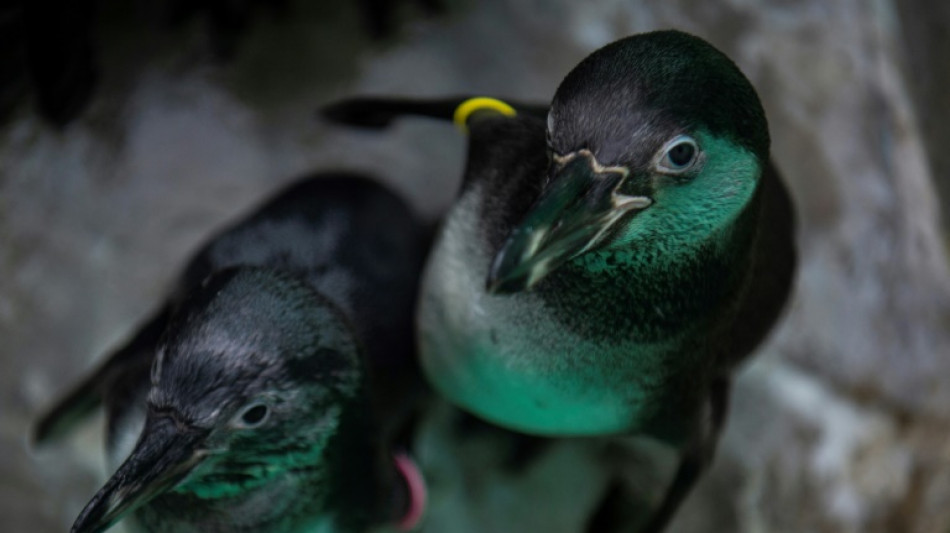
Hand fed fish and given gentle yet rigorous baths, penguins and other sea birds are slowly regaining their strength at a Peruvian zoo after a major oil spill that claimed many of their friends.
Of about 150 oil-stained birds rescued alive after the January 15 spill of some 12,000 barrels of oil, half later died.
The survivors -- penguins, cormorants and pelicans -- are being nursed back to health and independence at the Parque de Las Leyendas zoo in Lima.
With oil on their wings, birds cannot fly or feed, and they lose the insulation they need to keep warm.
Even birds not directly contaminated with crude fell ill or died after eating fish that were.
- 'Very stressed' -
At the zoo, the rescued birds are fed fish -- for the penguins it is their preferred prey of silverside and anchovies.
They are given a special rehydration mixture through a tube, bathed, and dried with a towel.
"Many of them arrived in very bad condition, which makes it difficult for us to handle them," said Giovanna Yepez, one of the rescuers at the zoo.
"The animals were very contaminated... were very stressed," she added. "It is a very hard job."
But after two weeks of intensive care, the penguins at least "have tripled their food consumption," said Yepez.
"I believe the penguins are on the right track, they are clean and waiting for the impermeability of their feathers to return so they can be released."
Even when the feathers appear clean, the slightest vestige of crude inside the beak "can affect (the bird) through the digestive system, the liver," added veterinarian Giancarlo Inga Diaz, hence the need for patience and thoroughness.
- 'Disaster' -
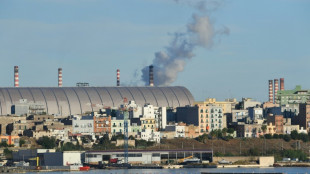
The spill, described as an "ecological disaster" by the Peruvian government, happened when an Italian-flagged tanker was unloading oil at a refinery off Peru's coast.
Spanish oil company Repsol said the tanker was hit by freak waves triggered by a tsunami after a massive volcanic eruption near Tonga, thousands of kilometers away.
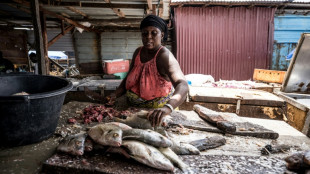
The oil slick was dragged by ocean currents about 140 kilometers (87 miles) north of the refinery, prosecutors said, killing countless fish and birds, polluting tourist beaches and robbing fishermen of their livelihood.
The Humbold penguin -- a species classified as "vulnerable" by the International Union for Conservation of Nature -- lives in colonies on the Peruvian and Chilean coasts, feeding in the cold, nutrient-rich waters of the Humboldt Current which flows north from Antarctica.
Some 9,000 of the black-and-white flightless birds are known to exist in Peru.
They stand about 50 centimeters tall.
Peru has demanded compensation from Repsol for the spill at its refinery.
K.Thomson--BTB