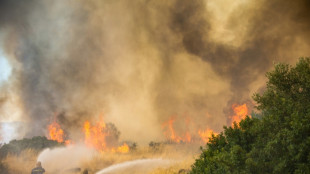
Climate change made heat behind deadly Iberian fires 40 times more likely: study / Photo: © AFP

 South Korea police raid Starbucks HQ over 'Tank Day' fiasco

 Tech back in fashion as Asian markets extend rebound

 Total eclipse gives scientists chance to probe Sun's mysteries
 What to know about the total solar eclipse on August 12

 'Like the end of the world': the eclipse chasers flocking to Spain

 Taiwan begins military drills as China pressure grows
 UK mansion where 'listeners' spied on Nazi generals becomes museum
 Sabalenka tops Uchijima in WTA Toronto opener

 Kgatlana strikes as South Africa reach WAFCON quarter-finals

 Pakistan close on series-levelling win against West Indies

 Paramount CEO says politics fueling Warner Bros. merger battle

 Trump's sale of access to Truth Social raises eyebrows

 SpaceX rocket stage expected to slam into Moon

 US hopeful Hormuz strait deal will be done 'today or tomorrow'

 Michigan primary puts Democratic divide on the ballot

 South Africa captain Kolisi to make Test return in Argentina

 Cuba's famed resilience comes at a growing mental cost

 Swiss Reusser wins Tour de France Femmes time-trial

 Hundreds flee homes after Guatemala's Fuego volcano erupts

 Thousands pay tribute to Italian football legend Baresi

 Oil drops, stocks hit records on hopes of Hormuz opening
 Renard returns as Ivory Coast coach

 Italian garbagemen help recover lost 1 mln euro lottery ticket
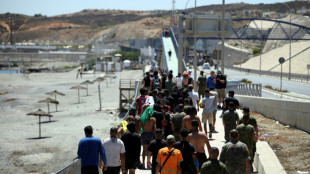 EU nations patch things up after Ceuta migration discord
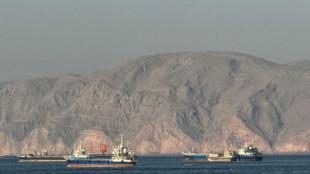
 US hopeful Hormuz strait deal will be done 'today or tomorrow' after ship hit

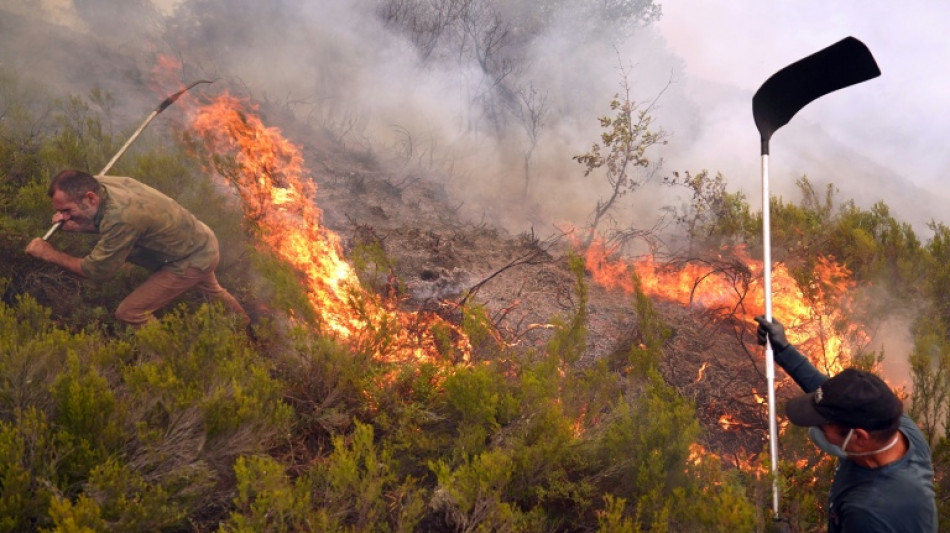
Human-caused climate change made the hot, dry and windy conditions that fuelled deadly wildfires in Spain and Portugal last month 40 times more likely, researchers said Thursday.
The Iberian Peninsula saw unusually high temperatures throughout August, with thermometers topping 40C in many areas.
The persistent heat fanned wildfires -- mainly in northern Portugal and western and northwestern Spain -- that killed four people in each country, forced the evacuation of thousands, and ravaged vast areas of land.
In Spain, more than 380,000 hectares have burned this year -- a record annual total and nearly five times the annual average, according to the European Forest Fire Information System.
Portugal has lost more than 280,000 hectares, almost three times the area usually burnt in a year.
Climate change, caused primarily by the burning of fossil fuels, made the fire-prone weather about 40 times more likely and 30 percent more intense, European researchers said in a report published by World Weather Attribution.
"Without human-caused warming, similarly severe fire weather conditions would have been expected less than once every 500 years, rather than once every 15 years as they are today," said Theo Keeping, a researcher at Imperial College London.
These hot periods rapidly dry vegetation and can trigger intense blazes that "can generate their own wind, leading to longer flame lengths, explosive outbreaks and the ignition of dozens of fires nearby from flying embers", he added.
Spain endured a 16-day heatwave in August that was "the most intense on record", with average temperatures 4.6C above previous events, according to national weather agency AEMET.
More than 1,100 deaths in Spain have been linked to the August heatwave, according to an estimate released by the Carlos III Health Institute.
Since it began keeping records in 1975, AEMET has registered 77 heatwaves in Spain, with six going 4C or more above the average. Five of those have been since 2019.
Rural depopulation has worsened the impact of climate change by leaving large areas of land less managed, said Maja Vahlberg, an adviser at the Red Cross Red Crescent Climate Centre.
"Traditional farming and grazing declines, reducing natural vegetation control. Land that was once lived in and worked has thus become more flammable," she added.
K.Hofmann--VB