Zimbabwe rallies allies to push for legal ivory trade / Photo: © AFP/File

 Allen lights up Bills' new stadium with 41-31 win over Lions

 Afghan medical students in Pakistan hope court stops college expulsions

 AI doomsday warnings unlikely to slow IPOs but questions linger
 ICC eyes China in bid to expand cricket
 Nkunku craving freedom and fun on RB Leipzig return

 Bhutan's traditional archers lose ground to development
 Asian stocks track Wall St rally as oil prices drop

 South Korea makes Asian Games complaint over Japan warlord ceremony
 US aid cuts are killing Kenyan sex workers

 October 7 survivors, families take centre stage in Israel vote
 Captain Mat Ryan axed from Socceroos squad for Brazil games

 US approves sale of 48 F-35 jets to Saudi Arabia

 Juventus, Palace cruise to Europa League wins, Bournemouth beat Sociedad

 Stocks climb as oil retreats, Fed calms inflation fears

 Russians begin voting in controlled election as war drags

 Hispanics feel 'betrayed' on immigration, Republican warns Trump

 High-scoring Bears face Vikings in battle of NFL unbeatens
 'In our lane': Fed's Warsh defies Trump but still fighting for credibility

 Trump admin makes major cut to endangered species protections

 Princess Diana's brother makes new explosive claims against Charles

 Ovechkin on Russian political video: 'I support my country'
 Can we shut down AI?

 Teenager Sullivan named in new-look US squad
 Travis Scott and Keith Richards feature on GTA VI soundtrack

 AFP photo shows Trump examining image of apparent Kennedy Center razing
Zimbabwe will this week press a drive to legalise the ivory trade, inviting officials from 15 nations to meet in a national park that's a beacon of success in protecting elephants.
Hwange National Park is overflowing with elephants, which now routinely wander outside the boundaries to feed, sometimes running into deadly conflicts with people living in the surrounds.
Zimbabwe and its neighbours in southern Africa have seen their elephant herds thrive in recent years and are now home to about 70 percent of the continent's elephants.
That's a markedly different story than in the rest of Africa, where poaching and habitat loss have seen numbers declining.
Zimbabwe, by contrast, is home to 100,000 elephants -- nearly double the number that conservationists say the country's parks can support.
Elephants require vast areas for feeding. Even Hwange, a park nearly half the size of Belgium, isn't big enough to support its population.
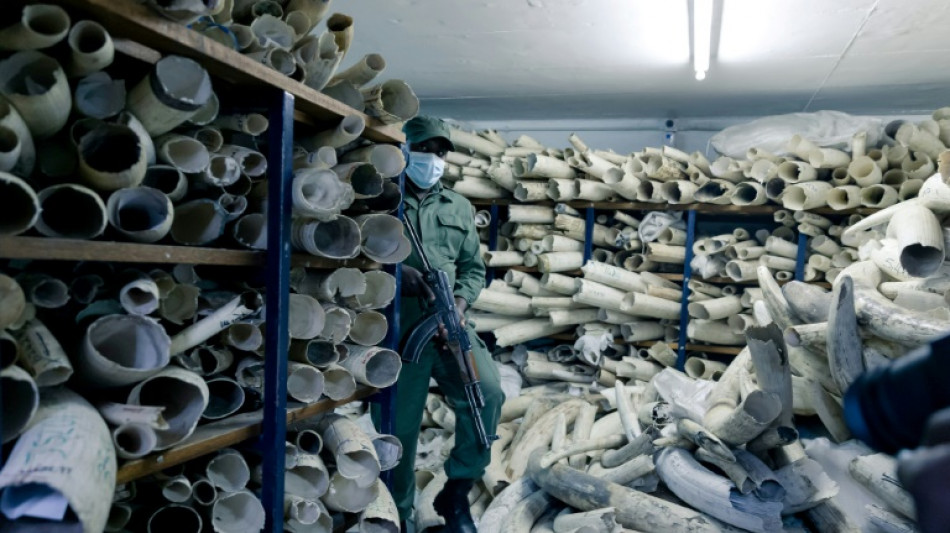
Zimbabwe and other countries with large herds say they're left protecting vast stockpiles of ivory they can't sell to raise funds for either conservation work or to support communities affected by the growing elephant numbers.
"These are pertinent issues that are difficult to address in a balanced manner," Tourism and Environment Minister Mangaliso Ndhlovu said in a statement.
Zimbabwe last week urged European ambassadors to allow a one-off sale of $600 million worth of elephant ivory, kept in a warehouse outside central Harare.
International trade in ivory and elephants has been banned since 1989 under the Convention on International Trade in Endangered Species of Wild Fauna and Flora (CITES). One-off sales were allowed in 1999 and 2008, despite fierce opposition.
Countries in southern Africa say the ban prevents them even from supporting each other's conservation efforts, for example, by moving elephants from Zimbabwe to countries that want to repopulate.
The conference brings together countries likely to support a legalisation move, including China and Japan, where ivory is highly prized.
Kenya and Tanzania, which fear legalisation will encourage more poaching, were not invited. But the island nations of Seychelles and Madagascar, which have no elephants, are attending.
- Dangerous signal -
A collection of 50 anti-ivory trade organisations issued a statement warning that opening the ivory market would decimate the African herd, which in some regions is near extinction.
"The conference is sending a dangerous signal to poachers and criminal syndicates that elephants are mere commodities, and that ivory trade could be resumed heightening the threat to the species," they said.
But growing elephant herds pose real dangers to nearby communities.
Zimbabwe says 60 people have been killed by elephants so far this year, compared with 72 in all of last year.
"Governments of elephant range states are faced with social and political pressures on why elephants are prioritised over their own life and livelihoods," Ndhlovu said.
C.Meier--BTB