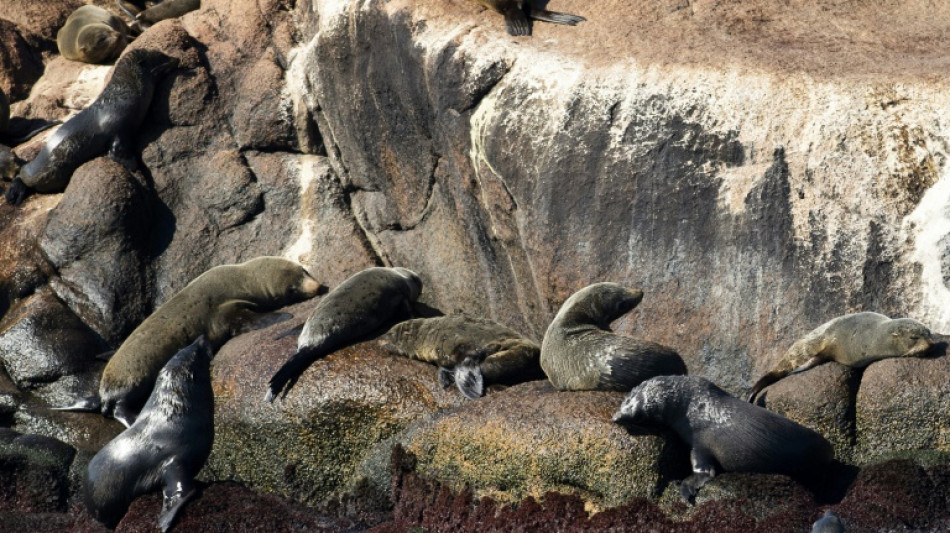
Bird flu kills 400 seals, sea lions in Uruguay / Photo: © AFP/File

 Indian crude-sensitive shares gain after 13% oil-price decline

 Stocks and dollar fall as Democratic election gains reshape markets

 Abdul El-Sayed Wins Michigan Senate Seat, Becoming First Muslim in US Congress

 Kuwait marks key events and anniversaries from national history

 Trump congratulates Democrats and signals willingness to cooperate

 Enel to Install Solar Panels at Niterói Waste Management Facility

 Qatar sees tentative opening for renewed regional diplomacy

 Qatar Tourism joins Pacific Asia Travel Association at London travel market

 Abdul El-Sayed Wins Michigan Senate Seat in Historic Election

 Qatar media bodies discuss support for humanitarian initiatives

An estimated 400 seals and sea lions have turned up dead on the coast of Uruguay in recent weeks, blamed by authorities on bird flu.
Multiple ministries are monitoring the situation after a first case of H5 bird flu was detected in a sea lion on a beach in Montevideo, where the River Plate empties into the Atlantic.
The dead animals have turned up on the Atlantic coast and along the river. So far 350 have been buried to stop the spread of the virus.
"This is an evolving situation now and we attribute it to bird flu," said the head of the fauna department at the environment ministry, Carmen Leizagoyen.
"The disease cannot be controlled. We have to wait for the immunity of the animals to act, but we do not know when this is going to happen," she told AFP.
Uruguay has an estimated 315,000 seals and sea lions.
Leizagoyen urged beachgoers to stay away from such animals to avoid catching the virus. Human infections with bird flu are rare but do occur.
I.Stoeckli--VB